Ice Hockey
Team Canada Medal Count
 14
14
 6
6
 3
3
Sport Details
NSO Channels


Sport Overview
Ice Hockey at Beijing 2022
Venues: National Indoor Stadium, Wukesong Sports Centre
Competition Dates: February 3-20 (Days -11-16)
Events: 2 (1 men, 1 women)
Trivia: Test your knowledge!
In its basic form, hockey is a game played on ice in which teams try to score in their opponent’s goal, using curved sticks to move the rubber puck. Five players and one goalkeeper are on the ice for a team at any one time, with substitutions coming from the bench. A regulation game consists of three 20-minute periods with two 15-minute intermissions. At the Olympic Games, no games can end in a tie, so deadlocks are broken by a four-on-four overtime period or, if needed, a shoot-out. Overtime is five minutes for group stage games and 10 minutes for all playoff games, except for the gold medal game which has a 20 minute overtime.
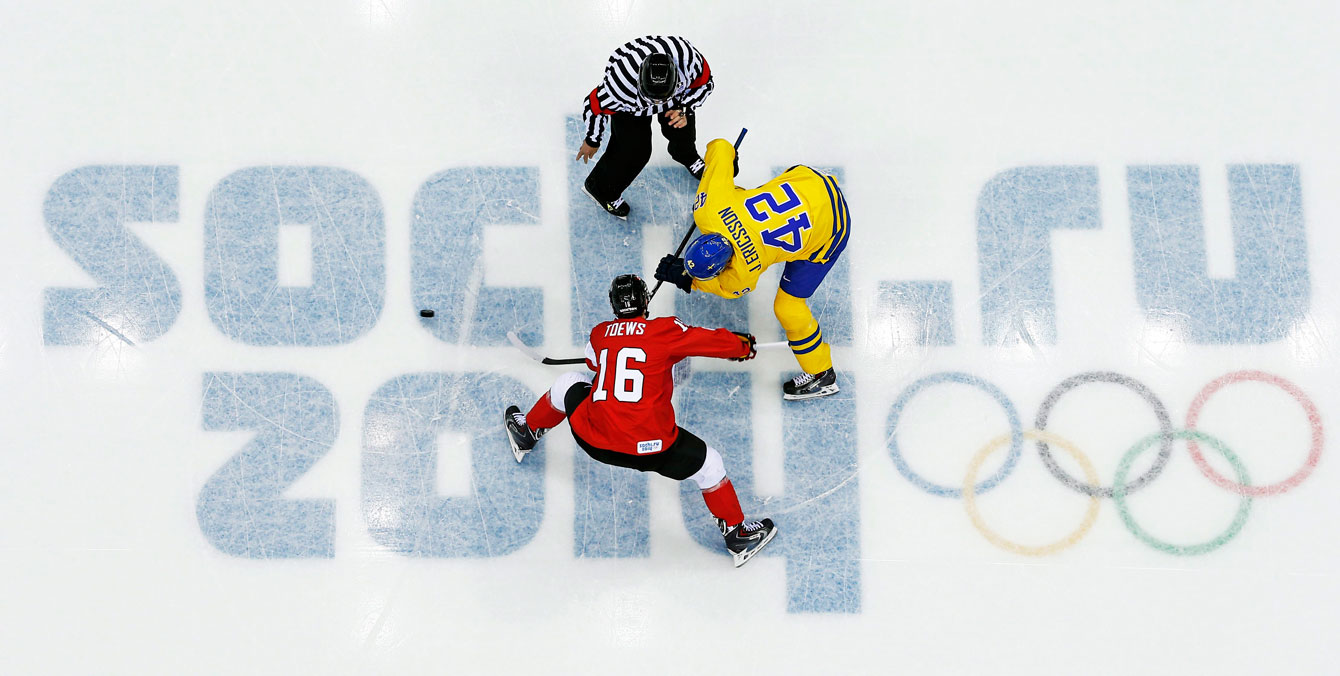
At Beijing 2022 the men’s tournament will have 12 teams divided into three groups:
Group A: Canada, United States, Germany, China
Group B: Russia, Czech Republic, Switzerland, Qualifier 3
Group C: Finland, Sweden, Qualifier 1, Qualifier 2
The tournament begins with a round robin within each group. No teams are eliminated from medal contention based on the preliminary round results. The three group winners and the second place team with the best record receive a bye into the quarterfinals. The remaining eight teams play a qualification playoff game. The winners of the qualification playoff games advance to the quarterfinals to face one of the teams that received a bye. Quarterfinal winners advance to the semifinals. Semifinal winners advance to play for gold and silver while the semifinal losers play for bronze.
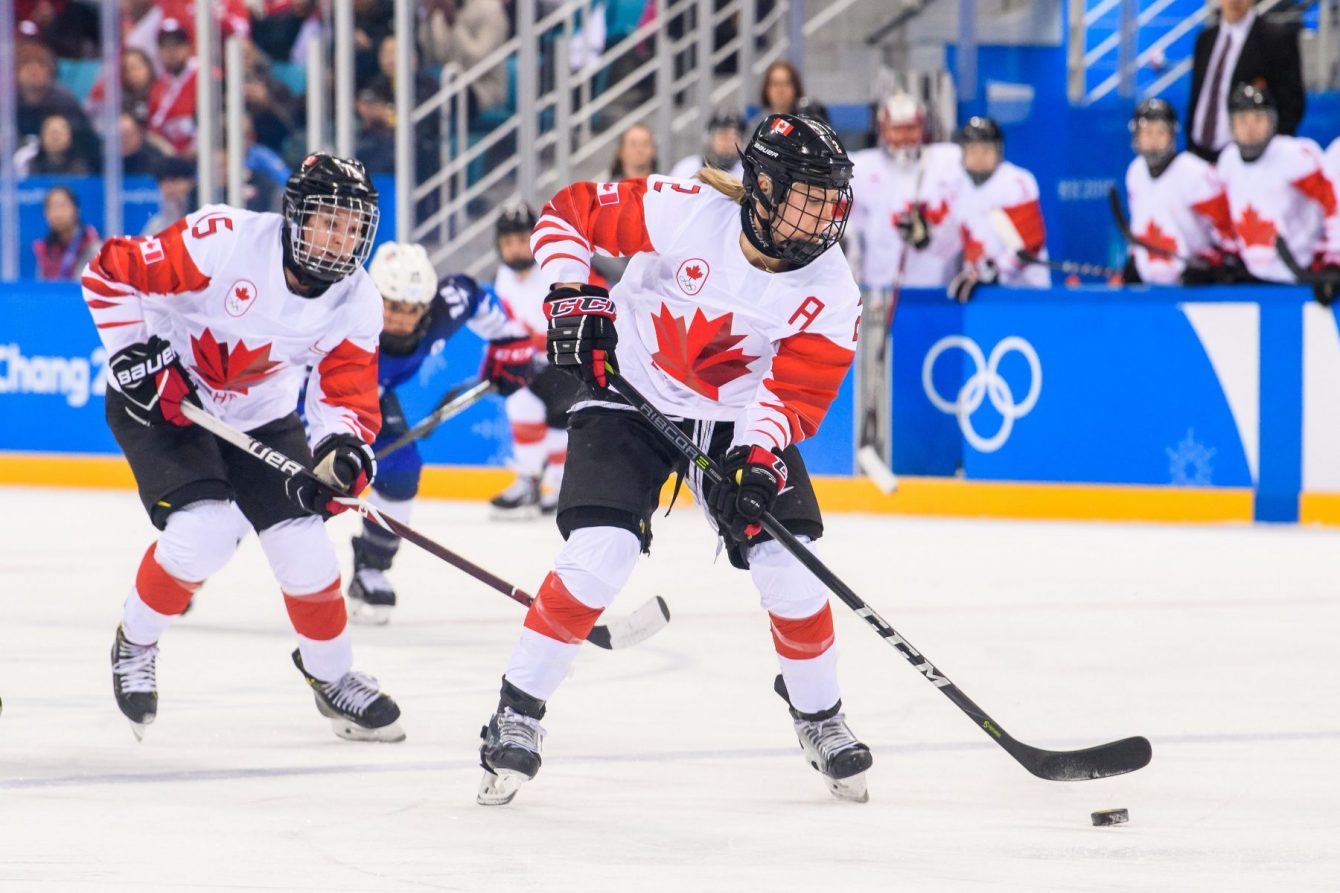
At Beijing 2022 the women’s tournament will have 10 teams divided into two groups:
Group A: United States, Canada, Finland, Russia, Switzerland
Group B: Japan, Qualifier 1, Qualifier 2, Qualifier 3, China
The tournament begins with a round robin within each group. Organized into two tiers, Group A consists of teams ranked 1-5 by the IIHF while Group B has the teams ranked 6-10. All the teams from Group A advance from the preliminary round along with the top three teams from Group B. The winners of the four quarterfinal games advance to the semifinals. The semifinal winners advance to play for gold and silver while the semifinal losers play for bronze.
Canadian History (pre-Beijing 2022)
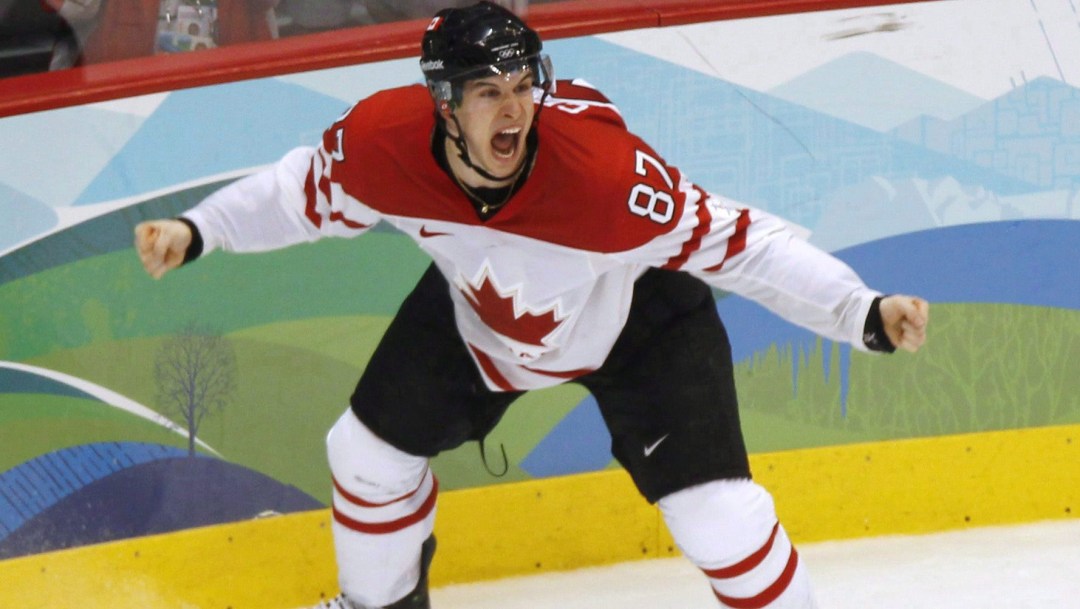
With 22 medals, including 13 gold, Canada is the most successful country in Olympic ice hockey.
Canada won the men’s tournament at six of the first seven Olympic Games in which ice hockey was included, beginning with the debut during the summer Games at Antwerp 1920.

There was then a 50 year drought after Oslo 1952 until the next gold was won at Salt Lake City 2002. But the next wait was much shorter, with back-to-back men’s gold medals at Vancouver 2010 and Sochi 2014. Shea Weber, Jonathan Toews, Sidney Crosby, Drew Doughty, Ryan Getzlaf, Rick Nash, Duncan Keith, Roberto Luongo, Patrick Marleau and Corey Perry were all members of those last two gold medal teams. Canada won bronze at PyeongChang 2018.

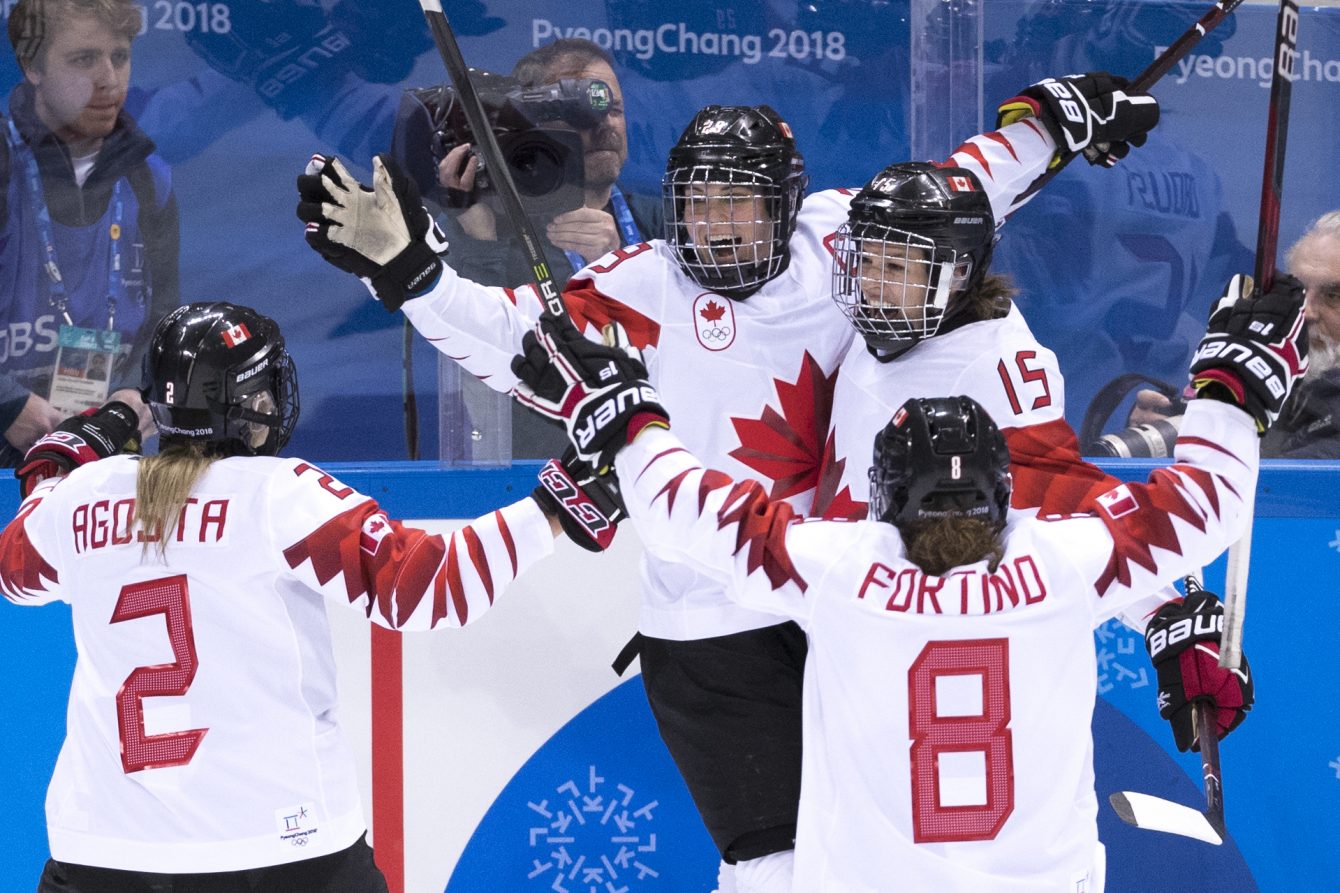
Canada has never missed the podium in the women’s tournament since it debuted at Nagano 1998. After a silver at those first Games, Canada won four straight gold medals, making Hayley Wickenheiser and Jayna Hefford the two most decorated athletes in the sport. Caroline Ouellette joined them on all four gold medal teams. Canada won silver at PyeongChang 2018.
Canadian Medallists
| Event | Athlete | Finish | Games |
|---|---|---|---|
| Men | Winnipeg Falcons | Gold | Antwerp 1920 |
| Men | Toronto Granites | Gold | Chamonix 1924 |
| Men | University of Toronto Grads | Gold | St. Moritz 1928 |
| Men | The Winnipegs | Gold | Lake Placid 1932 |
| Men | RCAF Flyers | Gold | St. Moritz 1948 |
| Men | Edmonton Mercurys | Gold | Oslo 1952 |
| Men | Team Canada | Gold | Salt Lake City 2002 |
| Women | Canadian National Women’s Team | Gold | Salt Lake City 2002 |
| Women | Canadian National Women’s Team | Gold | Turin 2006 |
| Men | Team Canada | Gold | Vancouver 2010 |
| Women | Canadian National Women’s Team | Gold | Vancouver 2010 |
| Men | Team Canada | Gold | Sochi 2014 |
| Women | Canadian National Women’s Team | Gold | Sochi 2014 |
| Women | Canadian Women's National Team | Gold | Beijing 2022 |
| Men | Port Arthur Bearcats | Silver | Garmisch-Partenkirchen 1936 |
| Men | Kitchener-Waterloo Dutchmen | Silver | Squaw Valley 1960 |
| Men | Canadian National Team | Silver | Albertville 1992 |
| Men | Canadian National Team | Silver | Lillehammer 1994 |
| Women | Canadian National Women’s Team | Silver | Nagano 1998 |
| Women | Team Canada | Silver | PyeongChang 2018 |
| Men | Kitchener-Waterloo Dutchmen | Bronze | Cortina d'Ampezzo 1956 |
| Men | Canadian National Team | Bronze | Grenoble 1968 |
| Men | Team Canada | Bronze | PyeongChang 2018 |
Teams
Beijing 2022 (Men)
- Adam Cracknell
- Adam Tambellini
- Alex Grant
- Ben Street
- Corban Knight
- Daniel Winnik
- David Desharnais
- Devon Levi
- Edward Pasquale
- Eric O’Dell
- Eric Staal
- Jack McBain
- Jason Demers
- Jordan Weal
- Josh Ho-Sang
- Kent Johnson
- Landon Ferraro
- Mark Barberio
- Mason McTavish
- Mat Robinson
- Matt Tomkins
- Maxim Noreau
- Morgan Ellis
- Owen Power
- Tyler Wotherspoon
Beijing 2022 (Women)
- Ann-Renée Desbiens
- Ashton Bell
- Blayre Turnbull
- Brianne Jenner
- Claire Thompson
- Ella Shelton
- Emerance Maschmeyer
- Emily Clark
- Emma Maltais
- Erin Ambrose
- Jamie Lee Rattray
- Jillian Saulnier
- Jocelyne Larocque
- Kristen Campbell
- Laura Stacey
- Marie-Philip Poulin
- Mélodie Daoust
- Micah Zandee-Hart
- Natalie Spooner
- Rebecca Johnston
- Renata Fast
- Sarah Fillier
- Sarah Nurse
PyeongChang 2018 (Men's)
- Andrew Ebbett
- Ben Scrivens
- Brandon Kozun
- Chay Genoway
- Chris Kelly
- Chris Lee
- Christian Thomas
- Cody Goloubef
- Derek Roy
- Eric O’Dell
- Gilbert Brulé
- Justin Peters
- Karl Stollery
- Kevin Poulin
- Linden Vey
- Marc-André Gragnani
- Mason Raymond
- Mat Robinson
- Maxim Lapierre
- Maxim Noreau
- Quinton Howden
- René Bourque
- Rob Klinkhammer
- Stefan Elliott
- Wojtek Wolski
PyeongChang 2018 (Women's)
- Ann-Renée Desbiens
- Bailey Bram
- Blayre Turnbull
- Brianne Jenner
- Brigette Lacquette
- Emily Clark
- Geneviève Lacasse
- Haley Irwin
- Jennifer Wakefield
- Jillian Saulnier
- Jocelyne Larocque
- Laura Fortino
- Laura Stacey
- Lauriane Rougeau
- Marie-Philip Poulin
- Meaghan Mikkelson
- Meghan Agosta
- Mélodie Daoust
- Natalie Spooner
- Rebecca Johnston
- Renata Fast
- Sarah Nurse
- Shannon Szabados
Sochi 2014 (Men's)
- Alex Pietrangelo
- Carey Price
- Chris Kunitz
- Corey Perry
- Dan Hamhuis
- Drew Doughty
- Duncan Keith
- Jamie Benn
- Jay Bouwmeester
- Jeff Carter
- John Tavares
- Jonathan Toews
- Marc-Édouard Vlasic
- Martin St. Louis
- Matt Duchene
- Mike Smith
- P.K. Subban
- Patrice Bergeron
- Patrick Marleau
- Patrick Sharp
- Rick Nash
- Roberto Luongo
- Ryan Getzlaf
- Shea Weber
- Sidney Crosby
Sochi 2014 (Women's)
- Brianne Jenner
- Caroline Ouellette
- Catherine Ward
- Charline Labonté
- Geneviève Lacasse
- Gillian Apps
- Haley Irwin
- Hayley Wickenheiser
- Jayna Hefford
- Jennifer Wakefield
- Jocelyne Larocque
- Laura Fortino
- Lauriane Rougeau
- Marie-Philip Poulin
- Meaghan Mikkelson
- Meghan Agosta
- Mélodie Daoust
- Natalie Spooner
- Rebecca Johnston
- Shannon Szabados
- Tara Watchorn
Vancouver 2010 (Men's)
- Brenden Morrow
- Brent Seabrook
- Christopher Pronger
- Corey Perry
- Dan Boyle
- Dany Heatley
- Drew Doughty
- Duncan Keith
- Eric Staal
- Jarome Iginla
- Joe Thornton
- Jonathan Toews
- Marc-André Fleury
- Martin Brodeur
- Michael Richards
- Patrice Bergeron
- Patrick Marleau
- Rick Nash
- Roberto Luongo
- Ryan Getzlaf
- Scott Niedermayer
- Shea Weber
- Sidney Crosby
Vancouver 2010 (Women's)
- Becky Kellar (Duke)
- Carla MacLeod
- Caroline Ouellette
- Catherine Ward
- Charline Labonté
- Cherie Piper
- Colleen Sostorics
- Gillian Apps
- Gina Kingsbury
- Haley Irwin
- Hayley Wickenheiser
- Jayna Hefford
- Jennifer Botterill
- Kim St-Pierre
- Marie-Philip Poulin
- Meaghan Mikkelson
- Meghan Agosta
- Rebecca Johnston
- Sarah Vaillancourt
- Shannon Szabados
- Tessa Bonhomme
Turin 2006 (Women's)
- Becky Kellar (Duke)
- Carla MacLeod
- Caroline Ouellette
- Cassie Campbell
- Charline Labonté
- Cherie Piper
- Cheryl Pounder
- Colleen Sostorics
- Danielle Goyette
- Gillian Apps
- Gillian Ferrari
- Gina Kingsbury
- Hayley Wickenheiser
- Jayna Hefford
- Jennifer Botterill
- Katie Weatherston
- Kim St-Pierre
- Meghan Agosta
- Sarah Vaillancourt
- Vicky Sunohara