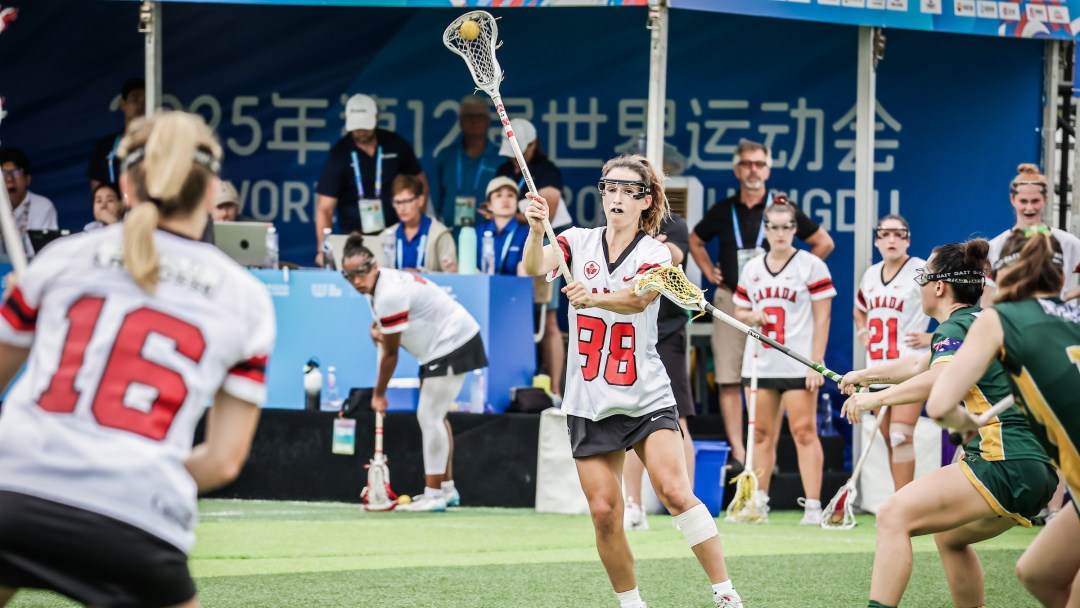
Lacrosse
Team Canada Medal Count
 2
2
 0
0
 1
1
Sport Details

NSO Channels


Sport Overview
Lacrosse at Los Angeles 2028
Venue: Exposition Park Stadium
Competition Dates: July 24-29 (Days 10-15)
Events: 2 (1 men, 1 women)
| Men’s Events | Women’s Events |
|---|---|
| Sixes Lacrosse | Sixes Lacrosse |
With a history dating back more than 1000 years, lacrosse is a sport with great cultural significance. It is considered a sacred gift from the Creator, rooted in the traditions of the Indigenous Peoples of North America.
In pre-colonial times, it was known as Baggataway or Tewaarathon and was played by various First Nations for spiritual, ceremonial, and diplomatic purposes—such as honouring elders, healing communities, and settling disputes. It often involved hundreds of players over vast distances.
French settlers who observed the Indigenous game named it “la crosse” because the stick used resembled a bishop’s staff. Settlers began introducing formal rules and by the 1840s games between Mohawk players and townspeople were popular. Lacrosse became one of the first cultural bridges between Indigenous and settler communities.
In 1859, lacrosse was declared Canada’s National Game. The first national sport governing body in North America was the National Lacrosse Association formed in 1867. In 1994, lacrosse was officially recognized as Canada’s National Summer Sport.
The most traditional form of the sport is field lacrosse, played by two teams of 10 (men) or 12 (women) players on a large field measuring 100m x 60m. Each match is divided into four 15-minute periods. Box lacrosse was introduced in the 20th century as a faster-paced, higher-action format played in hockey rinks. The 21st century saw another evolution with the introduction of sixes lacrosse, bringing together aspects of both field lacrosse and box lacrosse. It is this form of lacrosse that will be contested at Los Angeles 2028.
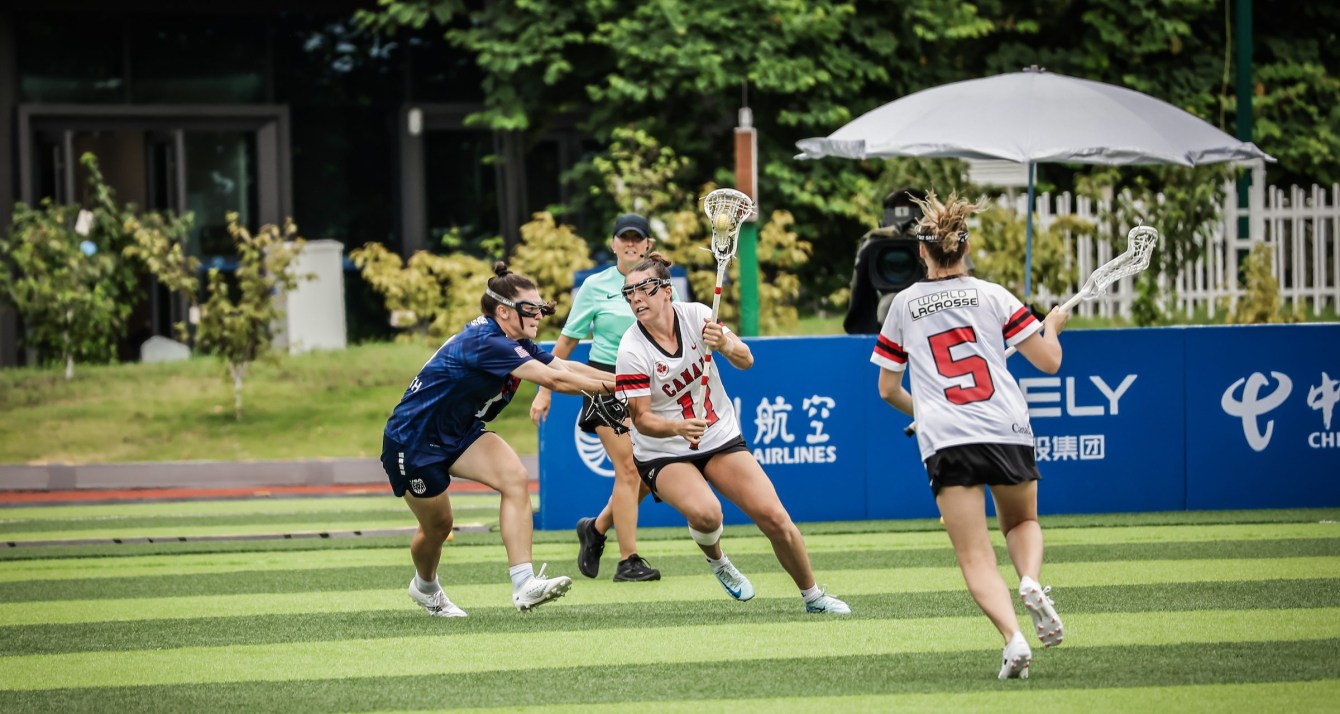
Sixes lacrosse is played outdoors on a field measuring 70m x 36m. Teams feature six players a side—five runners and one goalkeeper. There are no specialist positions. The primary equipment to play lacrosse are a ball and a stick, with the aim to score a goal by shooting the ball into the opponent’s net. The one-metre long stick includes a head which forms a pocket to catch, carry, pass, and shoot the ball that has a circumference of approximately 20cm.
Matches are divided into four eight-minute quarters, for a total duration of about 45 minutes. If a match is tied at the end of regulation, overtime periods of three minutes will be played until a winner is determined. There is a 30-second shot clock, which helps create an accelerated open style of play with quick transitions and non-stop, high-scoring action.
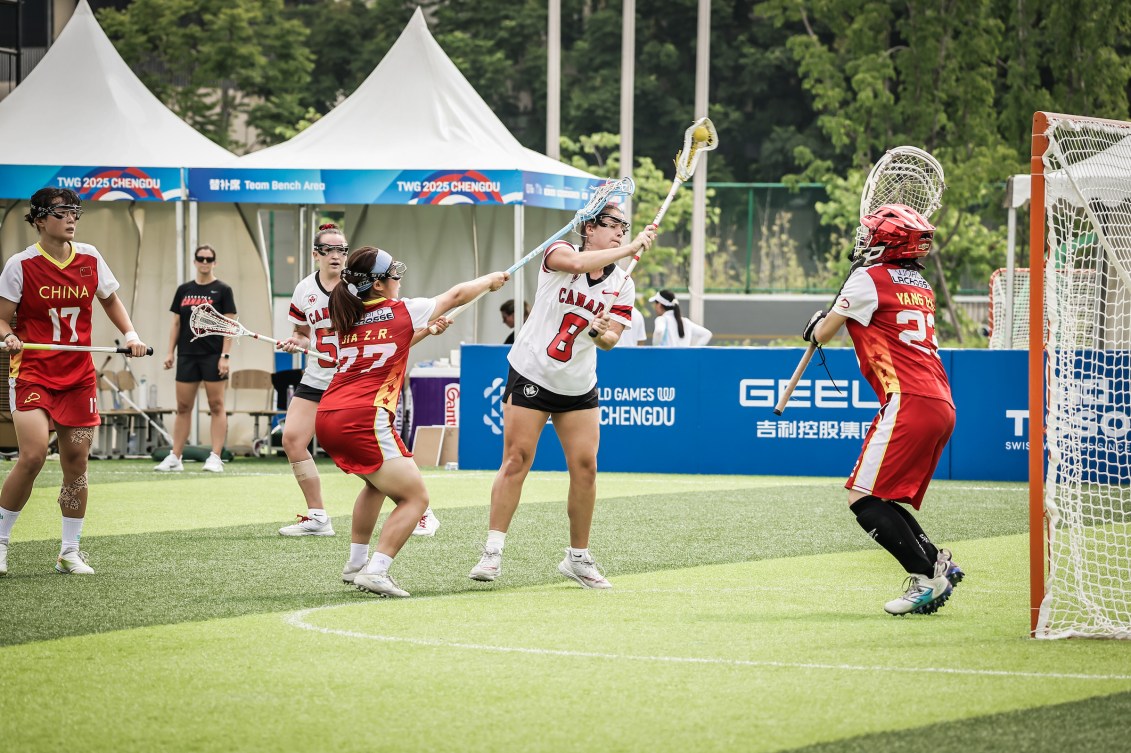
Body checking is not permitted; the game instead emphasizes clean stick checks, agility, and positional defence to highlight the sport’s speed, creativity, and finesse. There are no faceoffs; play restarts after goals with the team that conceded the goal passing the ball from behind the net.
At LA 2028, each tournament will start with a six-team round robin. The first- and second-ranked teams of each gender will play for gold and silver while the third- and fourth-ranked teams will play for bronze.
Canadian Olympic Lacrosse History
Canada is credited with three Olympic medals in lacrosse, the most of any country.
At St. Louis 1904, the Winnipeg Shamrocks won the gold medal, defeating the St. Louis Amateur Athletic Association in the final. The bronze medal was won by a team that has been referred to in various sources as Mohawk Indian or Iroquois Indian. Hailing from an area near Brantford, Ontario, they are now known to be members of the Haudenosaunee First Nation.
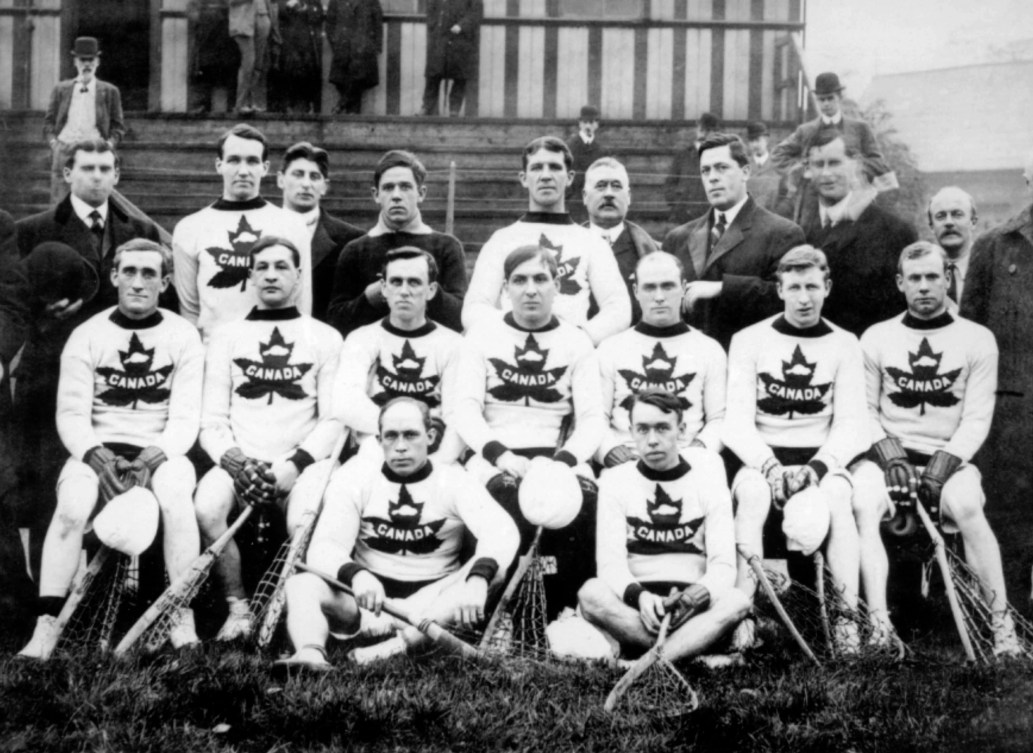
At London 1908, a national team that included athletes from across Canada defeated Great Britain in the lone match of the tournament to win the gold medal. There was only one match because South Africa had withdrawn. The Canadian team included four members of the Montreal Shamrocks, two members of the Montreal Amateur Athletic Association, one member of the Montreal Nationals, two players from New Westminster, B.C., and one player each from Calgary, Ottawa, Cornwall, Toronto, St. Catharines, and Orangeville.
Olympic Lacrosse History
Lacrosse was an official medal sport for men only at the St. Louis 1904 and London 1908 Olympic Games. It was featured as a demonstration sport at Amsterdam 1928, Los Angeles 1932, and London 1948.
At all of those Games, the sport appeared in the form of field lacrosse. This is also the form of lacrosse contested at the 2017 World Games, which included a women’s event. The 2022 World Games marked the global debut of sixes lacrosse, a faster paced version of the sport that came into being in 2020.
In August 2022, lacrosse was one of nine sports shortlisted as an OCOG Proposed Sport for LA 2028. During the 141st IOC Session in October 2023, sixes lacrosse was approved for inclusion at LA 2028.
Canadian Medallists
| Games | Event | Athlete | Finish |
|---|---|---|---|
| St. Louis 1904 | Field Lacrosse - Men | Winnipeg Shamrocks | Gold |
| St. Louis 1904 | Field Lacrosse - Men | Mohawk Indians (Haudenosaunee First Nation) | Bronze |
| London 1908 | Field Lacrosse - Men | Team Canada | Gold |