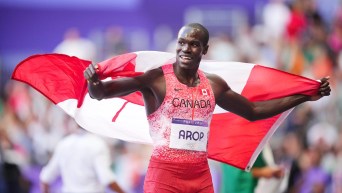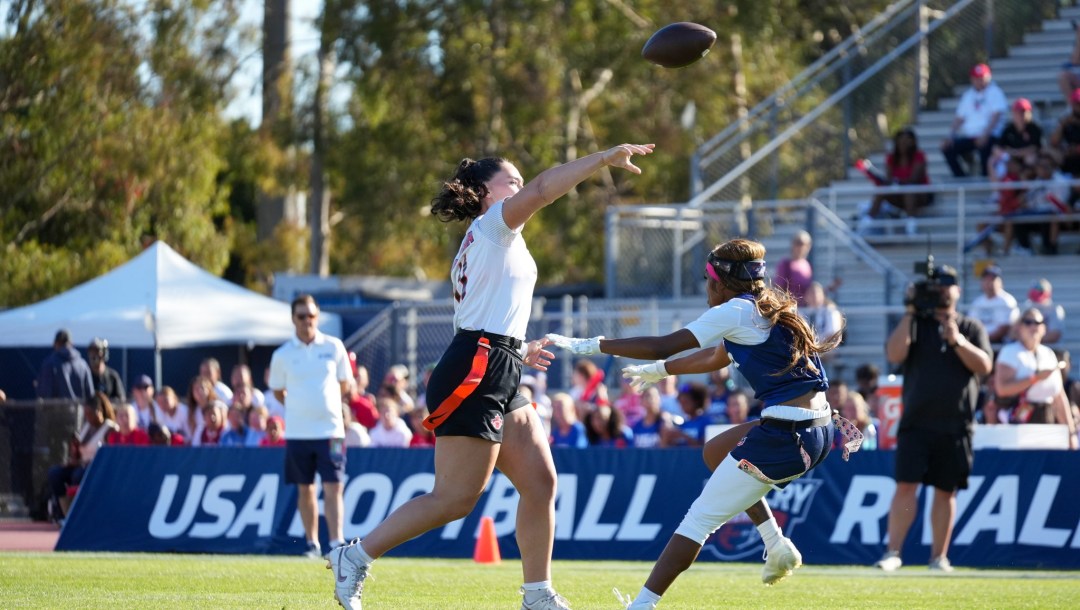
Learn all about flag football with members of Team Canada

Flag football‘s biggest moment is almost here.
After being approved for inclusion at Los Angeles 2028 during the 141st IOC Session in October 2023, flag football’s Olympic Games debut is now less than two years away.
“Very exciting moment for the sport,” said Sabrina Gervais, a defensive back for the Canadian senior women’s national team. “Very excited about it.”
Sara Parker, a quarterback for Team Canada, remembers being at a table having breakfast when the news came in that flag football would be part of the Los Angeles 2028 program.
“I remember there was a lot of hype behind it, and they were talking about it a lot leading up to that moment,” said Parker. “I think it was just a lot of gratitude and excitement just for the recognition that the sport was getting and all the opportunities that announcement represented.”
To understand what flag football is all about and what Olympic inclusion means for the sport, we sat down with a few members of Team Canada.
How does flag football work?
For fans new to flag football, the differences between it and tackle football will be immediately obvious.
For starters, the field measures 70 yards long x 25 yards wide, which includes 50 yards of playing distance plus 10 yards for each of the two endzones. An NFL field is sized at 120 yards long x 53.33 yards wide, which includes a playing distance of 100 yards. With a smaller playing area, flag football teams are only permitted to put five players on the field at one time. The other major visual difference will be the equipment — or lack thereof. Flag football is a non-contact sport, meaning helmets and shoulder pads are not part of the equipment.
“It’s very strategic,” said Parker. “There are less players on the field, so I think it brings out the value of every single player on the field. I think it’s a very explosive sport that’s fun to watch.”
Play begins at a team’s own five-yard line, where the centre snaps the ball back to the quarterback who can either pass the ball forward to a receiver or hand it off to a running back.
A play ends when either a flag — which is attached to the ball carrier’s waist — is removed, the ball carrier goes out of bounds, or a forward pass hits the ground. The team on offence has four attempts (downs) to get the ball from their own five-yard line to the halfway mark of the field. If they succeed, they have another four downs to reach the endzone and score a touchdown. If they don’t achieve this forward progression, they turn the ball over to their opponent to go on offence.
Like in tackle football, the goal for each team is to get the ball into the opposition’s defensive endzone, scoring a touchdown that is worth six points. Teams can add an extra point by running or passing the ball from the five-yard line into the endzone, or they can go for two extra points from the 10-yard line.
Games consist of two 20-minute halves.
“I think flag football is more fast paced,” added Parker. “I think every player brings their own value to the field. Because there are less players on the field, you get to kind of use everyone more. The smaller field kind of makes it more dynamic and a little bit more quick.”
What makes a good flag football player?
While there are obvious differences between tackle and flag football, speed is a key skillset in both — whether that be in terms of physical ability or processing the game.
“Honestly, IQ is a big difference maker,” said Caroline Moquin-Joubert, a wide receiver. “The fact that you can be really, really fast is a difference maker.
“Usually the people that can work under pressure, make big catches are going to perform well in flag football.”
Parker believes one of the biggest strengths of flag football is its inclusivity.
“I think that the strongest team is really the one with the most diversity and the players that bring different skillsets to the team,” said Parker. “I think that whether your strength is speed or IQ or strategy, there’s a place for everyone on the field, and it’s building a system that makes you feel valued and showcases your talent.”
“I love the fact that different skilled players can play flag,” added Moquin-Joubert. “You can have different skills on the field.”
More than just a recreational sport
Los Angeles 2028 will not only offer players the opportunity to win an Olympic medal, it will also give flag football a chance to show the world that it’s no longer just a recreational sport.
“The first thing you think about flag football is a recreational sport, a second sport,” said Moquin-Joubert. “But I think when you get in our community, when you watch our game, you realize that we’re professional and we’re going to the Olympics in 2028.”
Moquin-Joubert began playing flag football in high school. She was recruited by Concordia University to play hockey but also began playing flag football at the school when a Quebec university league started up. This past June, U Sports, the governing body for the highest level of university athletics in Canada, announced that women’s flag football will become a pilot sport beginning in 2027-28, citing the sports inclusion in the Olympic Games and growing participation rates.
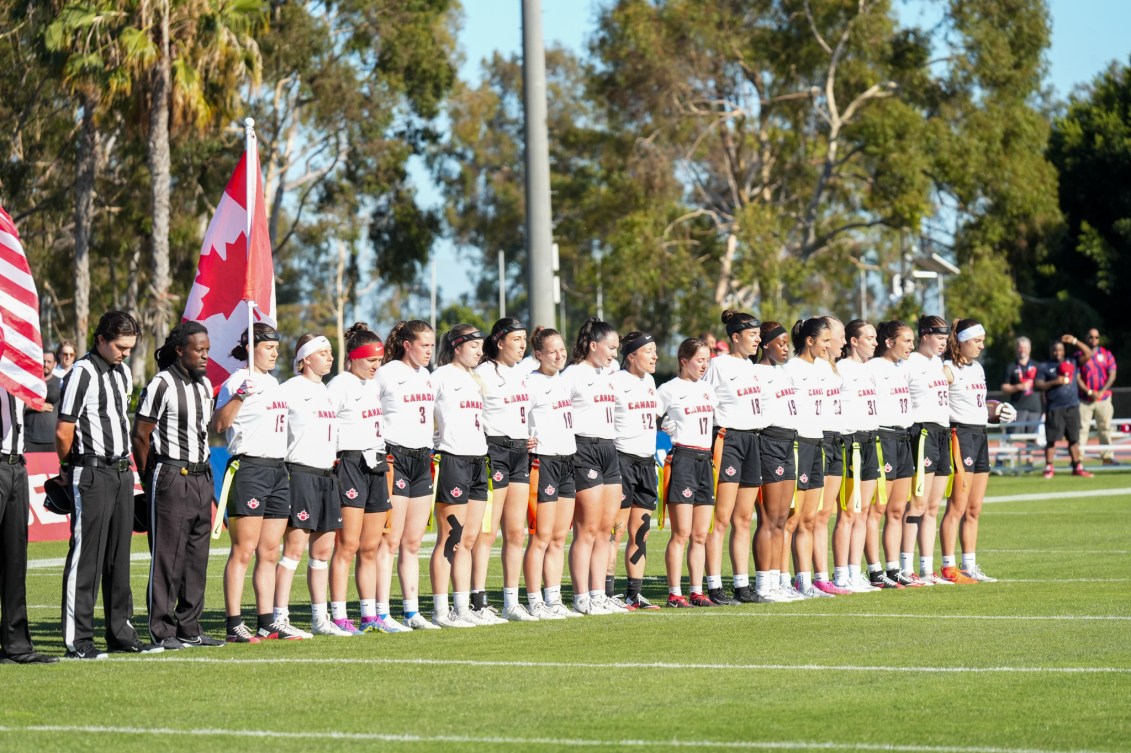
Parker, who also played ringette and basketball growing up, added that it takes a lot of practice to become a high level flag football player.
“I think the biggest misconception is that it’s a backyard sport, kind of a recreational version of football that people can just pick up easily,” said Parker. “I think that it takes a lot of different skillsets to be good at flag football. And there are so many things to appreciate in flag that you can’t see in tackle football.”
What will the flag football competition look like at Los Angeles 2028?
There will be two opportunities for teams to qualify for the flag football tournaments at Los Angeles 2028. Teams can either earn spots at the 2026 IFAF World Championships taking place August 13-16, 2026 or via the Olympic Q-Series that will take place in June 2028.
How Team Canada Can Qualify for LA 2028
The men’s and women’s Olympic flag football tournaments will take place during the first week of the Games (Days 1 to 8). Each will start with a six-team round robin. The top four teams of each gender will advance to the semifinals. The semifinal winners will play for gold while the losers will play for bronze.
Flag football will be played at Exposition Park Stadium, which is located nearby the historic LA Memorial Coliseum. Exposition Park Stadium is normally used for soccer, home of Los Angeles FC and Angel City FC.