2026-27 a season of change in Canadian ice dance and pairs figure skating

If you haven’t been following Canadian figure skating on social media over the summer, well, let’s just say the scene is going to look quite different in the 2026-27 season—especially in ice dance and pairs.
Following their emotional Olympic bronze medal, Piper Gilles and Paul Poirier announced they would not compete on the ISU Grand Prix series and have been busy touring and exploring other interests
Their heir apparents, Marjorie Lajoie and Zachary Lagha, shocked the world in early May when they revealed that they were going their separate ways after 15 years together. Within a few weeks, both shared that they had forged new partnerships.
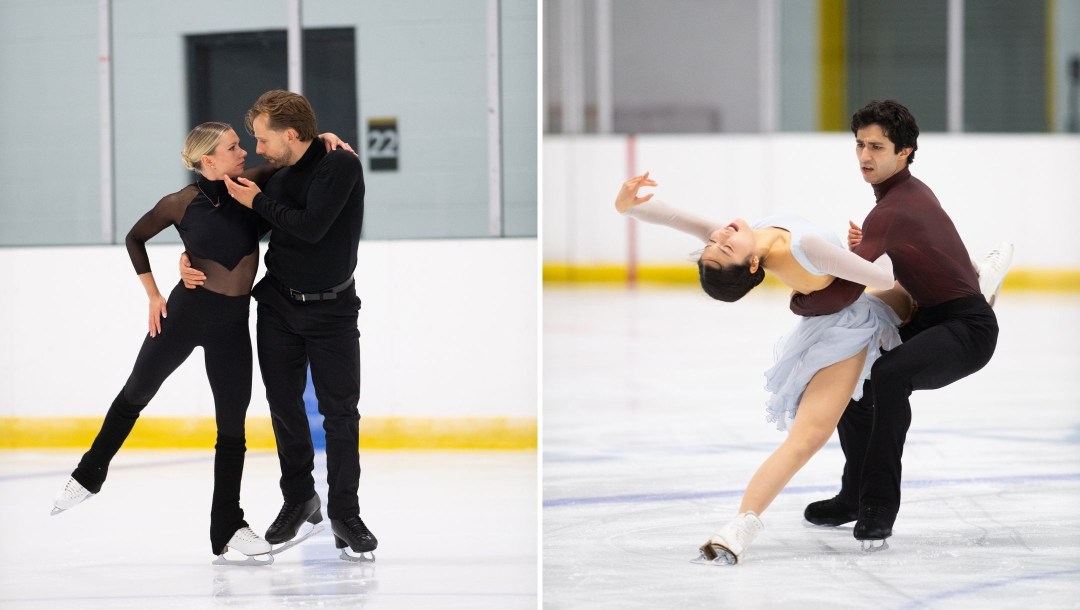
Lajoie joined forces with Jean-Luc Baker, an Olympian and four-time world championship competitor for the United States, in a partnership that was quickly and affectionately nicknamed “Bakerie” by the fandom (and endorsed by the duo themselves). Lagha linked up with Hannah Lim, a training mate in Montreal who previously represented South Korea, including at Milano Cortina 2026, before that partnership ended in late April.
But that was far from the only notable split.
Alicia Fabbri and Paul Ayer, national bronze medallists in 2024 and 2025, announced they were parting after eight years together and have since embarked on new partnerships. Also breaking up were Lily Hensen and Nathan Lickers, who had been partners for 15 years and finished in the top five twice at nationals.
If you’re keeping track, that left Olympians Marie-Jade Lauriault and Romain Le Gac as the top-ranked intact senior ice dance team in Canada.
Meanwhile in pairs, Lia Pereira and Trennt Michaud are now in the upper echelon of teams globally following their impressive Olympic performances and world championship bronze medal. But there’s been a shakeup behind them.
Gone are Deanna Stellato-Dudek and Maxime Deschamps—him to retirement, her to a new partnership in the United States. Also split are three-time Canadian bronze medallists Kelly-Ann Laurin and Loucas Éthier; he has formed a new partnership with Fiona Bombardier.
Ready to take a big step up to the senior international scene are two podium pairs from the 2026 Junior World Championships: gold medallists Ava Kemp & Jonathan Elizarov and silver medallists Jazmine Desrochers & Kieran Thrasher.
Did you follow all that?
Well, if you want to know more about what some of these duos are hoping to achieve this season, we’ve got the scoop from Skate Canada’s High Performance Camp.
Ice Dance
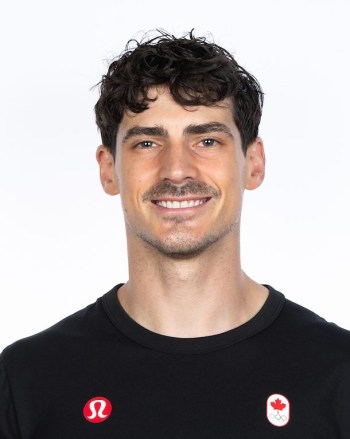
Since they first held hands in May, Lajoie and Baker knew it would be a challenging summer to embark on a new partnership. For starters, Baker hadn’t competed since the fall of 2022 when he and then-partner Kaitlin Hawayek took a step back after several injuries and some mental health struggles. In the interim, he had become an in-demand choreographer and launched a business to help skaters develop skills on and off the ice.
“From the first lap of us skating together, I was like ‘Hey, if we’re gonna do this, you have to understand I’m gone a lot of the summer,” Baker explained of the contractual obligations he had to fulfill.
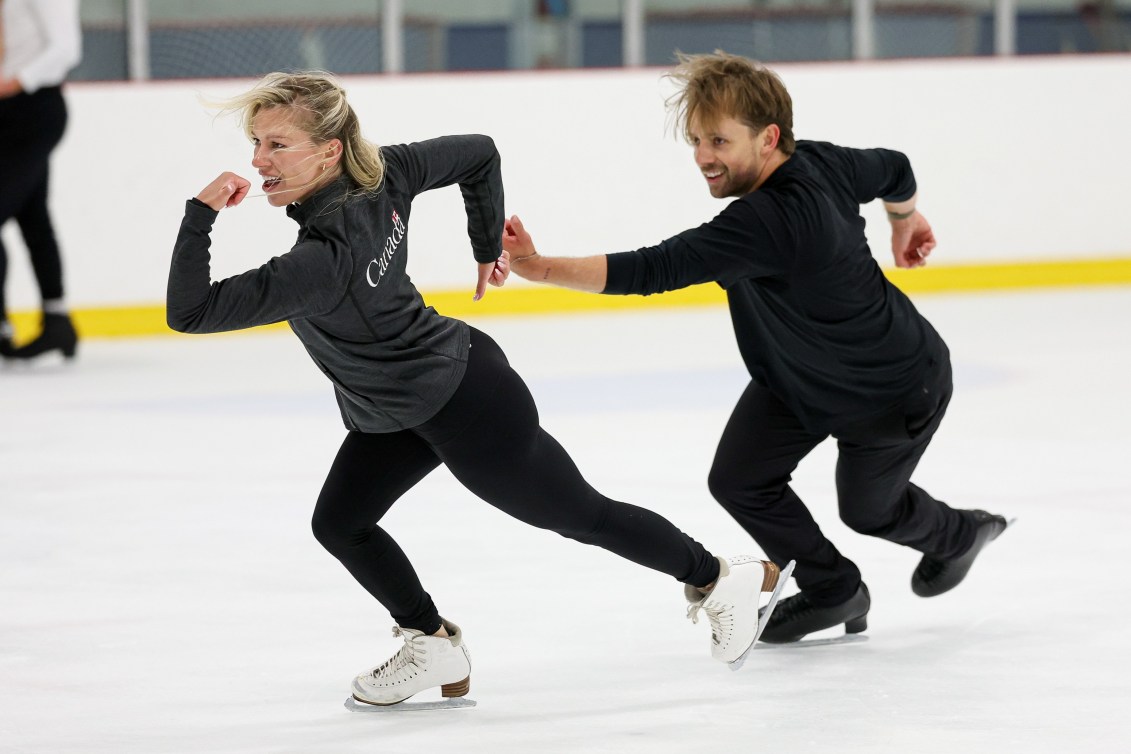
Lajoie was all in and travelled with him to France, Switzerland, and Boston where they snuck in as much training time as they could around his work commitments, aiming to learn as much as they could about each other, the way they think, the way they work.
They estimate that they skated together for only a week in May, four or five days in June, a week and a half in July, and finally their biggest stretch of two and a half weeks in August as they built towards the season.
But that sacrifice was worth it based on how they felt about their potential.
“When we did the first tryout, we were both really surprised how natural the communication and the skating was,” said Lajoie, who noted that they share a lot of similarities, which has made the adjustment to a new partnership easier than she expected.
They have a four-year plan, one that culminates in competing at Alpes 2030. With that as the end goal, they aren’t pressuring themselves to get out on the world stage sooner than they are ready for. They are scheduled to compete at Finlandia Trophy and NHK Trophy in late November, the last two of the six ISU Grand Prix events.
“There was a big adjustment throughout the last three months, of the little training we talked about, within my body, and just getting re-accustomed and acclimatized to the intense athlete lifestyle. So we want to make sure that we’re building healthily and building a proper base to the next three and a half years,” said Baker.
They both agree that of all the ice dance elements, step sequences were the easiest to adjust to doing with a new partner.
“I think we have easy flow together,” said Lajoie.
Getting synchronicity on their twizzles has been a little more challenging, mostly because they each have over a decade of muscle memory with different techniques. They’re also performing different style lifts than Lajoie had been familiar with. And because Baker is a lefty, they actually rotate the opposite direction than she is used to, so dizziness is something she’s had to overcome.
They do have some short term goals for this season: become national champions, finish in the top eight at the world championships, and maintain Canada’s position as a global leader in ice dance.
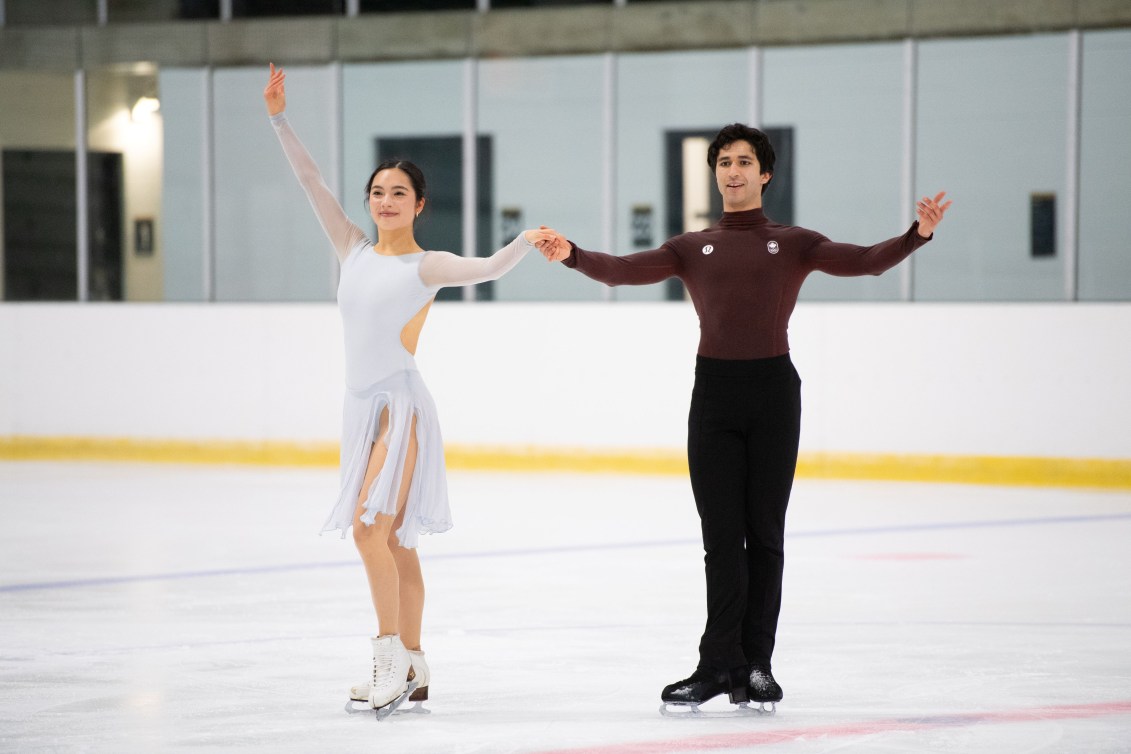
Lim and Lagha are on a different trajectory. Because Lim competed for South Korea last season, she has to wait a year before being eligible to represent Canada internationally. While for now that limits their competitive opportunities to domestic events, they see that as having long term benefits as they also look towards the 2030 Olympic Winter Games.
“It is, in a way, a bit of a rest year, but it’s also one where we can start to build our roots and our base and find what our identity is and build layers on top of that,” said Lim. She admitted earlier this summer that she might feel jealous and frustrated watching their friends head off to Grand Prix events but that they would “definitely channel that energy towards bettering ourselves at home.”
The national championships in January will be their biggest competition of the season and they would like to land on the podium. They already had their first competitive outing, performing their Sleeping Beauty rhythm dance at the Quebec Summer Championships in early August. It was a music choice that made sense, given they both had backgrounds in ballet.
“I think we have a similar style of skating and similar style of dancing,” said Lagha, who noted earlier this summer that it only took about a week of skating together to adapt their reflexes. “Choreography was easy and it’s fun to work.”
Lim added that their similarities were noticeable as they looked at themselves in the mirror when taking ballet classes together.
“The way we shape our elbows, our wrists, our arms, things like that. They come really natural to us. The way we turn our head or move our shoulders. It’s been very refreshing to see that,” said Lim.
Reigning national bronze medallists Lauriault and Le Gac are taking things one year at a time. At 30 and 31, respectively, they still have things they want to explore in competitive skating, especially with their coaching team led by Scott Moir that they only began working with last year.

“As long as we have ideas, passion, and we love what we’re doing, we’re going to stay,” said Lauriault.
Known for their innovative lifts, Lauriault and Le Gac are a team that can bring comedy to the ice. Proof of that lies in their decision to theme their rhythm dance as “Mr. Bean goes to dance class”.
“We’ve been laughing a lot throughout the whole choreography process,” said Lauriault. “Unexpected side of Scott, seeing this comedy and it’s been really fun to build this program.”
Looking to make their mark as first-year seniors are Layla Veillon and Alexander Brandys, who finished fourth at the 2026 Junior World Championships. Also coached by Moir and his team in London, Ontario, they’ll make their ISU Grand Prix debut at Skate Canada International at the end of October.
“Obviously we want to make a splash and even though it’s our first year, we want to make it seen that we are a good team and that we’re gonna keep fighting and pushing to be one of the top,” said Veillon, who added that one goal would be to place in the top five at the national championships in January.
Pairs
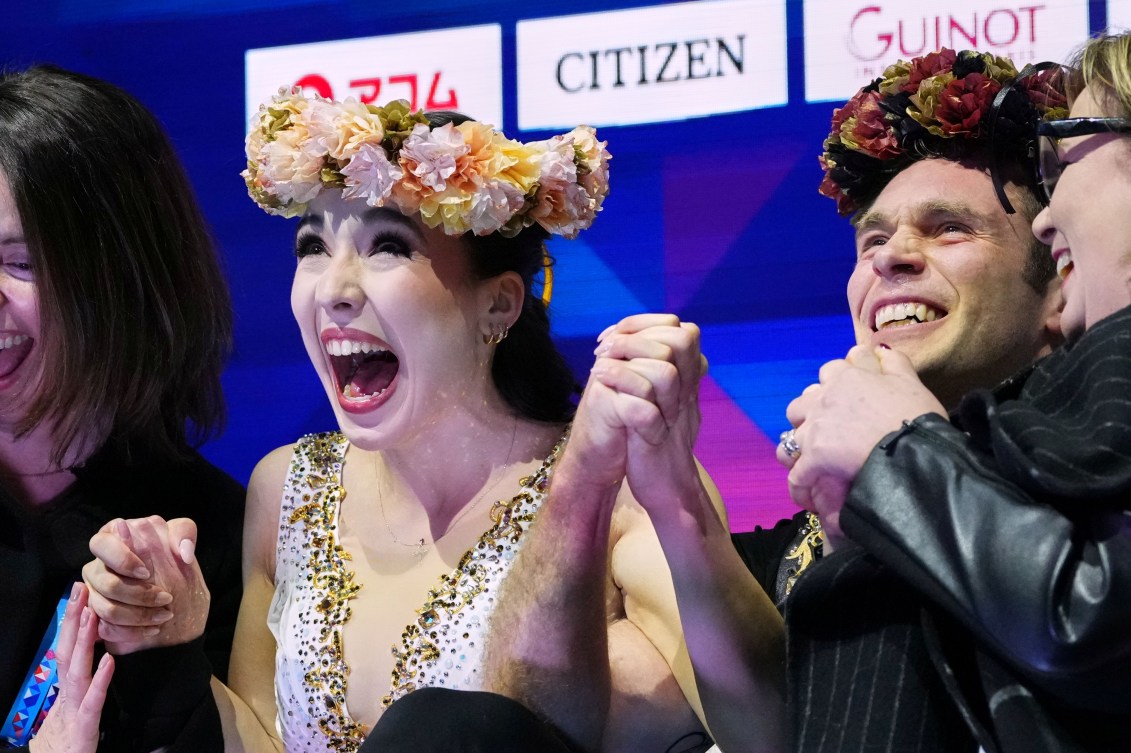
Pereira and Michaud call their world championship medal the “gift that keeps on giving”.
“You know, you get to celebrate in the moment, you get to step on the podium, and then a couple months later, you get seeded for the Grand Prix,” laughed Pereira about one of the new experiences that comes with being among the best in the world.
When they compete at Skate Canada International and Finlandia Trophy, they will be the highest-ranked pair in each field.
“Last year we just kept riding off each event and gaining more confidence and more confidence and that hasn’t changed,” Michaud said of their rise. “On hard days it’s nice to be like, you know, we’ve got this, we can do these things.”
But they’re also not taking anything for granted.
“One of the great parts about sport, if you look at it in the right way you can always be learning new things and keep improving, which is what we try to do,” he added.
One aspect of their skating they’re giving particular focus this season is refinement. They’re pleased with the consistency they’ve been able to achieve on their technical elements—level four triple twist, strong lifts, steady jumps and throws—but want to take the next step in their progression as performers.
“We’ve always been known for being fast and powerful, but we want to continue to push the beauty and the power with length and ease. I think that’s one of the things that you see in top skaters of every discipline is just the effortlessness of all their movements. So that’s been a big word for us, even through last season, is how can we be more effortless and strong as a team,” said Pereira.
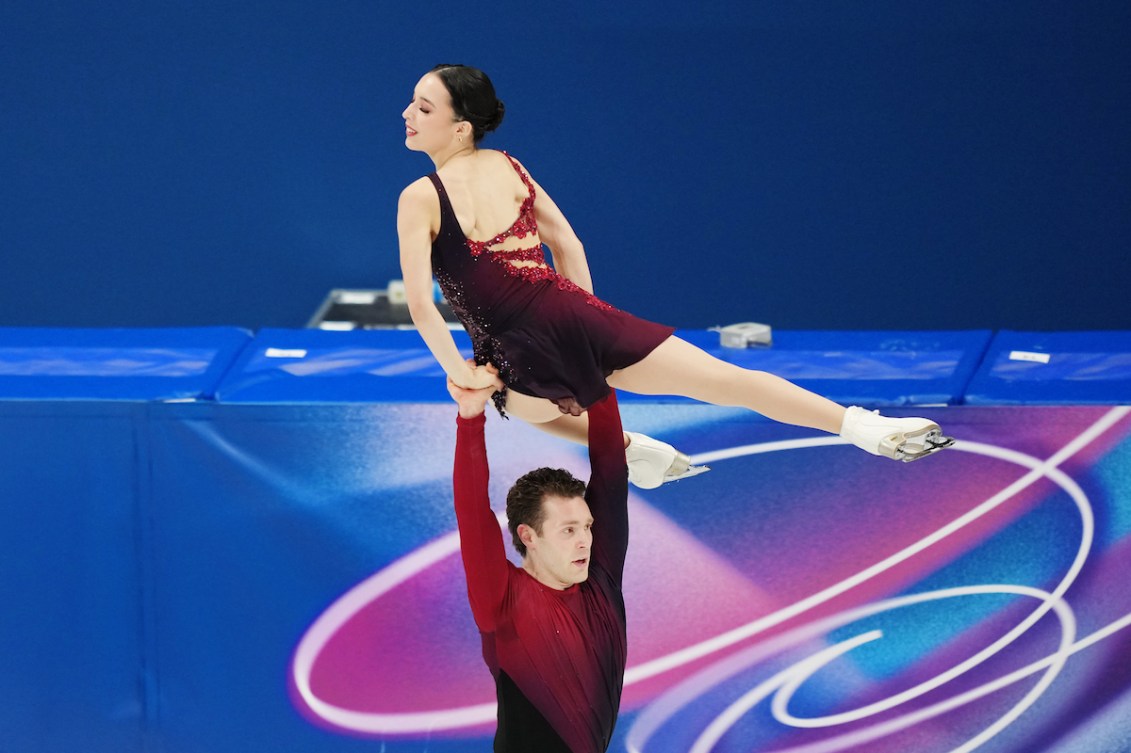
Last year’s short program was a fan favourite to a moody ballad by Jessie Ware. But they’ve gone in the complete opposite direction for a theme this season, leaning into Latin rhythms.
“It was in our playlist and I remember listening to it and really gravitating towards it. And I thought, ooh our coach put it in here but I don’t know if Trennt is gonna be on board,” Pereira recalled of her thoughts before a lunch meeting where she decided to let him voice an opinion first. “He was like, oh I really like the Latin one. So I really did not expect us to skate to it, but I was so happy when all three of us agreed.”
They’ve gone for a classic, contemporary style for the free program—a vehicle to help showcase that long, effortless skating they’ve been working on, but also incorporating some sharp, stiff movements.
“It’s kind of like we’re two pieces of art and music brings us to life,” Michaud explained the storyline. “The music starts to build and we start to build with the music.”
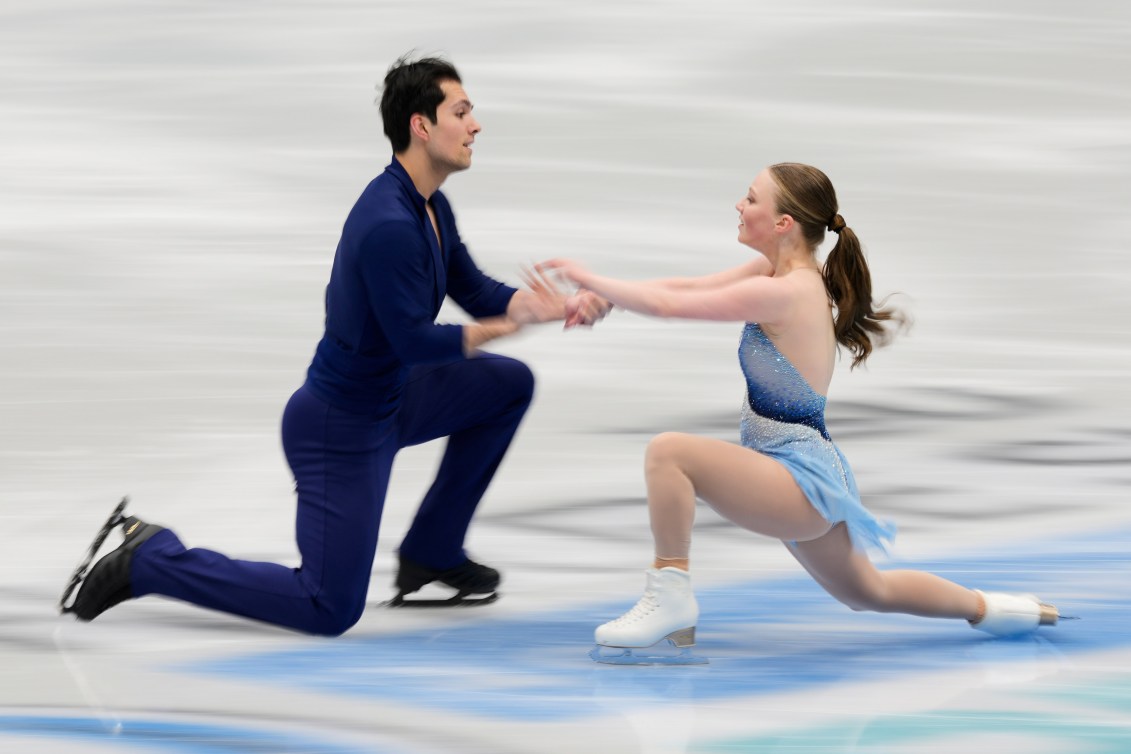
Kemp and Elizarov got their first taste of senior international competition last season when they finished eighth at the ISU Four Continents Championships in late January before becoming junior world champions.
“Being on the ice with those senior teams was eye-opening and that competition we weren’t really stressed,” said Elizarov. “It was just a good opportunity for us, so we just took in all the practices and I think it was really helpful.”
“Being able to witness all of that as we’re stepping into senior was really good,” added Kemp. “Like, okay, this is where we want to get to.”
A goal for this quadrennial is to get a consistent quadruple throw. It’s something they began working on before having to switch their focus to preparing this season’s programs.That process has included learning all new lifts as required in the updated senior-level rules (keep reading for more on that).
Desrochers and Thrasher are also eager to show that they are “not just some junior team that’s moved up to senior.”
As Desrochers put it, they want to “be able to fit in.”
For them, the biggest “shock” in becoming seniors was related to the timing of the season.
Junior international competitions are much sooner on the calendar, so it was “weird” to not be fully comfortable in their new Bridgerton-themed free program in July as they had grown used to.
While they’ve also had to learn all new lifts, they took comfort in the fact that every pairs team, no matter their experience, is dealing with some rule changes being implemented this season.
New Season, New Rules
As often happens at the start of a new Olympic cycle, the International Skating Union has introduced some major changes across all four disciplines when it comes to the technical composition of programs.
In ice dance, the most talked about aspect is the return of a compulsory pattern to the rhythm dance. For senior competitors this season it’s the Golden Waltz. Widely acknowledged as one of the most difficult compulsory dances, it’s essentially new to everyone, having not been featured in international competition in the last 15 years.
“We were happy about [the pattern dance] coming back. I think it’s a good tool to learn new skills in figure skating,” Lauriault said. “It’s a challenge. The Golden Waltz is a hard dance and it’s making us learn new things.”
“I’m super grateful that the ISU decided to implement this because it’s very hard and it exposes a lot,” Baker said earlier in the summer, noting that fans and judges will have to adjust to it not being the exact version of the Golden Waltz that Tessa Virtue and Scott Moir are well-remembered for performing at the 2010 World Championships when it was a standalone compulsory program.
“You’re going to see a lot of interpretations of the way it’s skated, the leans, the rise and falls, and I think that’s really cool. But I think that there will be a culture shock for the first couple months … until people realize that everyone has a different interpretation of what this pattern can be.”
In pairs free program, one of the lifts will now be a choreographic lift rather than a lift scored for level of difficulty. A choreographic spin has been added. Meanwhile, the option to do a three-jump combo has been removed, with only a two-jump combo permitted.
“It’s a good way to revamp it a little bit without overhauling the entire pairs discipline,” said Michaud.
“One of the things you’ve seen in the last couple years is a lot of similar elements that the top teams are doing,” added Pereira, noting that everyone was doing things they knew would consistently get level four difficulty. “So I think the choreo lift and the choreo spin are going to add some more variety back into pair skating and give fans an opportunity to be more involved in the performance and for everyone to have their own unique twist within their program.”
You can catch Canadian figure skaters competing at each stop of the ISU Figure Skating Grand Prix:
Grand Prix de France: October 23-25
Skate Canada International: October 30-November 1
Cup of China: November 6-8
Skate America: November 13-15
Finlandia Trophy: November 20-21
NHK Trophy: November 27-29
Grand Prix Final: December 10-13