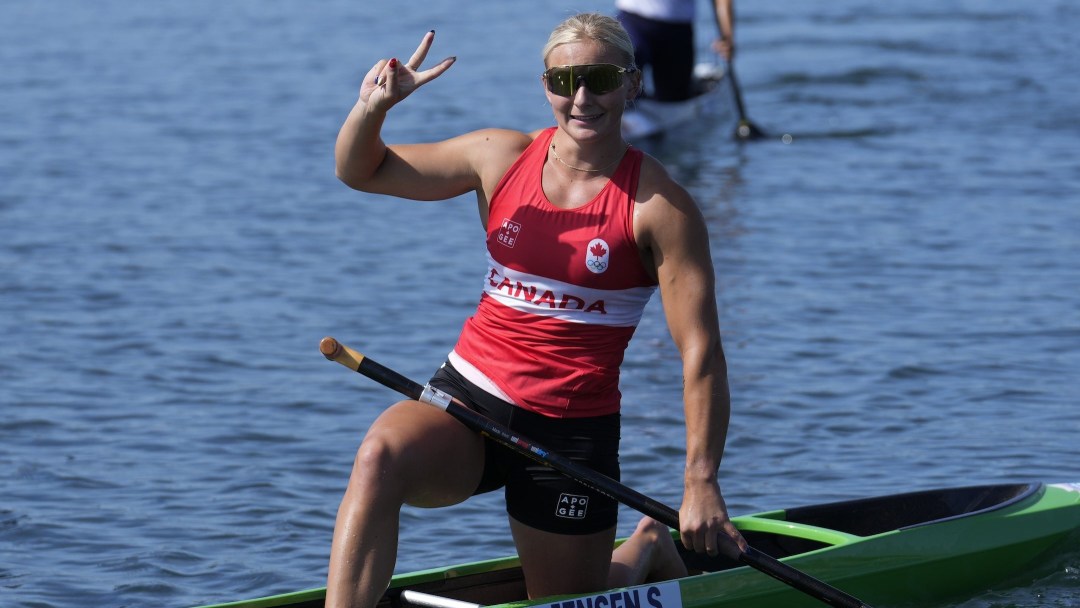
Sprint canoer Sophia Jensen able to chase Olympic dream thanks to Next Gen boost

It was a special visit to her elementary school that set sprint canoer Sophia Jensen down the path to becoming an Olympian.
She was 10 years old at the time, new to her school in Chelsea, Quebec. The Cascades Club, which runs programs on the Gatineau River, came by the school to do demonstrations and show the students some videos.
That’s when Jensen first fell in love with paddling. She quickly joined the Cascades Club and remains part of it to this day.
“I really wanted to make friends and be on the water,” says Jensen, now 25. “So, I thought it was the perfect opportunity to do both.”
She comes from an athletic bloodline, with cross-country skiing and biathlon being big sports in her family. Jensen was also a cross-country skier until that fateful visit from the Cascades Club ignited her passion for paddling.
“Once I started sprint canoeing and I got to go to a training camp in Florida, and it not being minus 30, I was pretty excited to continue in this sport,” she says.
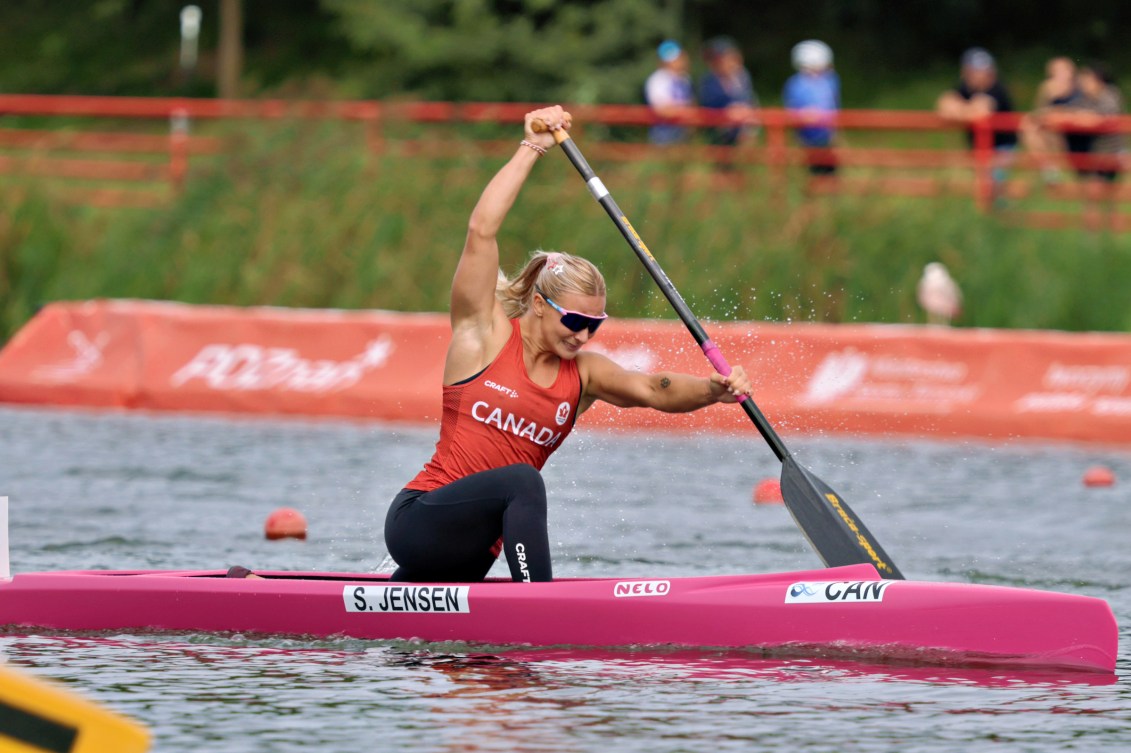
Success came quickly for Jensen, who became junior world champion in the C-1 200m and C-1 500m at age 16. But heading to sunnier climates for training during Canada’s harsh winters meant some big expenses that added up quickly.
“Flying, food, accommodations, transportation, [it] was definitely a cost weighing on my shoulders and my entire team’s shoulders,” says Jensen.
Fortunately for Jensen, much of that weight was lifted once she was identified as a Next Gen athlete by Canoe Kayak Canada in 2018, the year she had that breakout performance at the junior world championships. The National Sport Organization would now cover some of the costs related to such things as training, coaching, and mental health so those expenses didn’t all fall on Jensen.
Jensen says that support was essential as she worked to establish herself in the sport. She went on to win two more junior world titles in the C-1 200m and C-1 500m in 2019. In 2021 she became U23 world champion in the C-1 200m.
“There’s a lot of years in between where you started and when you get to be a senior athlete, and making a name for yourself is super difficult, especially in amateur sport,” she says.
“Without having the funding, I probably would have had to fall back onto having a job and losing time on the water and time with my training. I wouldn’t be where I am right now without it.”
Right now, she’s looking to follow in the impressive footsteps of teammates Katie Vincent and Laurence Vincent Lapointe. Women’s canoe events made their Olympic debut at Tokyo 2020 and Canadians have been on the C-1 200m podium at two straight Games: Vincent Lapointe took silver in Tokyo, Vincent won gold at Paris 2024.
“Watching my teammates Katie and Laurence race at Tokyo was the most inspiring moment for me,” says Jensen. “All this hard work, all of the time that they decided to stick with a sport that wasn’t in the Olympics yet, and to finally be there was just like, ‘yeah we can do anything.’”
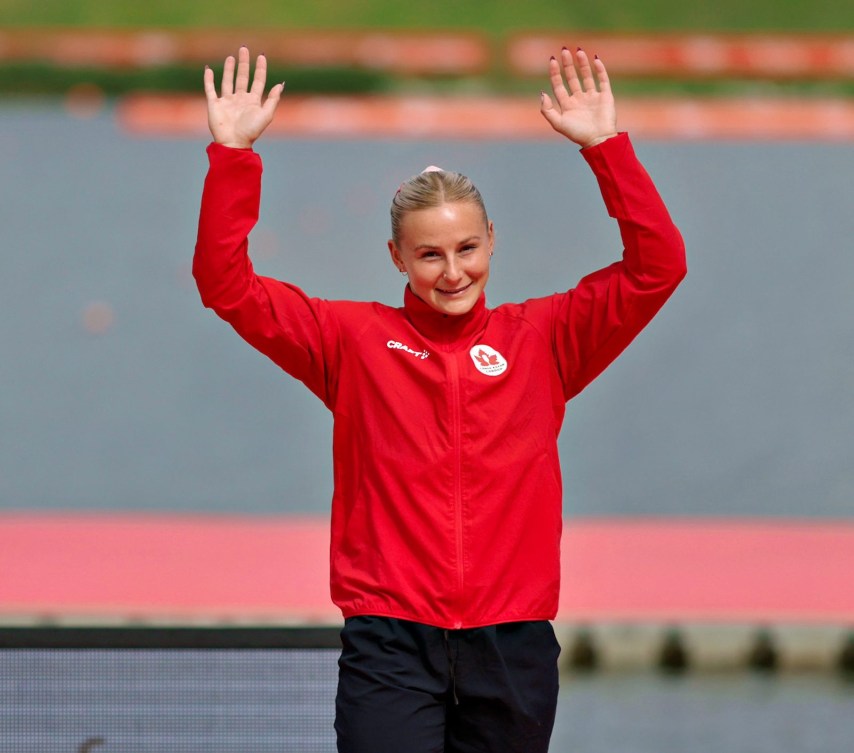
Jensen made her Olympic debut at Paris 2024 and finished sixth in the C-1 200 final. Since then, she’s added more accomplishments to her resumé, including winning silver in the C-1 200m at the 2026 Canoe Sprint World Championships. That capped a season that saw her win two C-1 200m silver medals on the World Cup circuit.
READ: Sophia Jensen wins C-1 200m silver at Canoe Sprint World Championships
Those results have helped boost her confidence along the road to the next Olympic Games. The mental health support she’s received has also played a big part in that personal evolution.
“With the extra support, I took my sports psychology super seriously, and I felt like I was on top of it for the first time,” says Jensen. “So much hard work went into it, and it was really exciting to see it pay off.
“Not only just the results, but the feeling. I finished each race feeling incredibly strong and brave and confident, which felt like a new feeling for me.”
And while she knows the margins are always incredibly slim in the “super quick” 200-metre race, she has high hopes heading into the LA28 Olympic Games.
“Every race is a new race, and I just have to keep preparing and keep perfecting,” she says. “Hopefully LA will be perfect.”
In October 2026, the Government of Canada, the Canadian Olympic Committee and the Canadian Paralympic Committee, alongside the Canadian Olympic Foundation and the Paralympic Foundation of Canada announced that annual funding for the long-standing and impactful Next Gen program will increase starting this year.
The Government of Canada will double its investment from $5 million annually to $10 million. This additional funding is contingent on matching private contributions dollar-for-dollar that will double the program’s impact, creating unprecedented opportunities to reach more athletes at a critical stage in their development. The Next Gen program now represents a total public-private investment of over $20 million annually to support the future of Canadian sport.
Since the Next Gen program’s inception in 2017, it has supported 4358 Team Canada athletes on their Olympic journeys, with 401 Next Gen athletes competing at an Olympic Games.
Learn more about the Next Gen program and how you can donate to the Canadian Olympic Foundation to support Team Canada athletes.