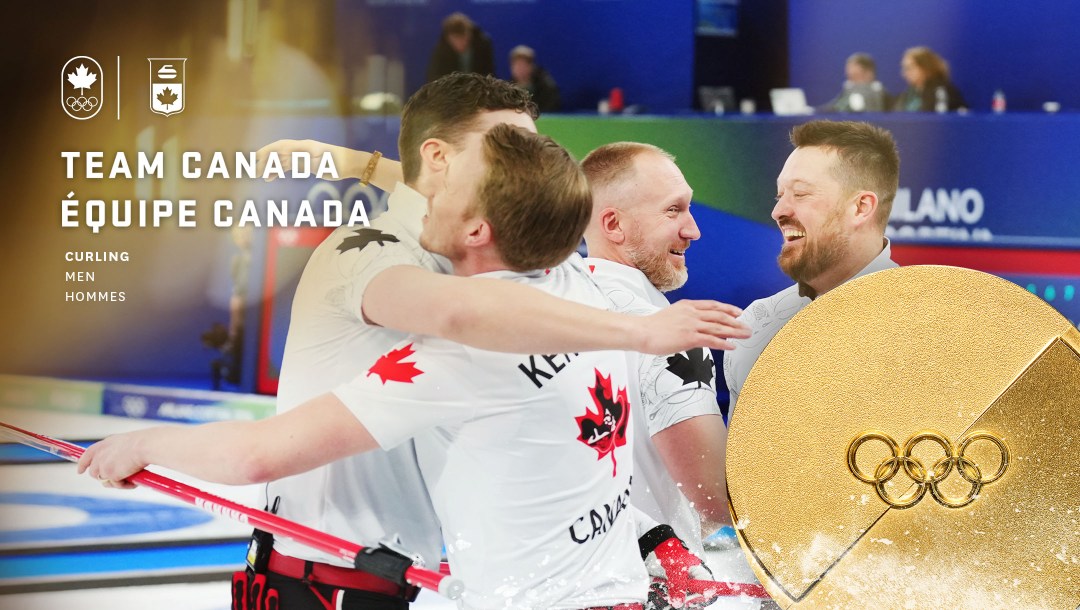
Gold for Team Jacobs in men’s curling at Milano Cortina 2026

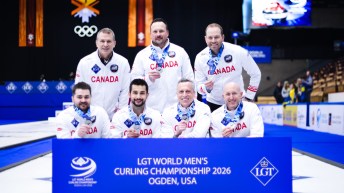
Brad Jacobs and Team Canada have won gold in men’s curling at the Milano Cortina 2026 Olympic Games.
Jacobs, third Marc Kennedy, second Brett Gallant and lead Ben Hebert scored three in the ninth end to beat Bruce Mouat and Great Britain 9-6 Saturday afternoon at the Cortina Olympic Stadium.
For Jacobs, Kennedy and Hebert it is their second Olympic gold. Kennedy and Hebert won in 2010 with Kevin Martin and Jacobs skipped his team to victory in 2014, the last time Canada had won Olympic gold. Jacobs is the first men’s skip to win two Olympic golds and Kennedy, with three medals—two gold and one bronze—is Canada’s most decorated Olympic curler.
For Gallant it is his first gold medal after winning bronze in 2022 with Brad Gushue.
The two teams won their semifinals Saturday: Jacobs outdueling Magnus Ramsfjell of Norway 9-5 and Mouat beating undefeated Yannick Schwaller of Switzerland 8-5.
The Jacobs foursome, the oldest team in the tournament, finished 7-2 in the round robin and that included a 9-5 win over Mouat who went into the gold-medal game still holding a 13-3 career record against Jacobs.
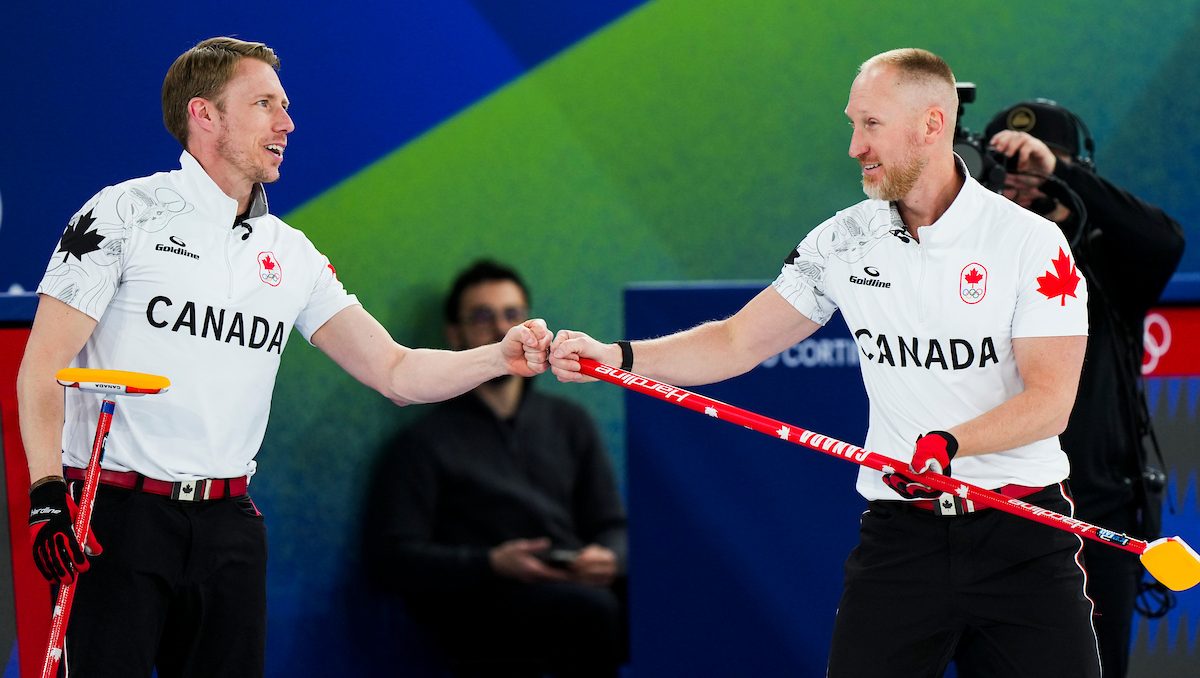
Starting with hammer, Canada went on the offensive immediately, putting Hebert’s first stone into the house and the first end turned into one of precision draws and taps. With an enthusiastic and noisy crowd in the Cortina Olympic Stadium cheering every good shot, Mouat forced Jacobs to draw against three to take a single they didn’t want.
Canada’s efficiency rate – scoring more than a single point with last rock – throughout the tournament was only 38 percent, compared with 61 percent for Great Britain.
Mouat and crew showed why that percentage is higher than Canada’s, taking advantage of three half shots by Gallant, Kennedy and Jacobs to score two on a last-rock draw in the second.
Canada was in some trouble in the third until Kennedy’s pick and roll flipped the end and Jacobs ultimately had a hit-and-stick for the deuce. Great Britain was forced into a single in the fourth and Canada took one in the fifth on a uncharacteristic miss by Jacobs. Trying to blank the fifth to get hammer in the even ends, Jacobs nose hit a tight double take-out.
The back-and-forth battle continued into the sixth when Great Britain gained a little upperhand with two in the sixth. Mouat made a last-rock wide double takeout to score the deuce for a 5-4 edge.
Canada was forced into another single in the seventh after a run back double by Kennedy left one British stone biting the 12 foot. That allowed Mouat to draw behind cover, forcing Jacobs into a run back. When his shooter rolled exposed on the outside, Mouat calmed skimmed a guard, made the hit and stick and forced Jacobs to draw for another single to tie the game 5-5.
Knowing the statistics show Canada’s chances of winning when they’re one down without hammer in the ninth are less than 40 percent, Great Britain was content to score one in the eight to regain the one-point lead. After Kennedy and Britain’s third Grant Hardie exchanged guards and take-outs, Mouat got his single on a straight forward hit-and-stick.
Four consecutive missed doubles by Great Britain set Canada up to score a game-changing three in the ninth end. Mouat tried to freeze to Canada’s shot rock but came up inches short. That gave Jacobs the chance to chip it out for four. His shooter rolled out and Canada settled for three and an 8-6 lead going into the tenth.
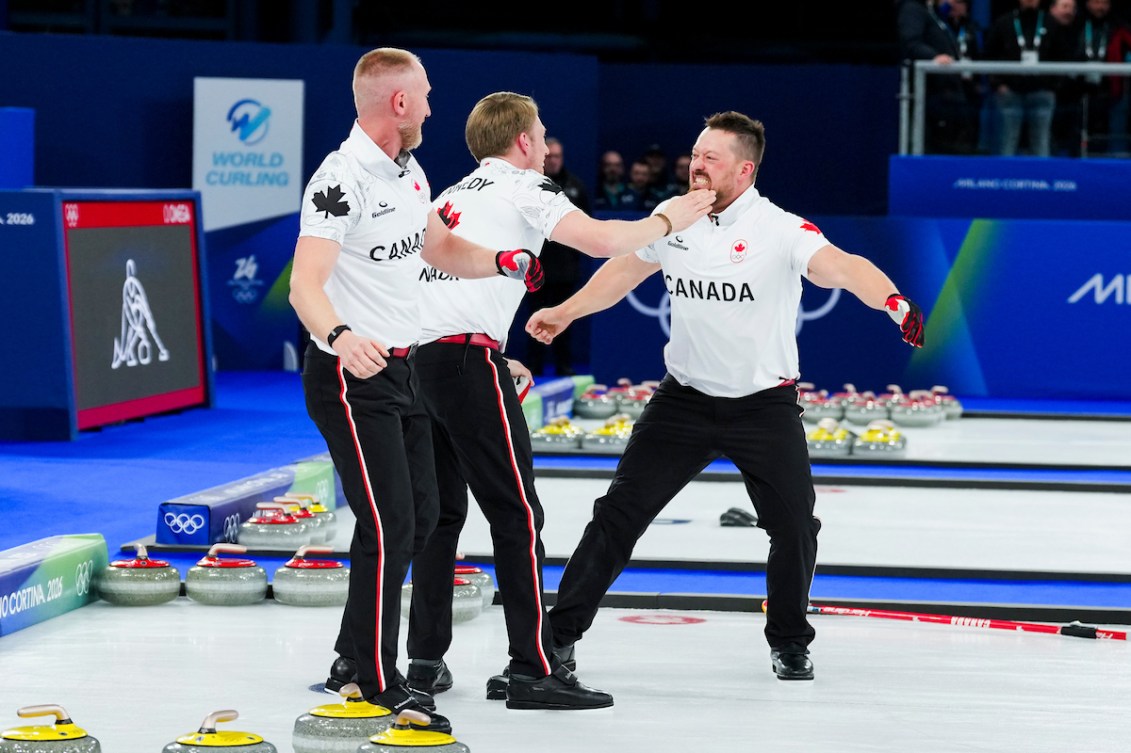
Canada put four stones into the top of the house and Great Britain couldn’t find a solution to the problem facing them. Wanting to eliminate the chance of Great Britain getting a multiple score, Jacobs made a tight double to eliminate two of Mouat’s stones in the house and followed with another double. That left only one British stone in the house and Canada sitting two, nearly frozen together. Mouat’s attempt to get the two failed and Canada had its gold medal.