
5 takeaways from Canada’s inspirational run at the 2026 FIFA World Cup

When Canada was awarded co-hosting duties for the 2026 FIFA World Cup, many dreamed that it would represent a transformative moment for soccer in this country.
That dream, it can now be said, has come true.
With an inspirational run to the Round of 16, the men’s national soccer team has fundamentally altered its place in the Canadian sporting consciousness.
Now that Canada’s on-field journey at the World Cup is complete, let’s look at five big takeaways from this tournament.
We’re in the deep end now
It would have been impressive enough if a full-strength Canada side had made it to the World Cup Round of 16.
But this was not a full-strength Canada side.
Dynamic winger Marcelo Flores was ruled out with a knee injury just two weeks before the tournament began. Midfield linchpin Ismaël Koné suffered a broken leg in Canada’s second group stage match. Defensive standout Moïse Bombito wasn’t healthy enough to start in the entire group stage.
Then, of course, there’s captain Alphonso Davies, still recovering from a hamstring injury. The 25-year-old was only healthy enough to play 15 minutes in Canada’s five games.
And yet, this team put together a credible run where, at moments, it looked like the World Cup quarterfinals were within reach.
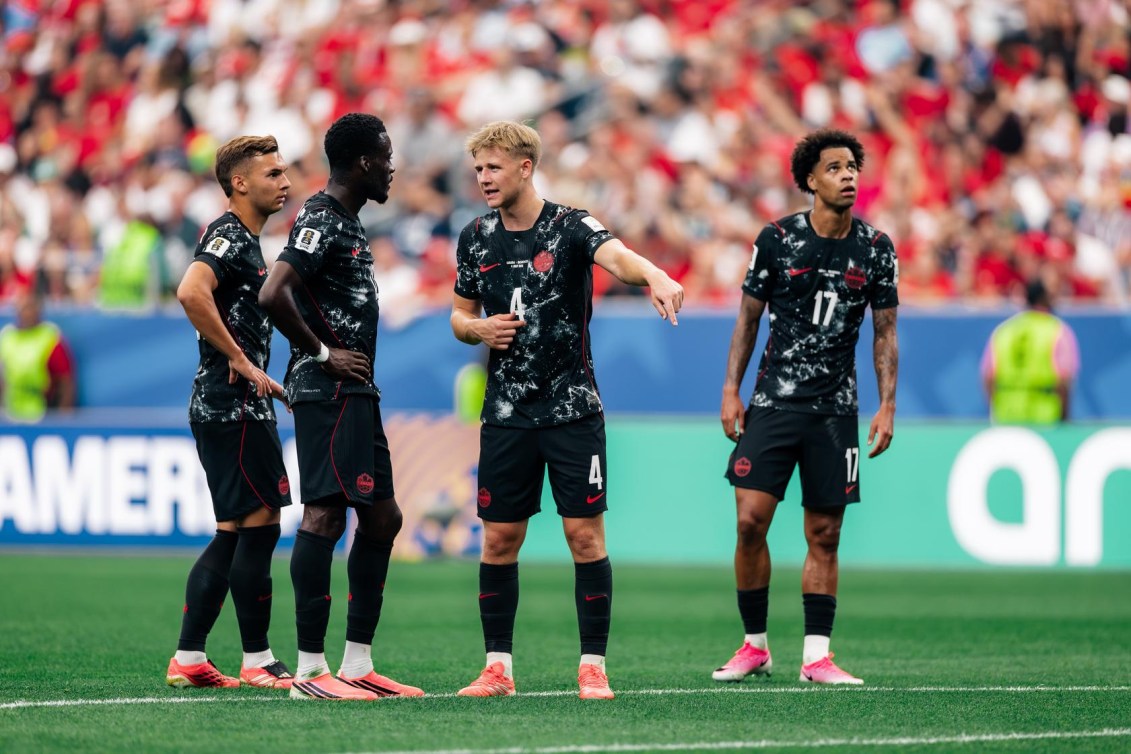
It’s a sign of the team’s development and depth that younger players like Luc de Fougerolles (20), Nathan Saliba (22), Niko Sigur (22) and Ali Ahmed (25) could be counted on for big minutes in big games.
It’s not one-and-done
FIFA World Cup host nations often get a boost from the energy of playing at home (see South Korea in 2002 as a prime example).
But that’s no guarantee; sometimes, the team is over-matched and has no business at the World Cup.
Based on their play, Canada has definitely earned a place on the world stage. Even if they didn’t have to qualify in 2026, they certainly could have. And that holds true for the next World Cup in four years’ time.
Consider the players named above, plus others such as Daniel Jebbison (22) and Ralph Priso (23) who just missed out on the World Cup squad. Then consider that plenty of Canada’s core players from this tournament will still be in and around their prime in 2030.
The takeaway is that this success isn’t a one-off. Going forward, this team’s bare minimum expectation will be qualifying for the World Cup, which is a massive divergence from the three decades prior.
The goal-scoring gloom is gone
It wasn’t that long ago that Canada went an entire calendar year without scoring a single goal (if you followed the team through that dark time, congratulations on persevering until today).
Now here we are: a FIFA World Cup where Canada scored nine times in five games, with goals from five different players. Call it six, if you include the own-goal that Jacob Shaffelburg forced against Qatar.
Sure, it’s said that they don’t ask how, they ask how many. But the how in this case matters too, because Canada scored some beauties.
READ: Stephen Eustaquio & Diana Matheson: Stunning similarities of two great Canadian goals
Cyle Larin’s turn-and-fire against Bosnia & Herzegovina. Jonathan David’s volleyed blast against Qatar. Promise David’s flying flick — with an absurd assist from Saliba — against Switzerland. Stephen Eustáquio’s epic daisy cutter against South Africa.
The men’s national team’s old reputation as being drab and uncreative has been forcefully put to bed.
If you build it, they will come
During its doldrums, the men’s national team had gone largely unnoticed by fans, media, and sponsors.
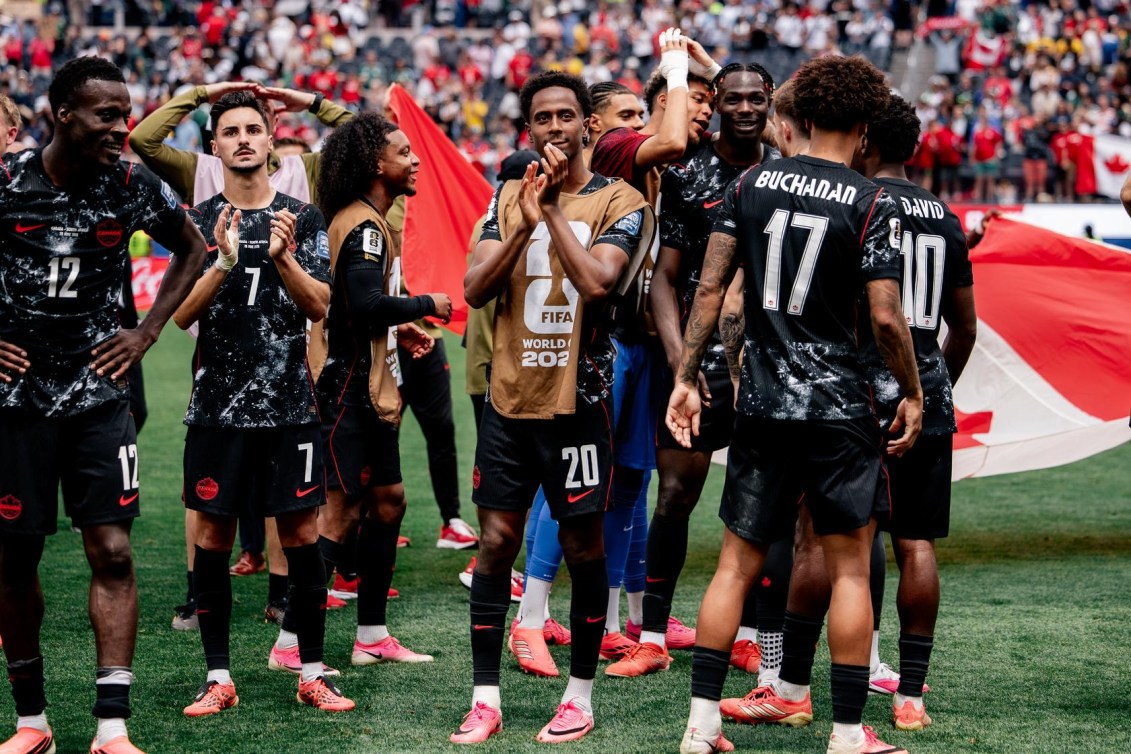
But for this tournament, watch parties across the country were packed. Television ratings were through the roof. Engagement with the team was at a level never seen before.
And perhaps most importantly has been the success of the Canada Soccer Foundation’s “Canada Rising” campaign, intended to drive investment in the future of soccer in this country. Just a day before Canada’s Round of 16 match, Canada Soccer announced that its goal of raising $25 million had been reached, one and a half years ahead of schedule.
READ: How accessibility and alignment turned Canada into a soccer power
Long-suffering fans of this national team hoped desperately, for years, that the wider Canadian public could be convinced to care. As it turns out, the old maxim is true: winning cures everything.
Now that the team has some positive momentum, look for years of paid-out dividends, both psychological and financial.
Canada is a soccer nation
The question that has surrounded the sport in this country for decades has been: “When will Canada be a soccer nation?”
Realistically, we have been for a while now. But as far as public perception goes, this FIFA World Cup is the tipping point between asking “when” and saying “now”.
Soccer is the most played sport among Canadian youth. We have domestic leagues and viable senior national teams on both the men’s and women’s sides. We’ve hosted or co-hosted basically every major FIFA tournament there is to host.
READ: This is our house: FIFA World Cup leaves lasting impact in Toronto
It seems the only impediment to declaring Canada a soccer nation is the idea that it’s an either-or proposition. That is, if we’re a soccer nation, then we somehow aren’t a hockey nation, or an Olympic nation.
But we don’t restrict our idea of Canada to a single thing when it comes to language or culture or geography. Why should that be the case with sport?
So, keep whatever ideas you had about Canada before this tournament. And now, add on the biggest lesson we’ve learned from the 2026 FIFA World Cup: that we do indeed live in a soccer — OK, fine, football — nation.