Perfect Harmony: How team spirit propelled Canada to the top of short track speed skating

Competing in an individual sport that also features team events, Canada’s short track speed skating team has discovered a winning formula that perhaps defies convention: collective excellence as the catalyst for individual success.
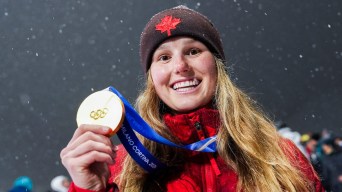
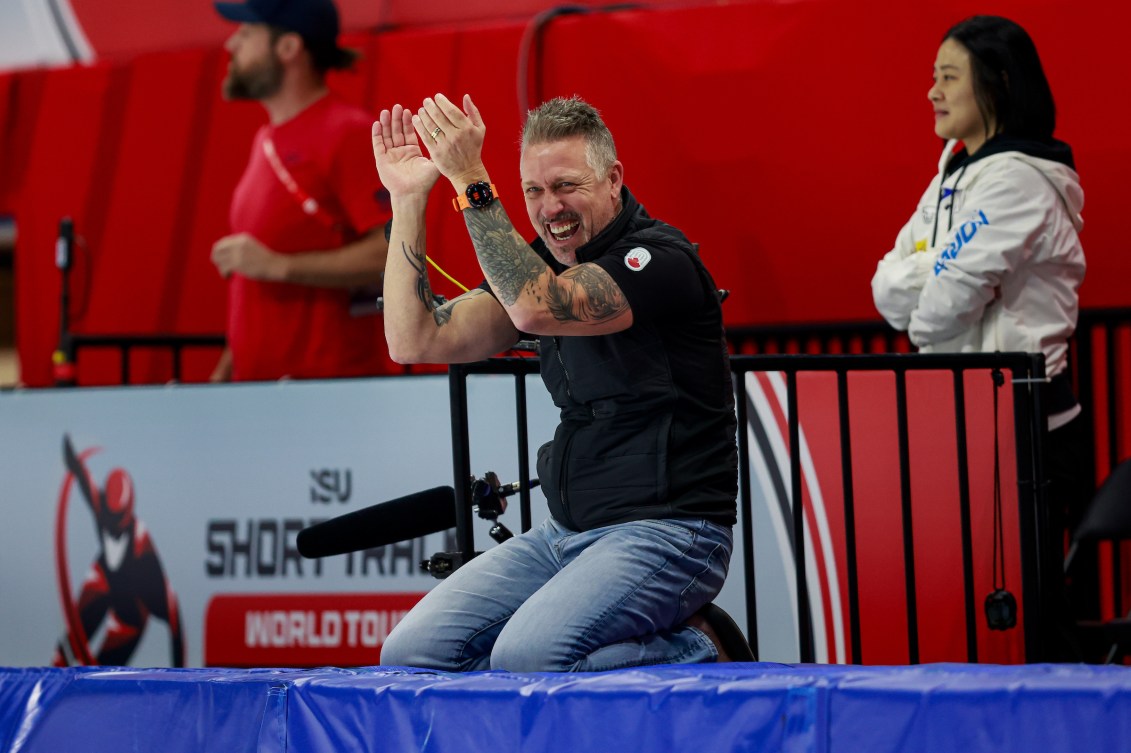
The proof is striking. In late November, at the final stop of the ISU Short Track World Tour in Dordrecht, Netherlands, Canada achieved a historic sweep of all available Crystal Globes: Courtney Sarault claimed the women’s overall title, William Dandjinou topped the men’s standings, and Canada won the team classification.
“If Crystal Globes had existed over the last 30 years, I’m not sure we would have seen this very often—men, women, and team,” said head coach Marc Gagnon. “What the Canadian team has just accomplished is extraordinary.”
To understand this success, one must first grasp the paradox at the heart of short track. It is a sport driven by individual ambition, yet personal progress is intrinsically tied to the quality of one’s environment.
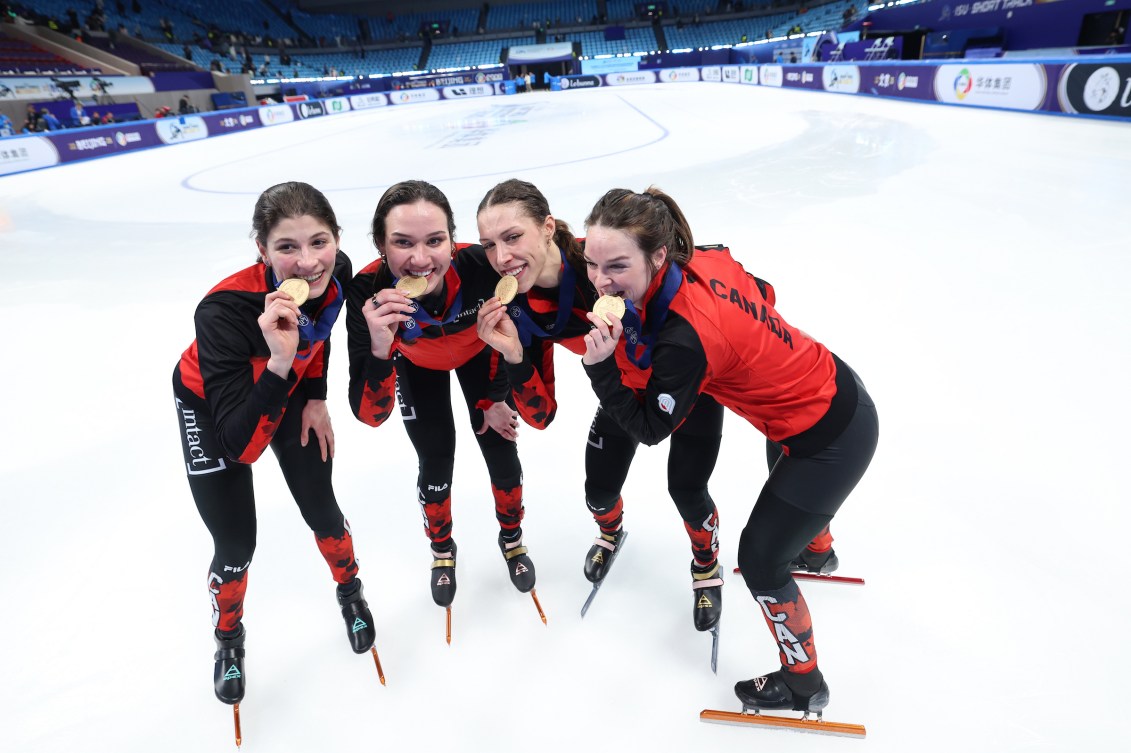
“I wouldn’t be half the athlete I [am] if every day I showed up and my work environment wasn’t as good as this one is,” Sarault said. “Every day, everyone pushes to the hardest they can and gives 110% every day. … That’s just the standard that we have.”
Dandjinou shares that view.
“It helps me try new things with strong skaters every day,” he said. “It’s a privilege, because most Olympic skaters in other countries don’t have the opportunity to train at such a high level, day in and day out.”
That training culture is now drawing international attention.
“We get requests from all over the world from people who want to train with us,” said Gagnon, who has led the Canadian short track program since 2024. “It’s not just because we’re the best team in the world right now. It’s because we train within a deep pool of skaters who understand that we’re all pushing each other upward.”
For Sarault, this breakthrough season represents the culmination of a long and difficult journey.
“The previous summer, I missed some [training] due to a concussion and some health issues,” explained the 25-year-old from Moncton, New Brunswick. “I finally had a full summer of really, really good, beneficial training, and I felt like I got way stronger.”
That physical transformation was matched by mental growth. Sarault speaks emotionally about the trust she developed with her coach.
“He trusted me a lot and built a program that I felt worked really good for me,” she said. “The trust that I had in him and the trust that he had in me gave me a lot of confidence and a lot of motivation to perform. It felt like we were both working in harmony to achieve my dream.”
Her mindset also explains her rise.
“I love working hard,” Sarault said. “I don’t see it as pain or difficult. I really love seeing how far my body can push, and how much I can test my limits. I think that’s what makes me so successful, the pain doesn’t make me back away.”
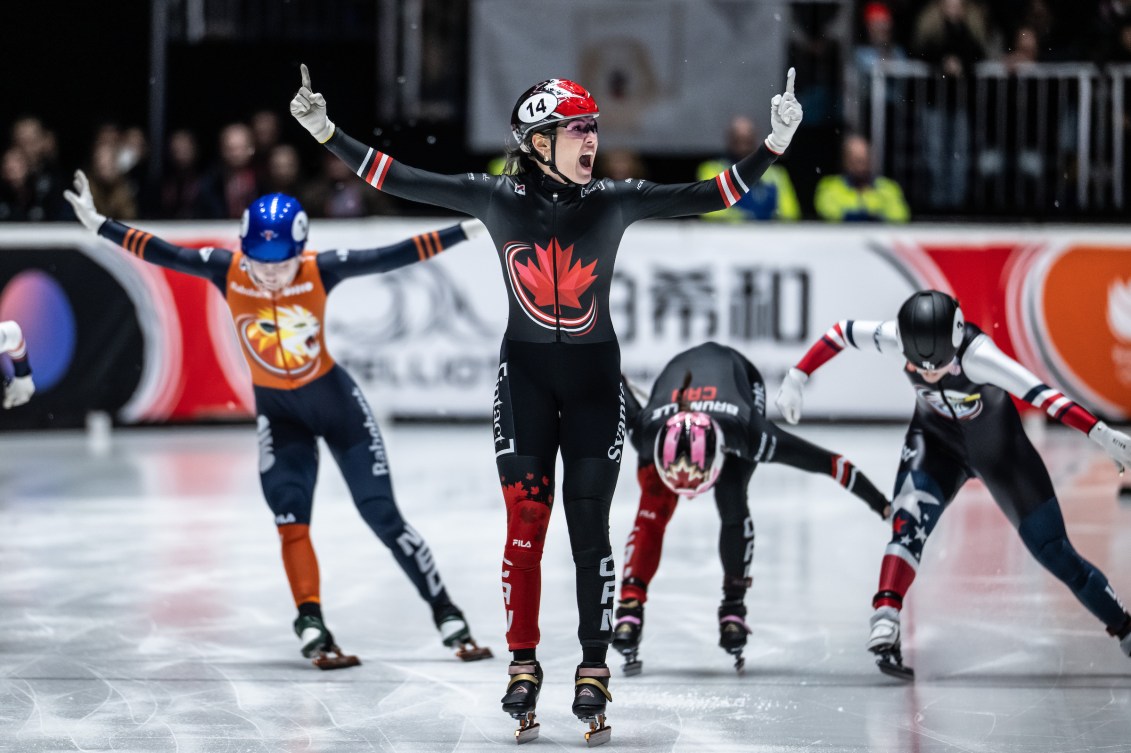
The newly crowned women’s Crystal Globe winner also shows maturity in how she reflects on success.
“Sometimes I achieve one thing and I set my mind on to the next challenge already,” said Sarault, who won gold in five events during the 2025–26 season. “With the last season not being as great, [now] I make sure that I’m proud of myself and acknowledge my achievements. It’s really special, and it’s something that will never be taken away from me. And I can say forever that, at one point in my career, I was number one in the world.”
On the men’s side, Dandjinou proved that last year’s overall title was no fluke. His recipe?
“Consistency,” said the 24-year-old, set to make his Olympic debut at Milano Cortina 2026. “I’ve developed a strong routine over the last two years. It was about trusting my abilities, trusting our training program, and staying focused on that routine.”
Four-time Olympic medallist Kim Boutin watches the dynamic with admiration.
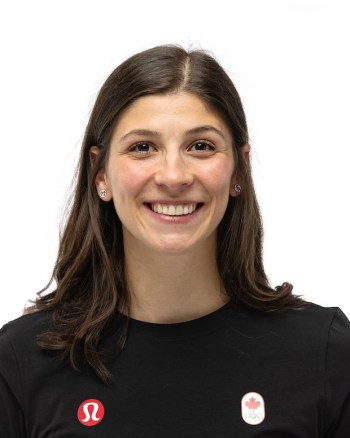
“It’s inspiring,” said Boutin, who has racked up 17 world championship medals in her career. “No matter which athlete is on the start line, we have medal potential. Internally, it creates competition, but it’s healthy competition—and there’s something really beautiful about that.”
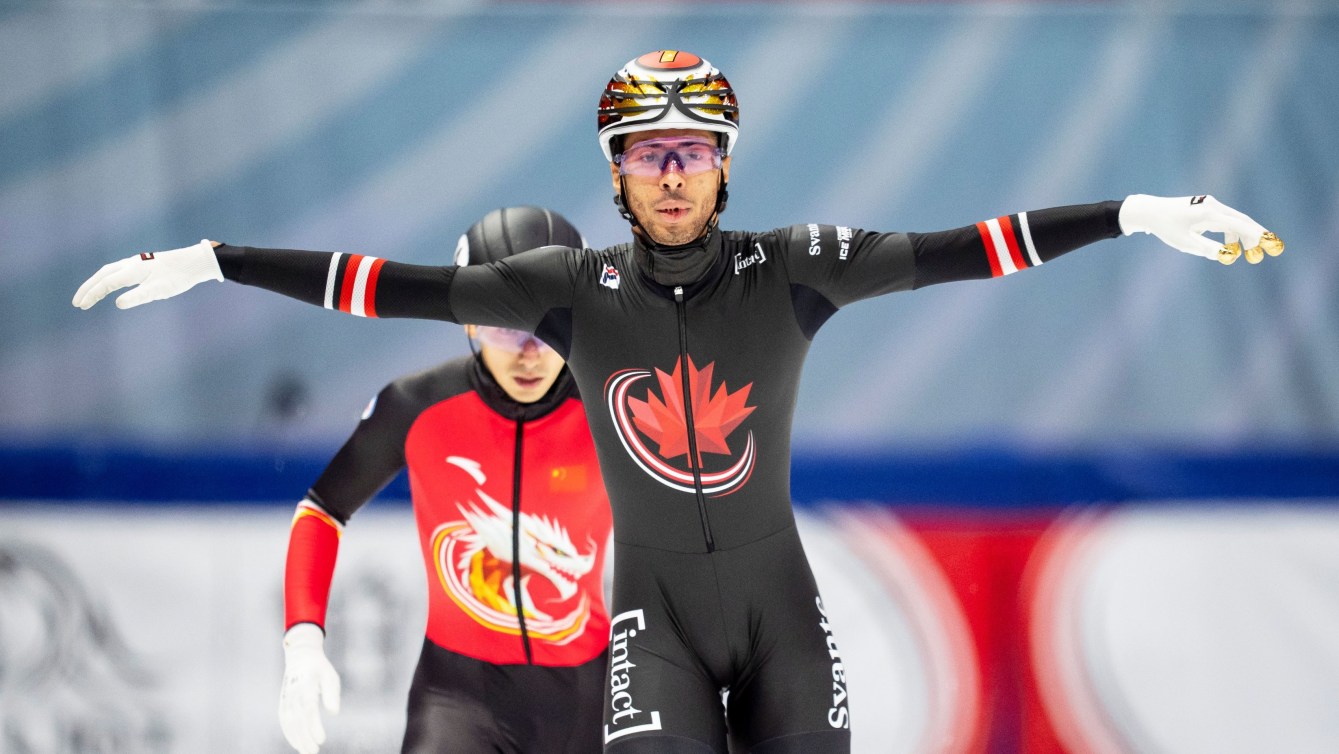
Behind the results lies Gagnon’s vision and deep understanding of the sport.
“Everything in short track is strategic,” said the five-time Olympic medallist. “Positioning in a race, conserving energy when you’re second or third in the pack—it’s like Formula 1 with the slingshot effect.”
What makes his approach unique is its personalization.
“It’s very individual,” Gagnon explained. “For William, being at the front isn’t as costly because he has the capacity to do it. For others, it’s smarter to conserve more energy.”
That’s where the team concept becomes essential.
“We have to develop that in training,” said the Chicoutimi native. “If there’s no one to practice with, if everyone is closed off and only focused on themselves, no one improves.”
For Gagnon, pride comes from daily commitment.
“I’m proud because every day, these athletes show up ready to give everything,” said the former skater, who won 29 world championship medals. “We’ve been recognized as the best team in the world for years, and that pressure is always there. The younger athletes can’t let up. If you do, someone else will take your place.”
As the team prepares for the Milano Cortina 2026 Olympic Winter Games, the Crystal Globes take on added meaning.
“William and Courtney really enjoyed the moment, but they can’t even pause to savour it—they have to keep training for the Games,” Gagnon acknowledged.
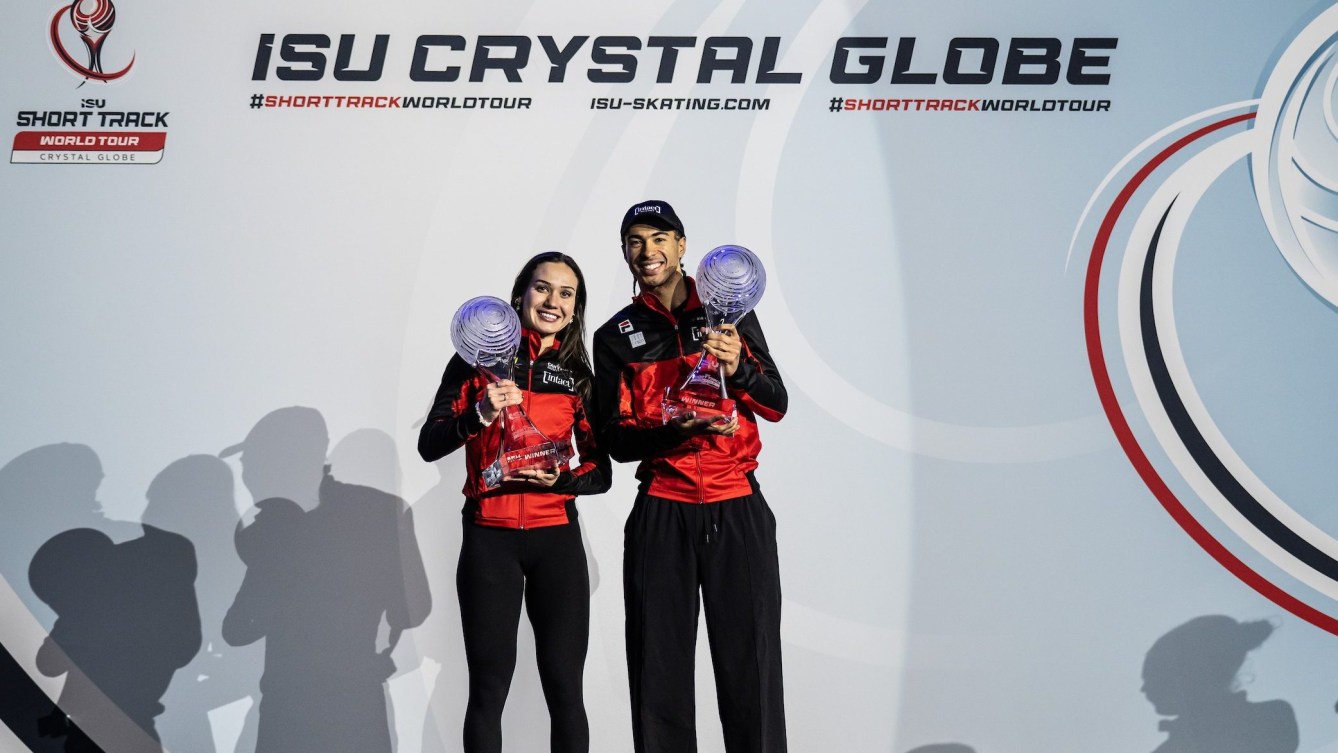
For Dandjinou, heading to his first Olympics as a two-time overall World Tour champion brings its own pressure.
“It adds pressure, but at the same time, it’s still status quo because I haven’t won anything at the Olympic level yet,” said the Sherbrooke native. The moment it will feel real? “Once I’m in the village, I think I’ll be like… wow. I might cry.”
Sarault feels the same.
“It hasn’t sunk in yet,” she admitted. “I think the biggest moment will when I get on the plane.”
Boutin, preparing for her third Olympic Games, offers a different perspective.
“I’m excited—I can’t wait,” said the 31-year-old. “It’s going to be fun having fans back in the stands.”
Gagnon is adamant: the individual Crystal Globes are collective victories.
“William and Courtney are who they are because the team is there,” he said. “It’s because of everyone around them, the people they train with, exchange ideas with. These are truly three team victories, even if two individuals won them.”
That mutual recognition—that understanding that individual excellence grows out of collective commitment—is the true secret behind Canada’s success. As the team prepares to face the world on the Olympic stage, it does so with a firm belief: together, they are greater than the sum of their parts.
The Crystal Globes shine in the display case, symbols of an extraordinary season. But for these athletes, they represent proof that when individual excellence and team spirit converge, something special happens.And the best may still be yet to come.