How ICON helps create cohesive experiences for Team Canada athletes and fans during Olympic Games

When Team Canada athletes arrive at the Olympic Village, they recognize almost immediately that it is their home away from home.
Plain, generic buildings and rooms have been transformed into a celebration of Canadian pride through the magic of pageantry and branding.
But of course, it’s not magic. It’s the result of great collaboration between several Canadian Olympic Committee teams and the organization’s Official Digital and Printing Production Partner since 2023, ICON Digital Productions Inc.
From small maple leaf stickers that marked the Canadian floors on elevator directories to large banners strung across outdoor balconies to the posters and backdrops that livened up indoor spaces, ICON printed it all.
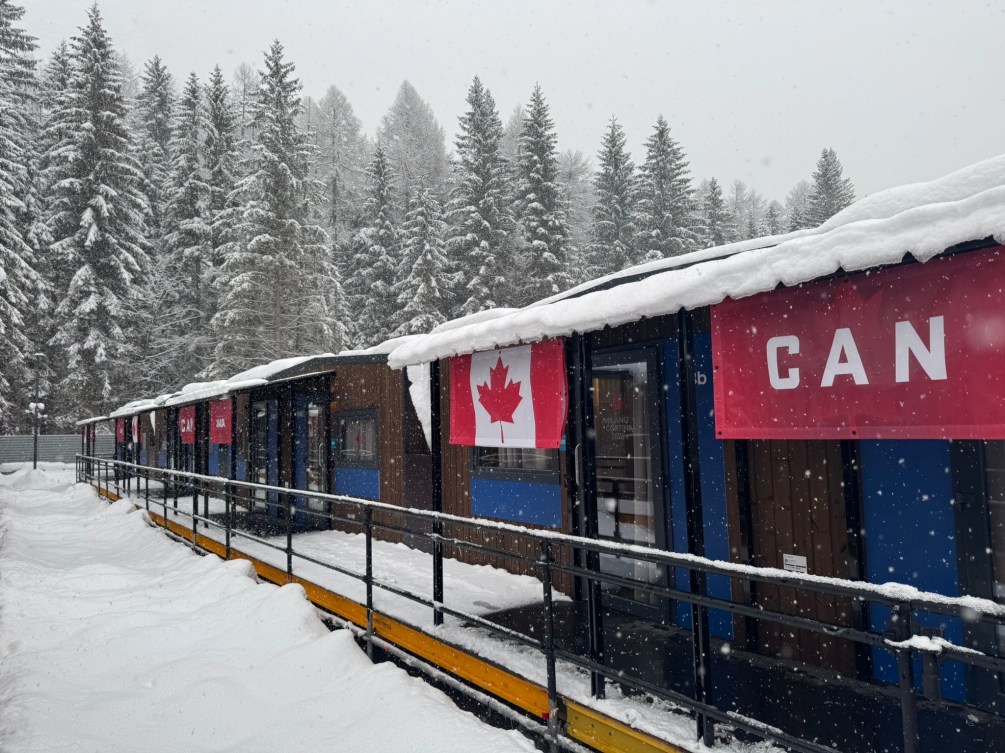
Banners decorate Team Canada buildings at the Cortina Olympic Village during the Milano Cortina 2026 Olympic Winter Games (Canadian Olympic Committee photo) 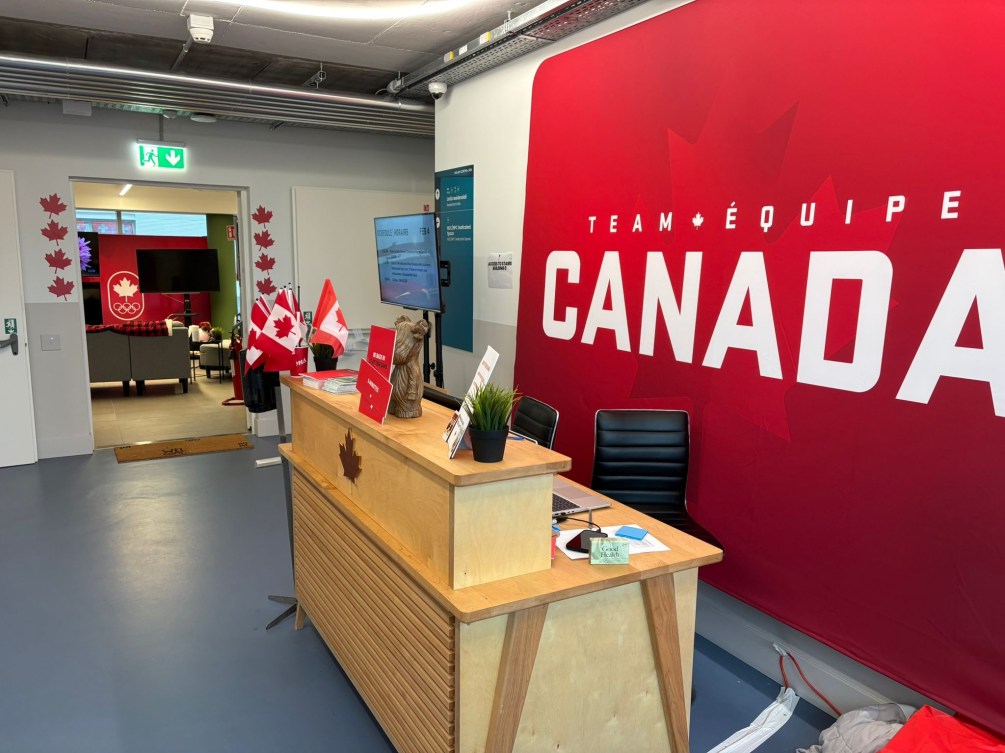
Team Canada reception desk at the Milan Olympic Village during the Milano Cortina 2026 Olympic Winter Games (Canadian Olympic Committee photo) 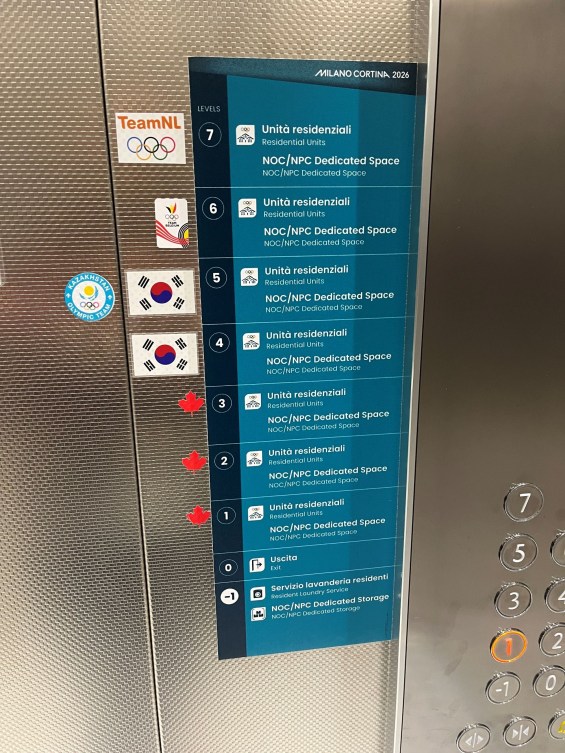
Maple leaf stickers indicate Team Canada floors at the Milan Olympic Village during the Milano Cortina 2026 Olympic Winter Games (Canadian Olympic Committee photo) 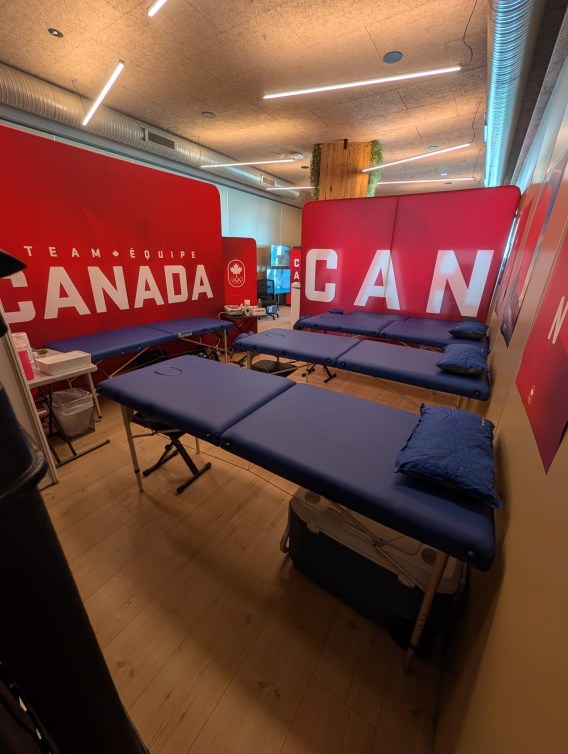
A medical room inside Team Canada’s quarters at the Milan Olympic Village during the Milano Cortina 2026 Olympic Winter Games (Canadian Olympic Committee photo) 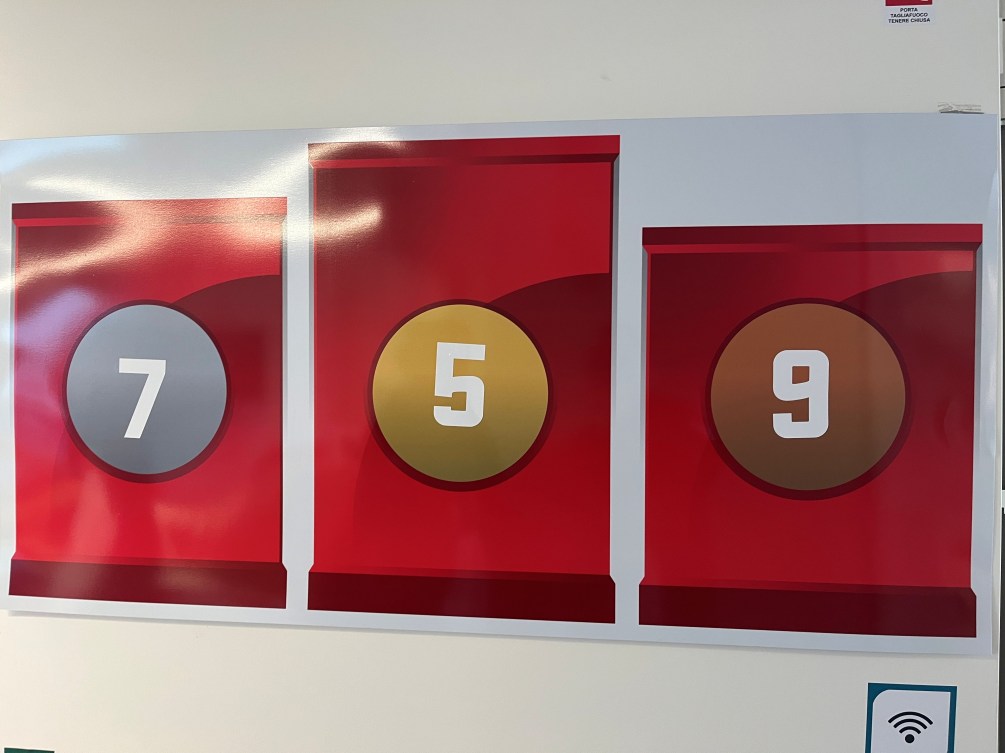
Updateable Team Canada medal count in the Milan Olympic Village during the Milano Cortina 2026 Olympic Winter Games (Canadian Olympic Committee photo)
“What’s great about working with ICON is we have this vision and we’re like ‘okay we think we want to do this’ and then they can help direct us,” said Véronique Labrosse, who was Team Canada’s Village Lead in Milan during the recent 2026 Olympic Winter Games.
But it wasn’t just the Olympic Village (make that Villages plural) for which ICON had a hand in making a location in Italy feel very Canadian. There was also the Canada Olympic House Celebration Series.
Milano Cortina 2026 had a uniquely large footprint, with athletes living in one of six clusters—Milan, Livigno, Cortina, Predazzo, Bormio, Anterselva—across northern Italy. The widespread nature of the Games meant there wouldn’t be one Canada Olympic House location, as is typical, but rather a series of Canada Olympic House Celebration Series events that would take place in Cortina, Livigno, and Milan.
Multiple short-term Canada Olympic House sites meant that it was crucial for ICON to be engaged early on, a big learning for their second Olympic Games as a Team Canada partner.
“Visiting the sites and venues in person allowed us to fully understand each space, visualize opportunities, and gather critical details,” said Neil Faulkner, Account Executive at ICON. “By being on the ground in Italy, we were able to assess site conditions firsthand and recommend appropriate substrates and solutions based on environmental, logistical, and installation considerations.
“Getting involved from the very beginning of the planning stage enabled us to offer strategic expertise, identify areas of opportunity, and ensure the execution was both efficient and impactful.”
But those weren’t the only considerations.
“Something we’ve been trying to play around with for the last couple Games is how do we maximize impact but also […] how do we be sustainable with the things we’re putting in?” said Yena Kim, a Project Manager with the COC’s Games team.
To that end, there is a desire that the materials used in the printing of pageantry elements be of high quality and therefore able to be used beyond just one Games. One example of that is the balcony banners initially produced for the Paris 2024 Olympic Village were repurposed for some of the Milano Cortina 2026 Olympic Villages.
“That’s something we really appreciate, especially when sometimes we don’t exactly know how things can be installed or where we’re allowed to go. So to have that flexibility is extremely important,” added Kim.
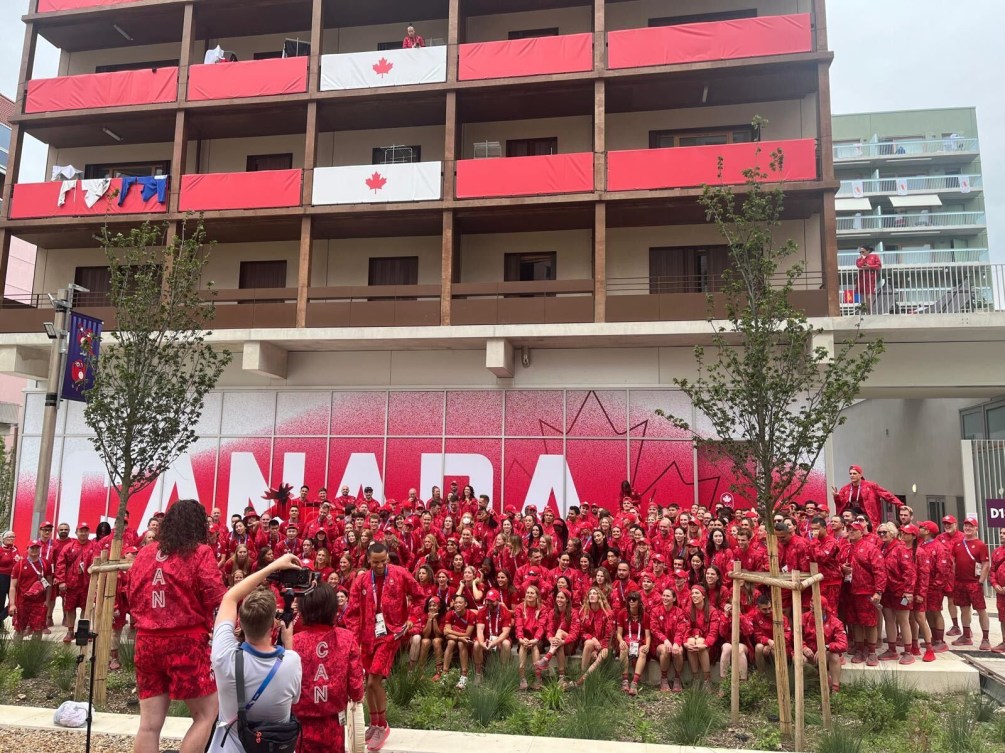
Banners decorate Team Canada balconies at the Olympic Village during the Paris 2024 Olympic Games (Canadian Olympic Committee photo) 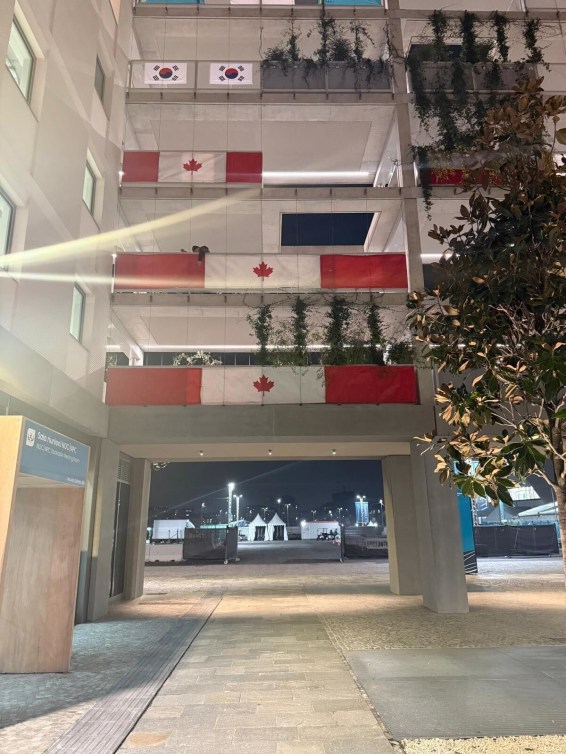
Those same banners were repurposed for the Team Canada balconies in the Milan Olympic Village during the Milano Cortina 2026 Olympic Winter Games (Canadian Olympic Committee photo)
Sustainability is also a major focus for ICON, which has operated as a zero-waste-to-landfill facility since 2024. That means that “over 90 per cent of the waste generated across our projects is diverted from landfill through recycling, reuse, and energy recovery streams,” said Roshna Jesuthasan, HR coordinator at ICON, noting that ICON diverted approximately 93.6 metric tons of waste from landfills in 2025. “This approach not only reduces environmental impact but also supports more circular production practices across large-scale programs like the Olympic Games.”
Paris 2024 marked the first Olympic Games for which Team Canada was partnered with ICON, who delivered hundreds of branded elements such as interior and exterior vinyl graphics, window graphics, floor graphics, fabric backdrops, custom locker elements, and interactive display installations for the Olympic Village, a Canada Olympic House that was open to fans for the duration of the Games, and multiple Team Canada FanFest weekend events.
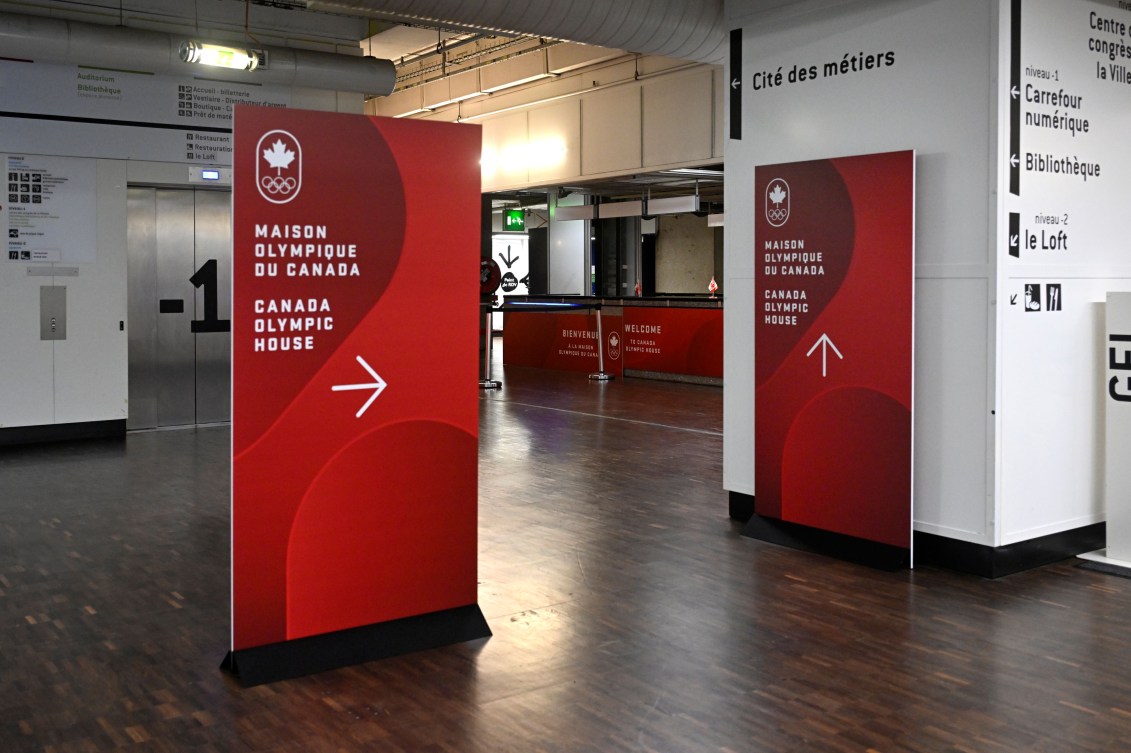
Signage to direct fans to Canada Olympic House at the Paris 2024 Olympic Games (Bernard Brault/COC) 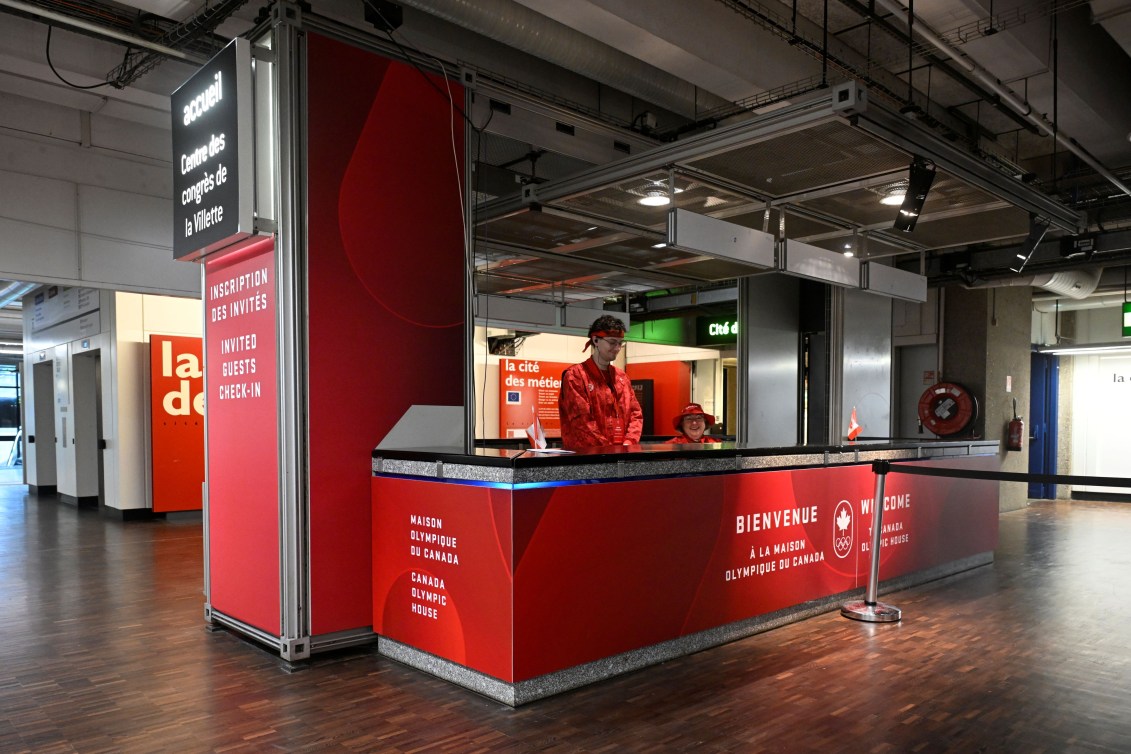
Welcome desk at Canada Olympic House during the Paris 2024 Olympic Games (Bernard Brault/COC) 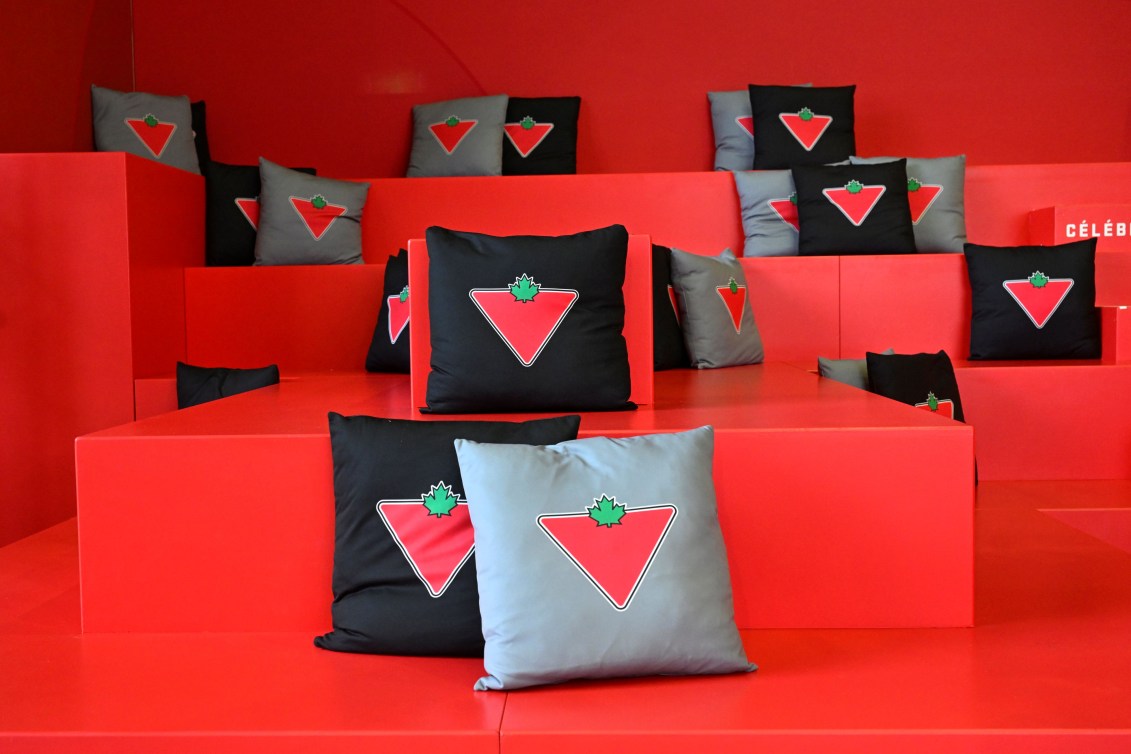
Pillows in the Canadian Tire Celebration Arena at Canada Olympic House during the Paris 2024 Olympic Games (Bernard Brault/COC)
For Milano Cortina 2026, the first meeting between the COC and ICON about branded elements took place about 10 months before the Games. The COC’s own design team was responsible for the inspiration and concepts. Once designs were finalized, they were sent to ICON for production that had to be completed by September to meet the deadline for shipping everything from Montreal to Italy via sea freight.
For the Italy-based activations, ICON produced 150 balcony banners, 450 posters (across 10 versions), 18 QuickStand display systems with accompanying prints, nine step-and-repeat backdrops, and three custom medal walls that could be updated to reflect Team Canada’s performance.
As one can imagine, the logistics for shipping that many elements to so many locations could be a nightmare. ICON made it a dream for COC staff.
“We have such a good relationship with them that they were open and understanding that we had six different Villages that we had to split up for. They were able to label every single piece. It was very well organized,” said Labrosse.
Each package sent by ICON had a detailed production docket that included a unique identifier, quantity, item description, and destination. Shipments were organized by location, with each destination receiving its own dedicated skid. This allowed on-site teams to quickly allocate materials without needing to re-sort.
But there were also four Team Canada FanFest events in Toronto, Calgary, Vancouver, and Montreal which required 74 transit shelter prints, 10,000 postcards, and extensive event signage that included wayfinding, stage graphics, pillar wraps, banners, and credentials.
While large-scale, multi-venue projects always come with logistical challenges, one moment that made the ICON team particularly proud was the installation for the Toronto FanFest event in Nathan Phillips Square in early February.
“The team was working in extreme conditions, with temperatures reaching -30°C and winds up to 80km/hr on the day of installation. Despite this, the team successfully completed the installation on schedule, ensuring the event was fully branded and ready for launch,” said Faulkner.
Whether an alpine skier in Cortina, a figure skater in Milan, a snowboarder’s family member in Livigno, or a fan in Vancouver, everyone could feel part of a cohesive and immersive brand experience across both domestic and international Olympic environments through the Team Canada assets created by ICON.