FIFA World Cup 2026: Your guide to soccer’s biggest party

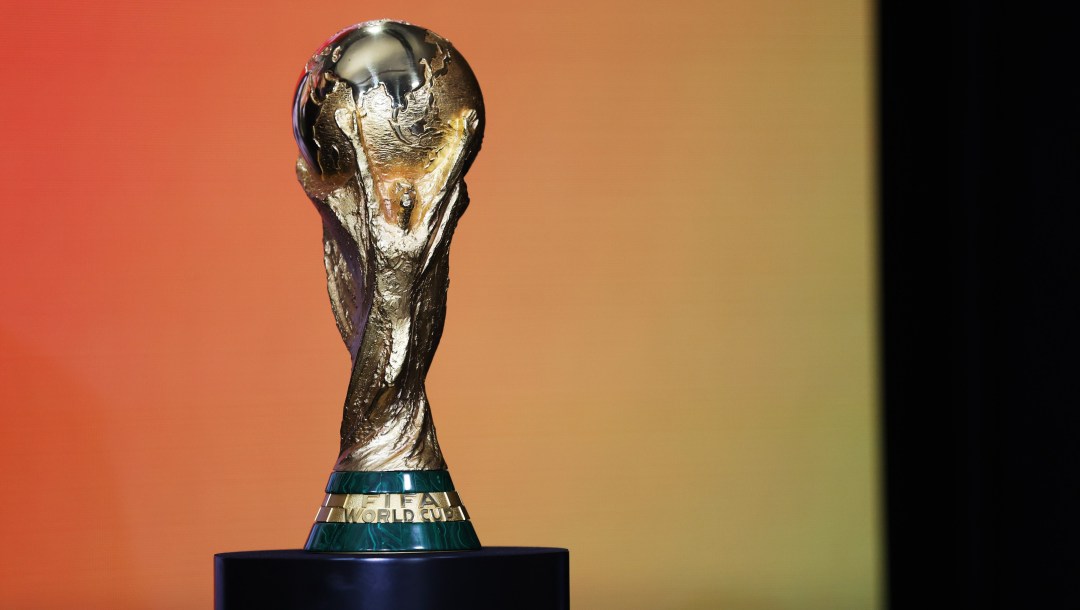
The 2026 FIFA World Cup is kicking off soon, right here on Canadian turf — are you ready?
This year’s edition runs from June 11 to July 19 and is being co-hosted by Canada, the United States and Mexico. A total of 104 matches will be played, including seven in Vancouver and six in Toronto.
How does it all work? What should fans look out for? And what might be expected of Team Canada?
Read on, and you’ll be ready for the party in no time.
What is the FIFA World Cup?
Held every four years, the FIFA World Cup crowns the global champion in international men’s soccer. This will be the 23rd edition of the tournament, the first one having been held in Uruguay in 1930.
Eight nations have won the World Cup, with Brazil holding top spot with five titles. Germany and Italy have each won four times, while Argentina has three wins. France has two wins in recent memory (1998, 2018), while Uruguay’s pair are more distant (1930, 1950).
Spain (2010) and England (1966) have each won the World Cup once.
Argentina is the reigning champion. Their win over France in the 2022 World Cup final is considered to be among the greatest matches ever played.

What’s new for the 2026 FIFA World Cup?
This is the first FIFA World Cup to be co-hosted by three nations and the first to feature 48 teams. The previous seven editions of the tournament featured fields of 32 teams.
This World Cup will also feature a few rule changes meant to speed up play and widen the scope of what can be checked by video review.
How will a 48-team World Cup tournament work?
There are 12 groups, labelled A through L, with four teams in each group. Canada is in Group B along with Bosnia & Herzegovina, Qatar and Switzerland.
Each team plays three matches in the First Stage, one against each team in their group. The teams are then ranked based on points (three for a win, one for a draw), goal difference, goals scored, and other tiebreaking criteria, if needed.
The top two teams in each group automatically advance to the Elimination (aka “knockout”) Stage. The 12 third-place teams are then ranked using the same criteria noted above, with the top eight also advancing, for a total of 32 teams moving on.
The Round of 32 features knockout games that must have a winner. That means extra time and, if necessary, penalty shootouts. The winners of those matches head to the Round of 16, with hopes to continue winning and advance to the Quarterfinals and then the Semifinals.
The Final takes place on July 19 in East Rutherford, New Jersey.
When and where does Canada play?
Canada faces Bosnia & Herzegovina in Toronto on June 12 (3:00 p.m. ET / noon PT), then heads to Vancouver to face Qatar on June 18 (6:00 p.m. ET / 3:00 p.m PT) and Switzerland on June 24 (3:00 p.m. ET / noon PT).
If Canada were to advance to the Round of 32, well, then it’s all up in the air. That match could be on June 28, June 29, July 1 or July 2. It could take place in California, Massachusetts, or even back in Vancouver. It would all depend on where Canada finishes in Group B: as winner, runner-up, or a top-eight third-place team.
Who will be playing for Canada?
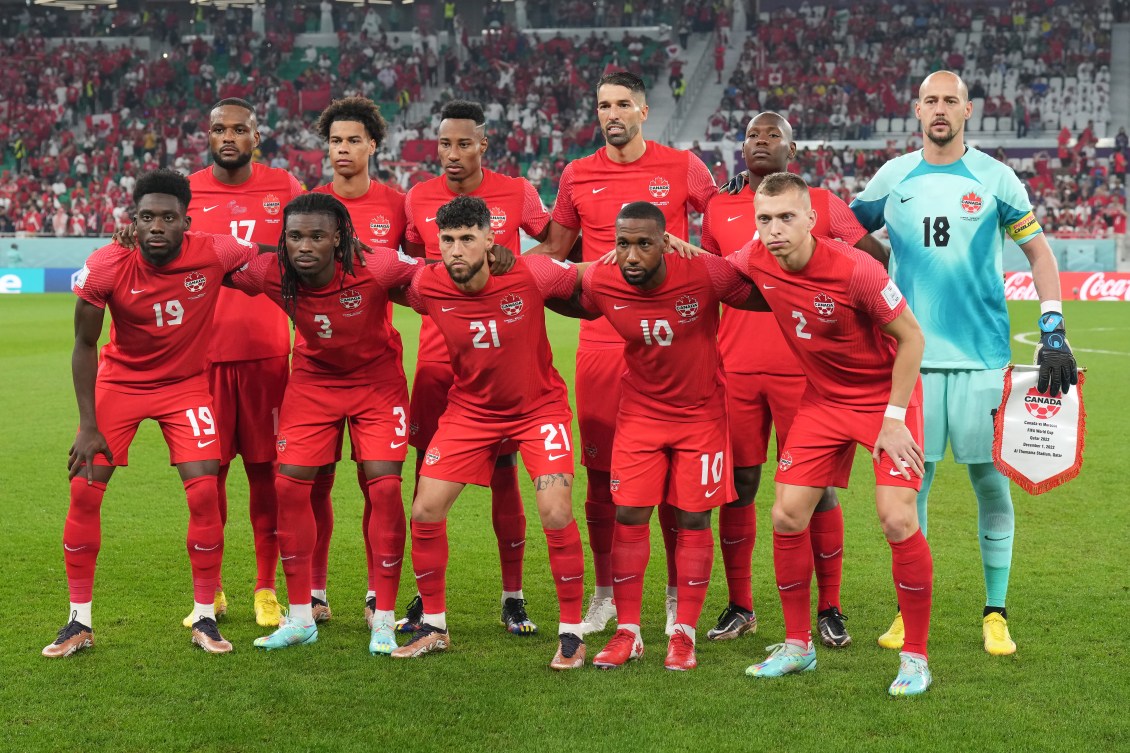
Canada Soccer will reveal its 26-man World Cup roster in a televised announcement on Friday, May 29 at 7:00 p.m. ET / 4:00 p.m. PT that you can watch on TSN, CTV, Crave, and RDS.
How has Canada done at past FIFA World Cups?
This is Canada’s third appearance ever at the FIFA World Cup. At Mexico 1986, the debutants put up a valiant effort but went home with zero points and zero goals scored.
An exciting young core of players led Canada to unexpectedly qualify for Qatar 2022. Drawn into what proved to be the tournament’s toughest group, Canada once again went home without a point.
READ: 5 lessons learned from Canada’s FIFA World Cup adventure
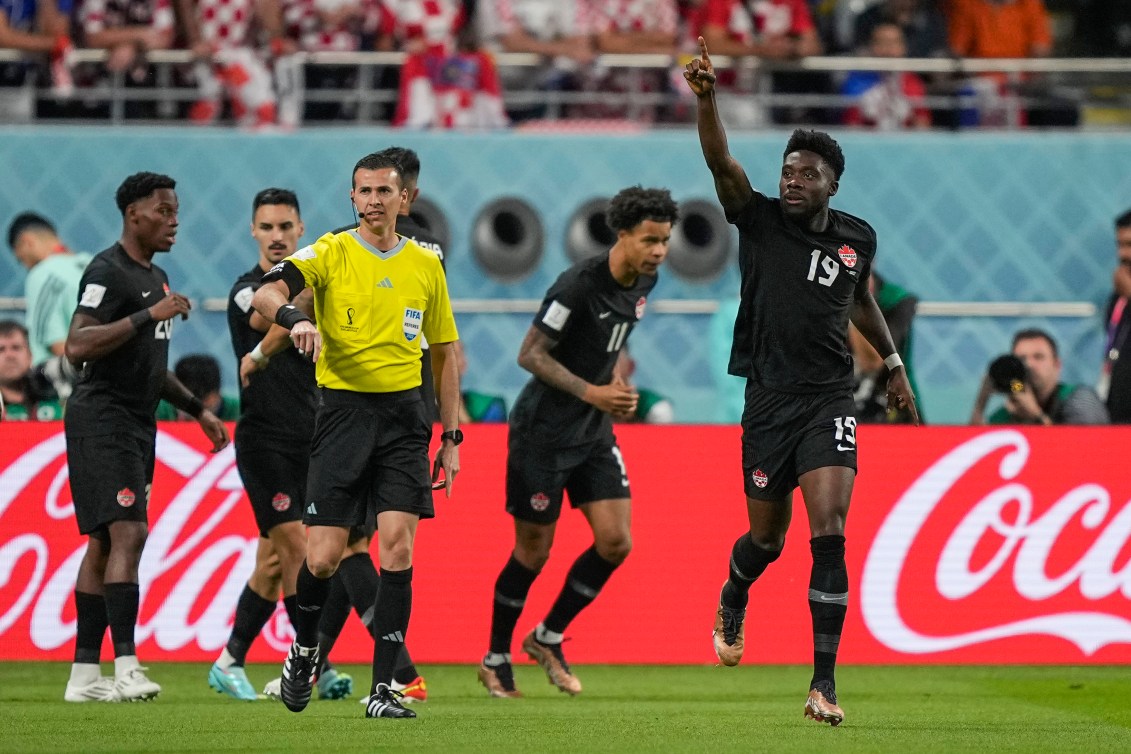
But superstar Alphonso Davies did score Canada’s first-ever FIFA World Cup goal. Now, with an expanded tournament and the chance to play at home, the team could make even more history.
How does Canada stack up in Group B?
Canada sits at No. 30 in the most recent FIFA World Ranking, the second-highest ranked team in its group. Switzerland is at No. 19, while Qatar sits at No. 55 and Bosnia & Herzegovina is No. 65.
But the rankings don’t always tell the whole story. Consider that Bosnia & Herzegovina knocked out No. 12 Italy in a European qualification playoff to reach this tournament.
Traditional wisdom might suggest Canada will be fighting for second place. Realistically, there’s almost no result that’s completely out of the question, from winning the group to finishing fourth.
Who are the pre-tournament favourites?
This World Cup features all of the world’s top 10-ranked teams, including reigning champions Argentina (No. 3) and runners-up France (No. 1).
Spain (No. 2) is considered by some to be the prohibitive favourite. Perennial contenders such as England (No. 4), Portugal (No. 5), Brazil (No. 6) and Germany (No. 10) are also likely in the mix.
Who are the biggest underdogs?
Some soccer purists suggest that the tournament’s expansion will have a negative impact on overall quality. But that’s perhaps too cynical a view on what could be some fascinating Cinderella stories.
Consider the tiny island country of Curaçao, making its first-ever World Cup appearance. Then there’s fellow Caribbean nation Haiti, overcoming strife to return to the World Cup for the first time since 1974.
Cape Verde, an archipelago off the coast of West Africa, will also be making their World Cup debut. Same goes for the nations of Jordan and Uzbekistan.
Which underdogs will shock us? Which soccer heavyweights will fall short? And how will the host nations fare?
The whole world will soon find out.