Memories of Montreal 1976: Canada’s flag bearers reflect on historic Olympic Games at home

Montreal 1976 provided an opportunity that no Canadian athletes had before: the chance to compete at a home Olympic Games.
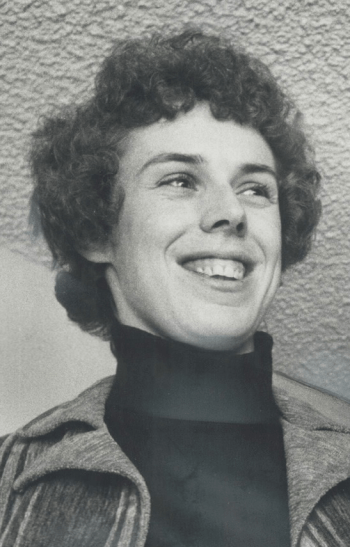
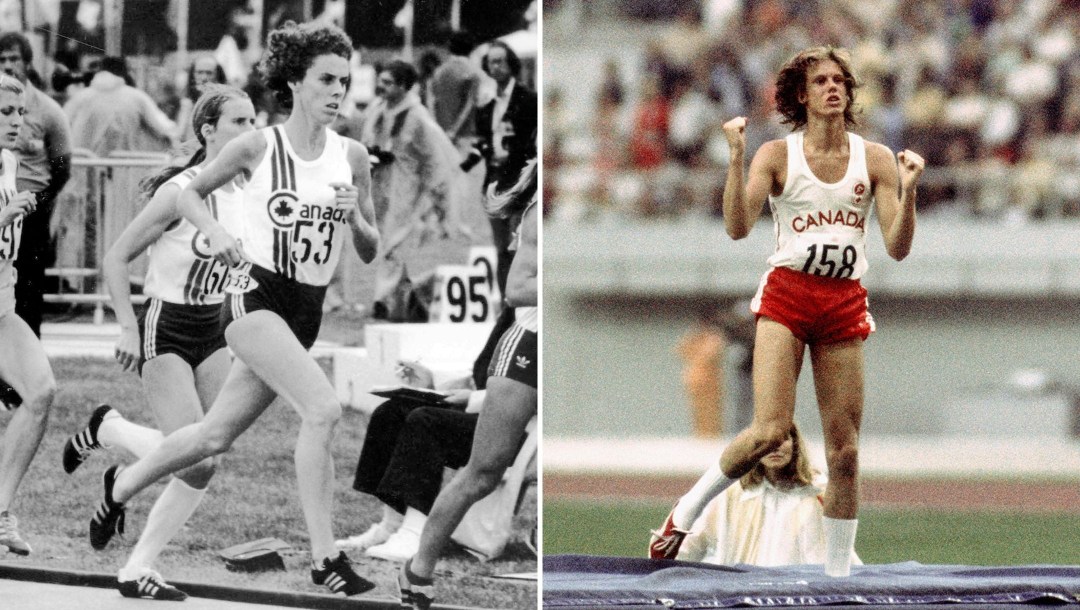
It was solely for that reason that Abby Hoffman, a finalist in the women’s 800m at Mexico City 1968 and Munich 1972, decided to go for a fourth Olympic appearance rather than retiring.
In the lead up to the Games, she had become well known as an advocate, seeking things such as improved training conditions, more financing, and better technical support, coaching, and access to competitions for her fellow Canadian athletes.
“I was a really vocal critic. I was the athlete’s representative in my own sport of track and field, but I was also very engaged in mobilizing people across other sports and we were very successful in generating a lot of media critical of the Canadian team preparations,” she explained.
So it’s no wonder she found it “ironic and completely unexpected” when she was asked to be Canada’s Opening Ceremony flag bearer.
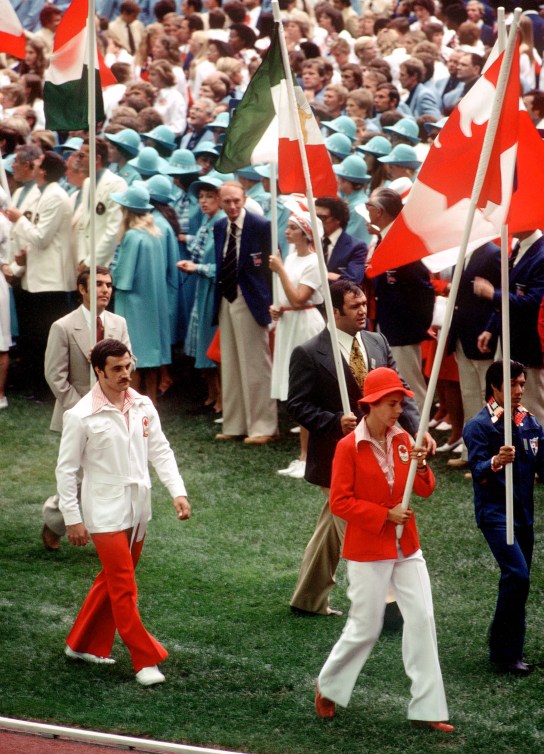
“It was an honour for me as the first female in that role [at a summer Games] for the Canadian team, but it was more I took it as a kind of recognition that the things that I had been talking about and other athletes had been talking about in the lead up to the Games were valid and that these were things that needed to be improved,” Hoffman said.
When the day of the ceremony arrived, Hoffman says that despite being “not normally a very sentimental or emotional kind of person” she was “very excited.”
“Canada being the host country, of course, we’re the last into the stadium. So by the time the Canadian team was coming into the stadium, there was incredible noise and music and just a celebratory atmosphere on this really spectacular, beautiful day.
“I remember thinking to myself, maybe I physically even did it, sort of shaking my fist a little bit, just kind of in recognition of that fact that, despite all the negativism about is Montreal going to be ready, are these Games actually ever going to happen … that here we were on this spectacular day and there’s the Canadian team entering the stadium to what is obviously a hugely enthusiastic stadium full of enthusiastic spectators.
“It was just a wonderful moment that you could just enjoy and I do remember it vividly, right to this day almost 50 years later.”
When she did bring her competitive career to a close, Hoffman made more history as the first woman to be the Director General of Sport Canada and the first woman elected to the executive committee of the Canadian Olympic Association. Through that lens, she looks back on how much things have changed for the better over the last half century.
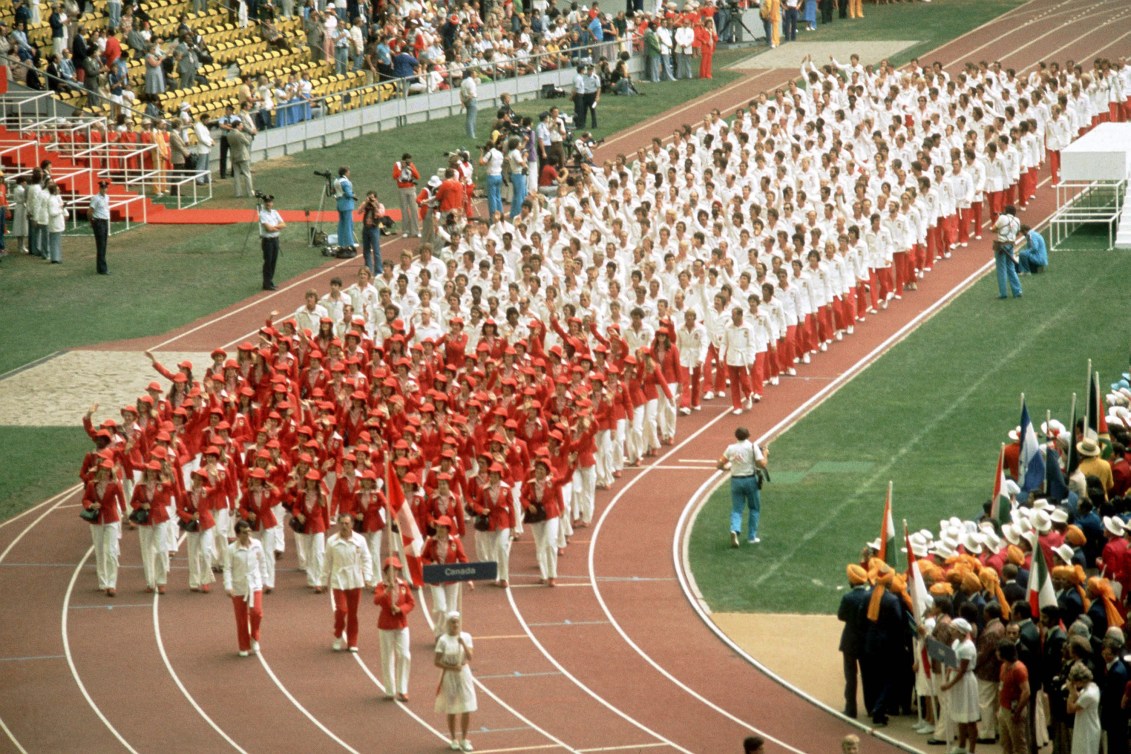
“If you look at the Canadian team coming into the stadium for the Opening Ceremony and you see the women’s team at the front of the Canadian team delegation and then you see the men’s team and the relative proportions are about one to four. I mean, it’s just incredible that it was even acceptable in 1976 to have that many fewer events for women,” she said, calling out that in track and field at the time, women didn’t run a distance longer than 1500m and only had 14 events compared to the 23 for men.
“People across many sports had to chip away and chip away and advocate, in a very forceful way, to get to where we are today.”
The Jump of Joy
By the penultimate day of the Games, Canadian athletes had won 10 medals, but none yet in track and field, the biggest sport on the program.
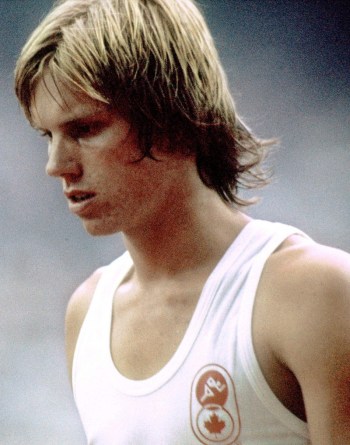
High jumper Greg Joy had come to Montreal with the goal of winning gold. But a rainy day would make that difficult, despite him having prepared by hosing down the surface at his training venue in El Paso, Texas.
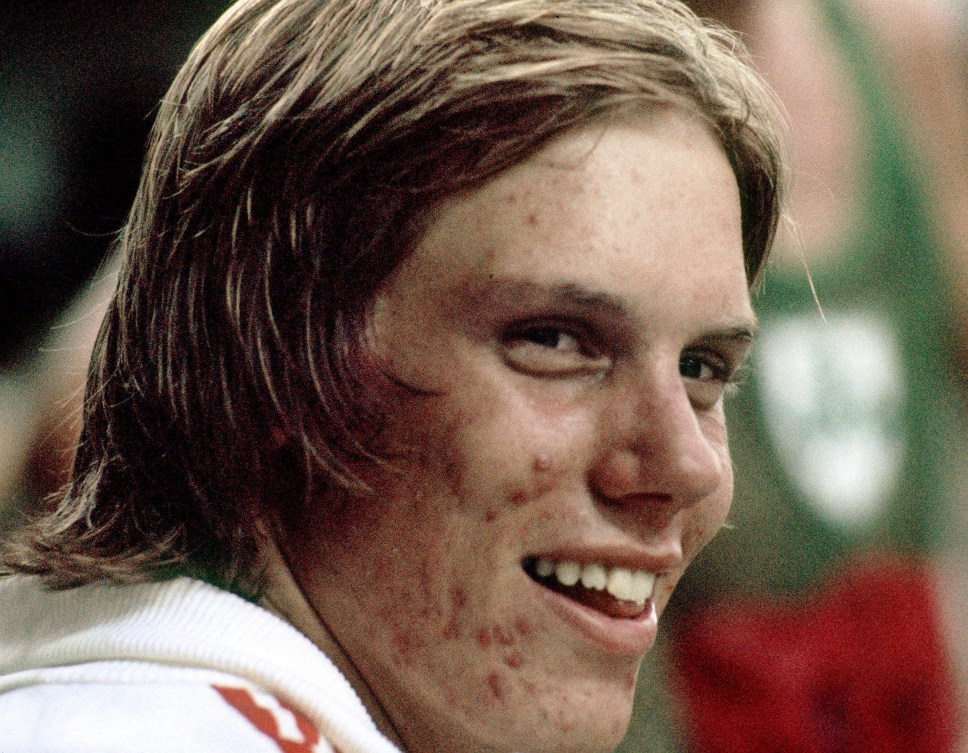
“At 2.18 [metres] I got down to my third attempt and I realized I had short spikes on, which were slipping on the wet fan. Put in longer spikes and went over my third attempt or I would have been done,” Joy recalled.
The Canadian fans proved hearty, sitting through the rough weather to put all of their support behind Joy.
“When I got up to jump, especially with my medal jump, the place was completely silent. You could hear a pin drop. And as soon as I went over the bar, the place just erupted,” Joy said, calling it “pretty special.”
Trying to clear 2.23m, which would secure him the silver medal, Joy again needed his third and final attempt at the height. While many would crumble under that pressure, Joy said he didn’t find it daunting as he had become used to finding himself in that situation and just told himself “I can do this.”
Upon landing on the mat with the bar still safely in place, he described feeling “ecstatic” at having at least reached the Olympic podium, something no Canadian high jumper had done since 1932.
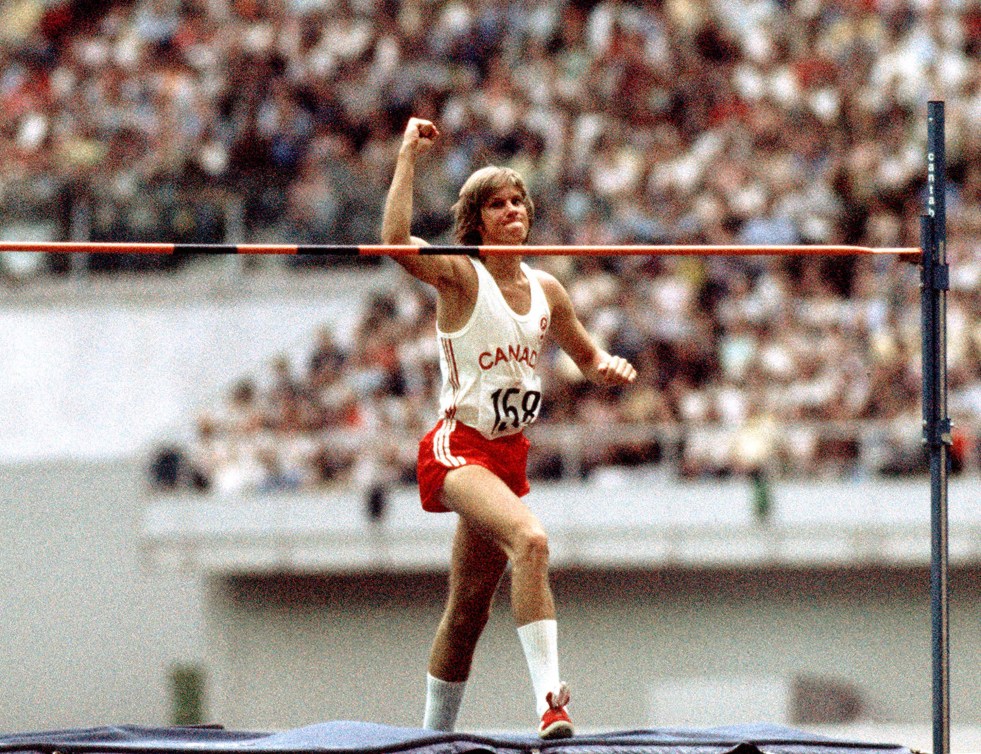
For a country that did not win a gold medal at the home Games, Joy’s silver on the second last day made him a national hero—a realization he came to quite quickly.
“The next day, they chose me to carry the flag in the Closing Ceremony and I started walking down the street with all the flag bearers and the people just started screaming my name. It was wild. And when I went into the stadium and I had the flag, the place just erupted.”
But that was far from the end of his moment of fame.
“The next day I got on the flight, I’m sitting in my seat and the steward came up. He said ‘The pilot wants to see you’ and I’m going ‘What did I do?’ And he had me sit in the cockpit with him the entire way back to Vancouver, which you can’t do today, but I had that happen and I thought ‘This is not normal.’”
Canadians of a certain age will surely remember seeing Joy’s medal winning-moment on their TVs every morning and every night during the 1980s, closing out an “O Canada” montage that CBC played as it signed on and signed off each day. Even if they weren’t born at the time he became a national hero, they recognized him as such.
“That was really, really special,” said Joy. “To have people come up to me [and say] ‘I saw it on TV last night … One of the guys I was just interviewing with, he said ‘I’d see you before I’d watch cartoons in the morning.’ It was on television, it was in movie theatres. It was quite a thrill.”