Alpes 2030
Games Channels


Games Summary
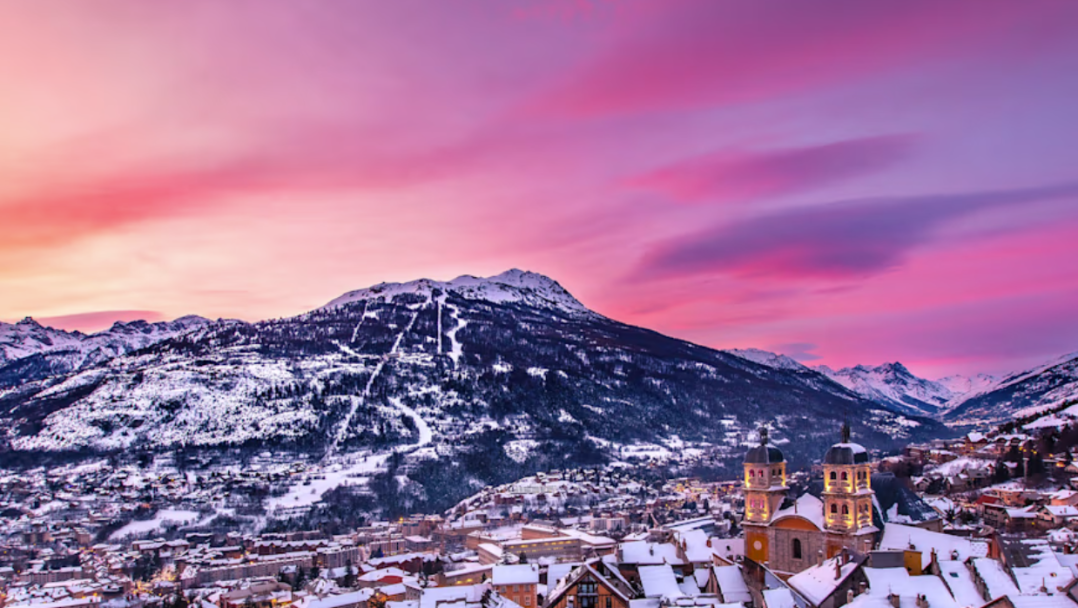
In 2030, the region of the French Alps will host the XXVI Olympic Winter Games.
The International Olympic Committee named the French Alps as the host of the 2030 Olympic Winter Games at the 142nd IOC Session in Paris, France, on July 24, 2024. IOC members voted 84-4 in favour of the Alpes 2030 bid.
Alpes 2030 will be the seventh Olympic Games hosted by France. The nation played host to the Olympic Winter Games three previous times: Chamonix 1924, Grenoble 1968 and Albertville 1992. The country has hosted the Olympic Summer Games in the city of Paris three times (Paris 1900, Paris 1924, and Paris 2024).
Alpes 2030 will draw inspiration and expertise from France’s most recent Olympic Games hosting experience. As was the case at Paris 2024, sustainability will be a priority for these Games.
The Games will primarily take place within four clusters in southeastern France—Haute-Savoie, Savoie, Briançon and Lyon.
The third largest city in France, Lyon will host the indoor ice sports of curling, figure skating, short track speed skating, and ice hockey. Rather than construct a new venue for long track speed skating, that sport will be held at the world renowned Thialf in Heerenveen, Netherlands.
Courchevel and Val d’Isere, both regular stops on the FIS World Cup circuits, have been confirmed as the two alpine skiing venues for the speed and technical events, respectively. Also in Savoie is the sliding centre for bobsleigh, skeleton, and luge in La Plagne and the Tremplin du Praz ski jumping hills. Both of those venues were constructed for Albertville 1992.
Freestyle skiing and snowboard will be held in Briançon, at Serre Chevalier and Montgenèvre. Cross-country skiing and biathlon will take place in Haute-Savoie, at La Clusaz and Le Grand-Bornand, respectively.
These will be the second consecutive Olympic Winter Games to take place in the European Alps, following Milano Cortina 2026.
Getting to know the French Alps and France
One of the most modern countries in the world, France is a leader among European nations. Its global influence can be felt through its role as a permanent member of the United Nations’ Security Council as well as its positions in NATO, the G-7, G-20 and the European Union.
Although the largest portion of France (551,500km2) is located in western Europe, five overseas entities—French Guiana, Guadeloupe, Martinique, Mayotte, Réunion—also became part of France proper in the early 21st century.
With a population of more than 67 million (62 million in western Europe), France is the 21st most populous country in the world. France is a semi-presidential republic divided into 13 metropolitan regions along with the five overseas regions. The president is the head of state while the prime minister is the head of government.
The official language of the country is French. The national anthem, “La Marseillaise,” was first adopted in 1795 and restored in 1870. It was made famous when the National Guard of Marseille sang it while heading into Paris in 1792 during the French Revolutionary Wars. The French flag, featuring three equal vertical bands of blue, white and red, is known as “le drapeau tricolore” and dates back to 1790.
The French Alps run on Central European Time, which is six hours ahead of Eastern Standard Time.