Top 10 for Jack Crawford after ‘a few mistakes’ add up in men’s downhill

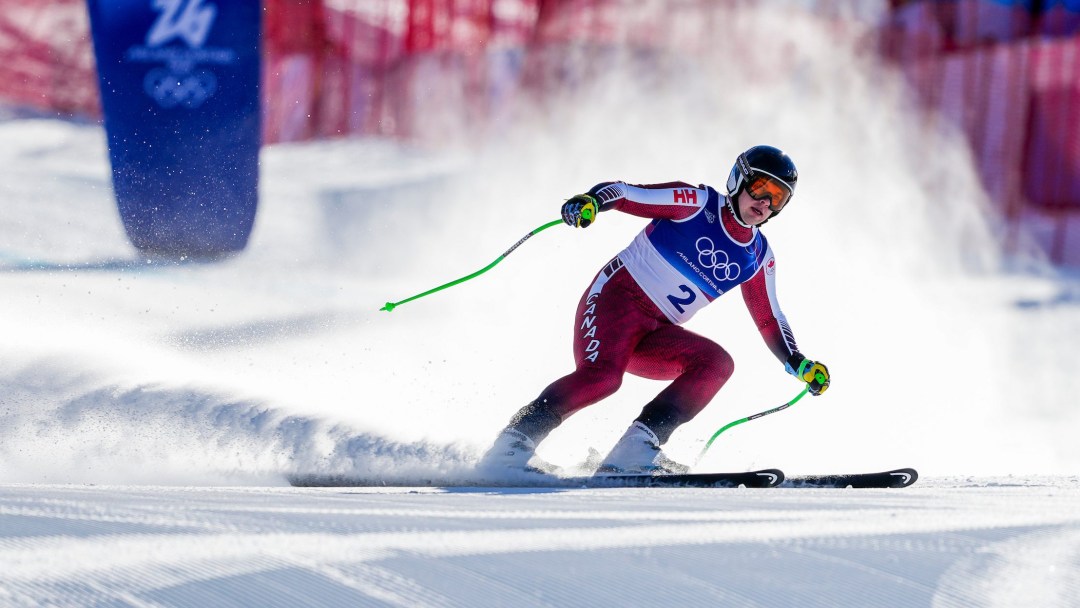
Jack Crawford had his eyes on the men’s downhill podium heading into Milano Cortina 2026. But when hurtling down a ski hill at 150 km/h, all it takes is one second to change your fate.
On Day 1 of these Games, Crawford posted a time of 1:53.00, good for ninth place in the men’s downhill. He was the top Canadian in a field that also included Cameron Alexander (1:53.49, 14th place), Jeffrey Read (1:54.56, 25th) and Brodie Seger (1:54.96, 28th).
“I’ve been struggling a little bit to find form and confidence in my skiing, and today I thought I finally brought that,” said Crawford, a 28-year-old from Toronto. “I definitely brought a level that could have won the race today, just a few mistakes here and there that unfortunately cost me that podium.”
READ: “Best buds” continuing Canada’s legacy in men’s alpine speed events
It was just over a year ago that Crawford won World Cup gold at Kitzbuehel, the sport’s most prestigious downhill. That raised hopes for Canada’s first Olympic medal in the men’s downhill since Edi Podivinsky won bronze at Lillehammer 1994.
But the hill at Bormio, site of the men’s alpine events at Milano Cortina 2026, is notoriously treacherous. And while it’s one of Crawford’s favourite places to race, it also poses unique challenges.
“It’s super bumpy, it’s hard; it’s one of the hardest, if not the hardest, World Cup tracks of the year,” said Crawford. “They always do a great job prepping the snow, but it’s never one that feels good.”
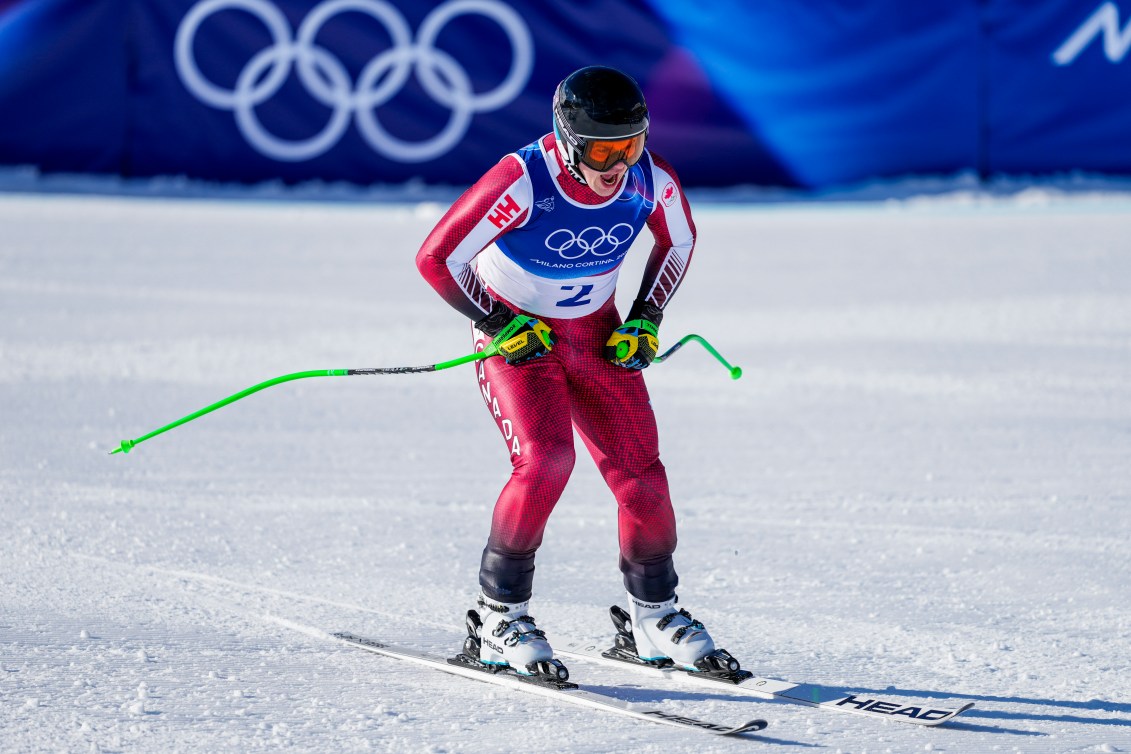
Crawford got off to a good start, but lost some speed in the middle portion. From that moment on, he felt that his day was over.
“There was one right footer that I just didn’t time super well and got a little bit low and then just didn’t make a good adjustment,” he said. “On this course in that section when you do that it’s just, it’s instantly like a second lost.
“So, yeah, just a bad place to make a mistake.”
Crawford, competing in his third Olympics, let out a yell of frustration at the bottom of the mountain. But for Read, his Canadian teammate, the post-race mood was notably different.
The 28-year-old from Calgary felt “energized by the moment” of competing in his first Olympic Games.
“I think it’s really cool, my Olympic debut, so I had a lot of fun out there,” said Read. “This crowd and the energy, I think it’s so special and it brings a different side to ski racing that we don’t see on the regular on World Cups.”

Read is no stranger to the Games themselves. His father Ken was one of the original “Crazy Canucks”, while his brother Erik raced at PyeongChang 2018 and Beijing 2022. His cousin Stefan competed in ski jumping at Turin 2006 and Vancouver 2010 and uncle Jim was an alpine skier at Sarajevo 1984 and Calgary 1988.
“I have such a good family and so much understanding that they don’t want to take the limelight off me,” said Read. “They don’t want to put pressure on me, and … they believed in me.
“I knew that I had the ability to get here.”
Crawford, Alexander, and Seger will now get ready for the men’s super-G, taking place on Wednesday. It’s anticipated that they’ll be joined by Seger’s younger brother Riley, making his Olympic debut.