Karate
Sport Details


NSO Channels




Sport Overview
Karate at Tokyo 2020
Venue: Nippon Budokan
Competition Dates: August 5-7, 2021 (Days 13-15)
Events: 8 (4 men, 4 women)
Trivia: Test your knowledge!
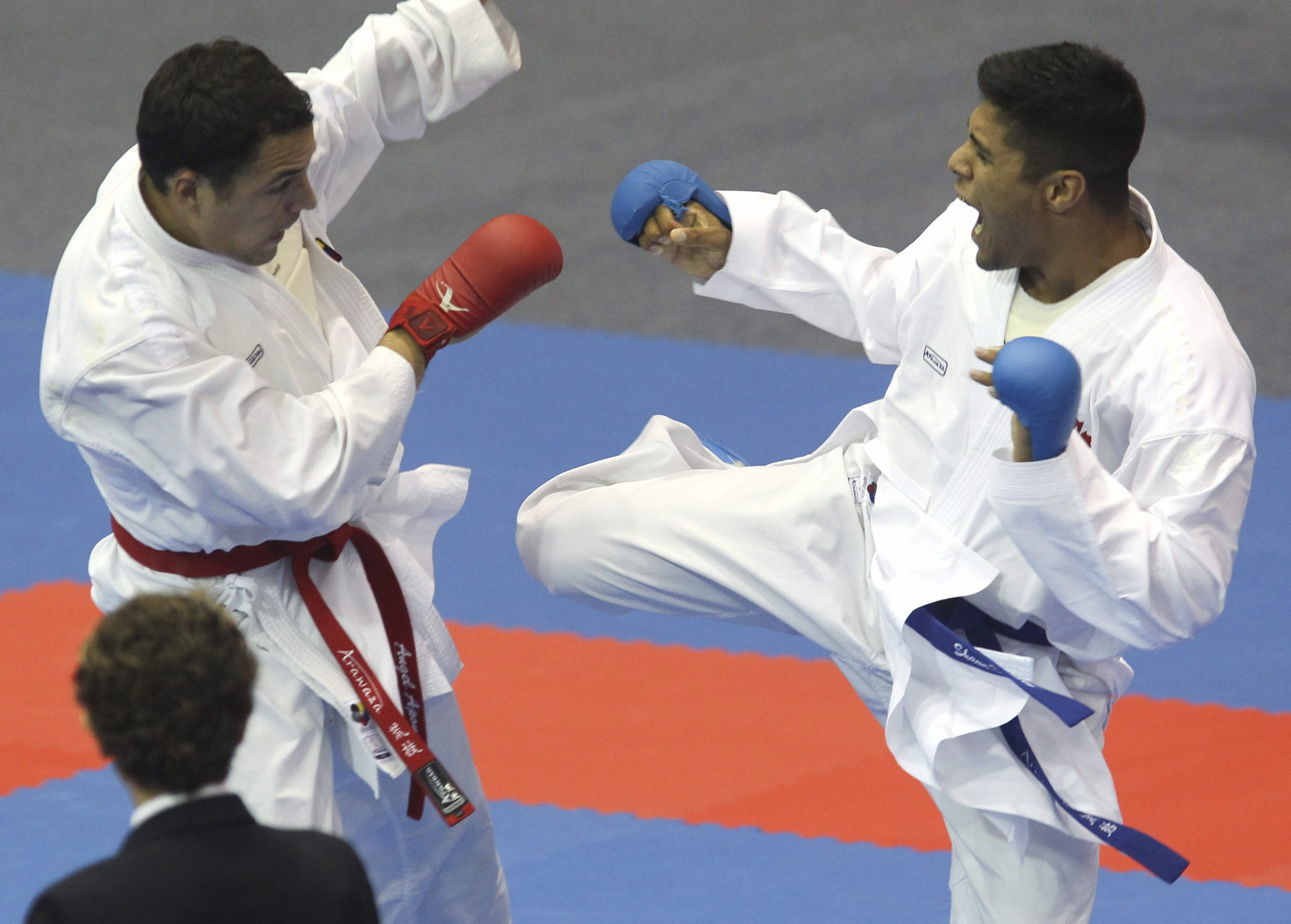
Karate was at home when it made its Olympic debut at Tokyo 2020. The martial art has its origins in what is now the Okinawa prefecture of Japan.
Karate features two forms of competition: kata and kumite.
Kata is a judged competition in which athletes perform a series of choreographed offensive and defensive karate techniques which are scored for their timing, strength, power, balance, and speed. There are 98 kata recognized by the World Karate Federation from which competitors choose to demonstrate.
Athletes are expected to show a variety of movements with focus and concentration. The result should be beautiful, flowing motion that displays the proper expression of each technique. At Tokyo 2020 there was one men’s event and one women’s event, each featuring 10 competitors.
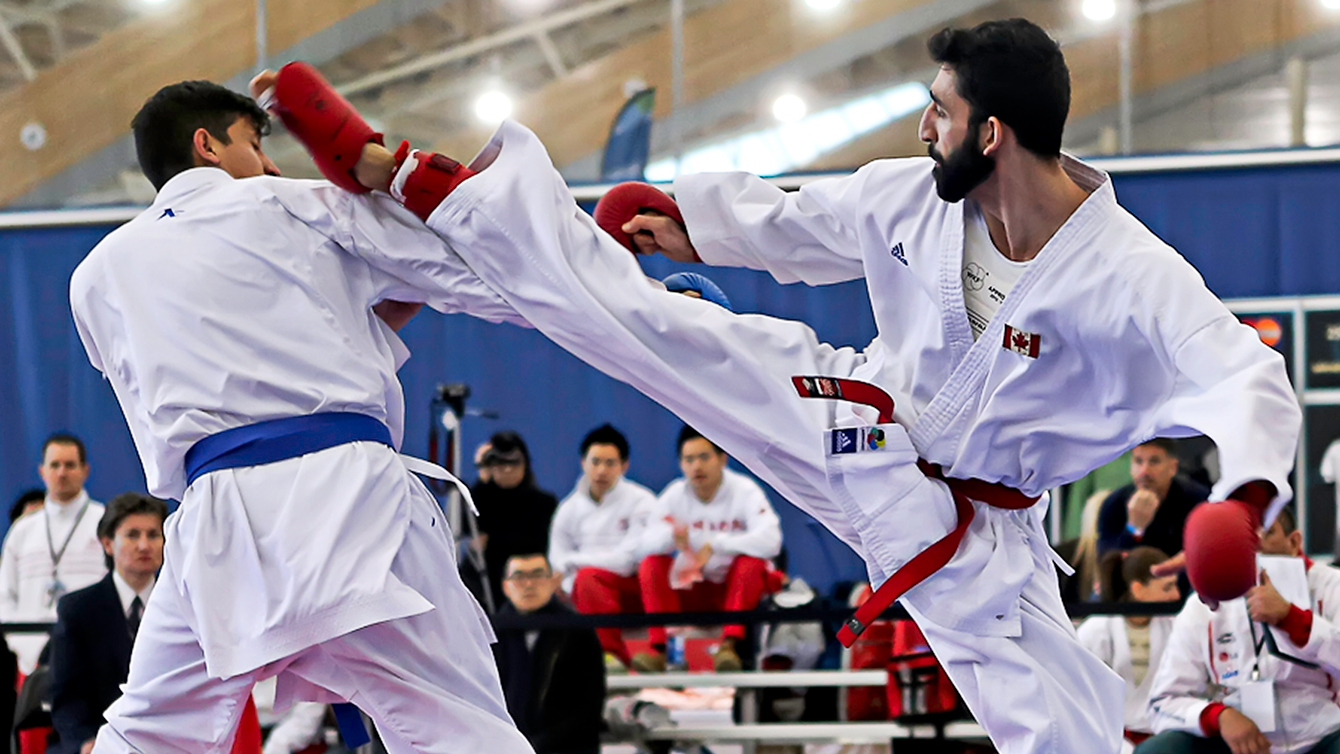
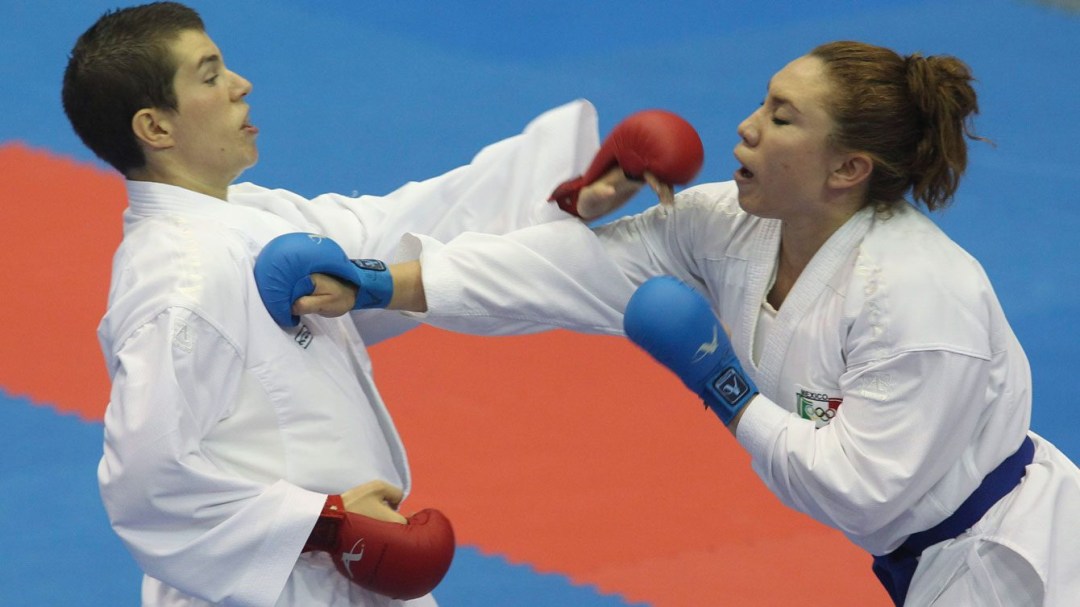
Kumite is a series of one-on-one bouts, with competitors divided by weight class. At Tokyo 2020 there will be three kumite events each for men (-67kg, -75kg, +75kg) and women (-55kg, -61kg, +61kg), with 10 competitors per event.
Each bout in men’s kumite lasts three minutes while women’s bouts last two minutes. Points are scored when a combatant lands successful kicks, strikes, and punches to their opponent. These techniques must be applied with good form, timing, vigor, and awareness. Depending on the way the technique is executed, judges can award ippon (three points), waza-ari (two points) or yuko (one point). Bouts can end before time has elapsed if one combatant has an eight-point lead.
The 10 competitors in each weight class are split into two pools for a preliminary round robin within the pools. A bout victory is worth two points while a tied bout gives each competitor one point. At the end of the round robin, the top two competitors in each pool advance to the semifinals. The semifinal winners advance to fight for gold and silver while both semifinal losers receive a bronze medal.
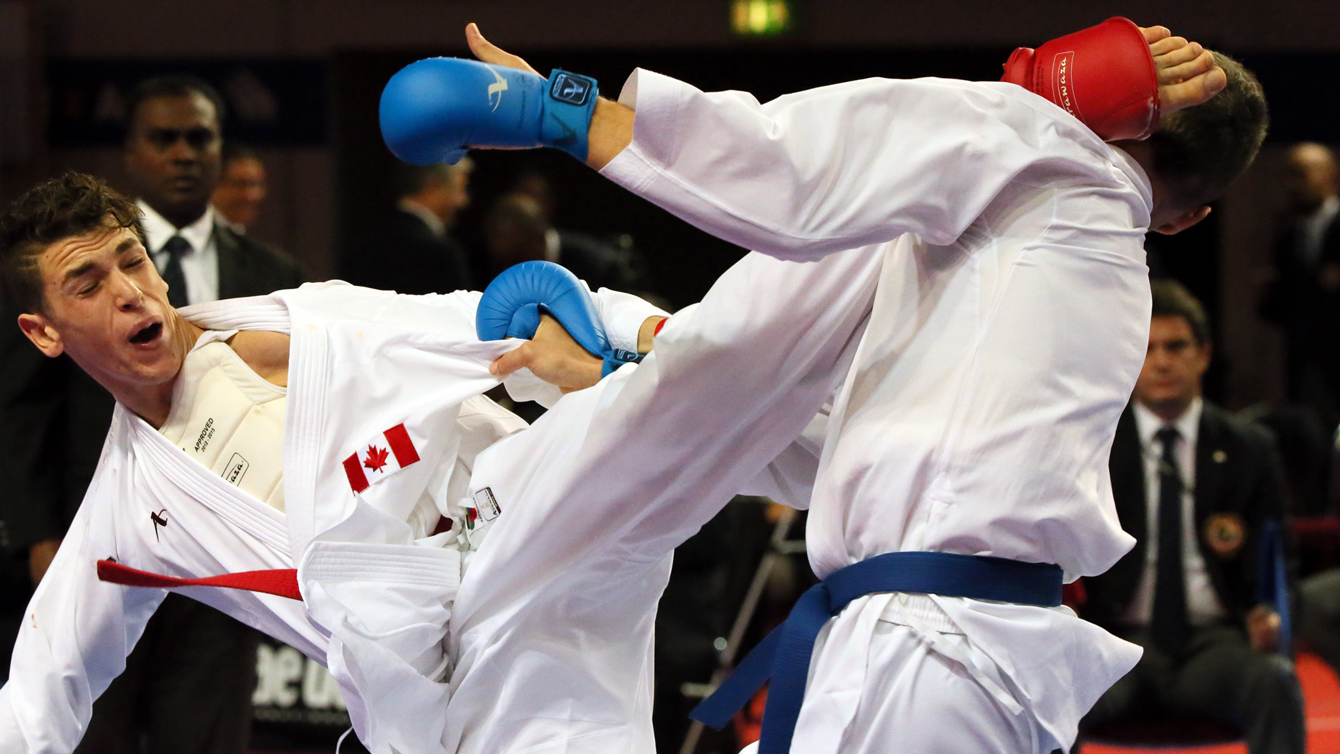
Karate History
The origins of karate date back to 17th century Okinawa, an island located between Japan and southern China. After invasion by a Japanese clan in 1609 and the ensuing forced occupation, the inhabitants were forbidden to bear weapons in their daily life. Instead they secretly practiced hand-to-hand combat skills that incorporated striking and kicking, called “te” (translation: hand).
On Okinawa three similar but distinct systems of “te” began to develop, tied to major geographical regions. In 1935 a multi-style group of masters met and decided on a common name for their teachings: karate (translation: empty hand). The martial art quickly spread across Japan before being disseminated around the world throughout the 20th century. The first karate competition in Canada was held in 1954. It is now estimated that there are 100 million practitioners of karate globally.
Before making its Olympic debut at Tokyo 2020, karate was included on the program of the 2018 Summer Youth Olympic Games in Buenos Aires. Karate has been on the Pan American Games program since 1995.