Gymnastics – Artistic
Team Canada Medal Count
 1
1
 0
0
 0
0
Sport Details


NSO Channels


Sport Overview
Artistic Gymnastics at Los Angeles 2028
Venue: DTLA Arena
Competition Dates: July 15-20, 22-25 (Days 1-6, 8-11)
Events: 15 (8 men, 6 women, 1 mixed)
| Men’s Events | Women’s Events | Mixed Events |
|---|---|---|
| Team All-Around Floor Exercise Pommel Horse Rings Vault Parallel Bars Horizontal Bar | Team All-Around Vault Uneven Bars Balance Beam Floor Exercise | Team |
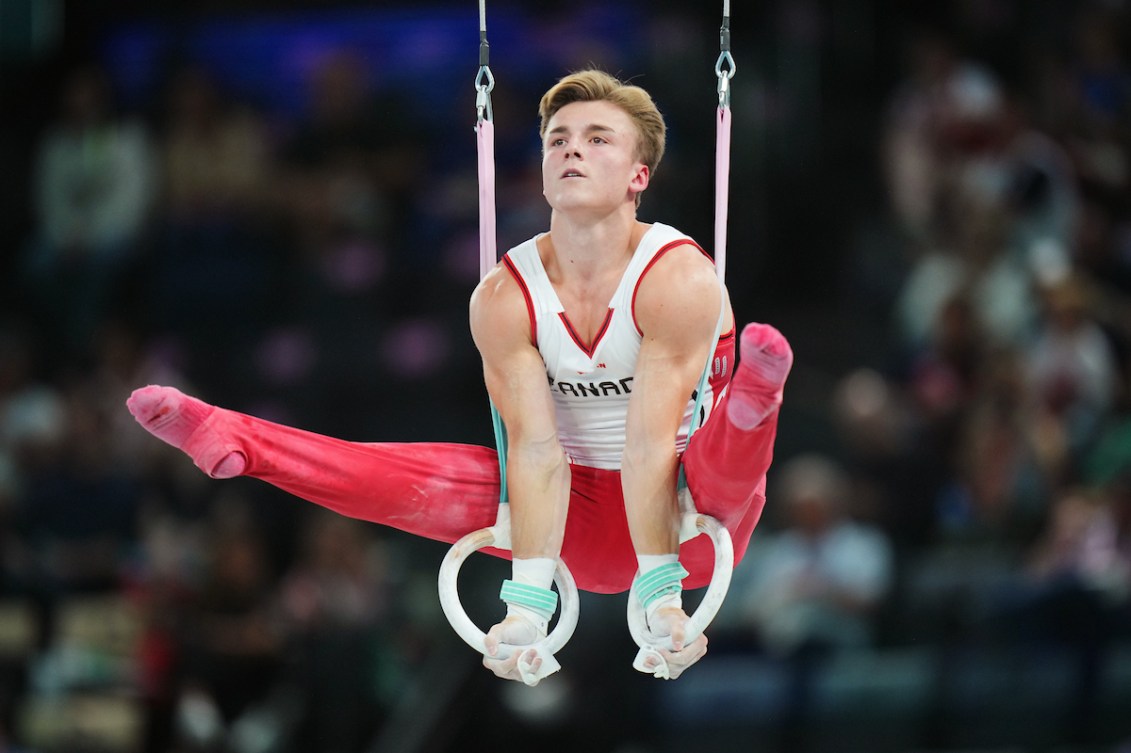
Artistic gymnastics is of the original sports included at the Olympic Games, although the competitive program has evolved greatly over the years. In addition to the separate team and individual all-around events for men and women, there are also individual events for each apparatus on which artistic gymnasts compete. New at Los Angeles 2028 will be a mixed team event.
There are six apparatus for men and four for women:
Men: Floor Exercise, Pommel Horse, Rings, Vault, Parallel Bars, Horizontal Bar
Women: Vault, Uneven Bars, Beam, Floor Exercise
There are five phases of Olympic competition:
Qualification
- All athletes compete in qualification. Men’s and women’s teams will have four of their five gymnasts compete on each apparatus but only the top three scores per apparatus are counted towards advancing to the team finals.
Team Finals
- The top eight men’s and women’s teams from qualification send three gymnasts to compete on each apparatus and all scores are counted towards the team’s final score.
Individual All-Around Finals
- The top 24 gymnasts of each gender from qualification (maximum two per country per gender) compete on all apparatus. These scores are added together and the gymnast with the highest total is the all-around champion.
Individual Apparatus Finals
- The top eight athletes on each apparatus (maximum two per country per apparatus) based on the qualification results compete. To be eligible for the vault final, a gymnast must have competed two different vaults during qualification.
Mixed Team Final
- Each team includes two men and two women. The top eight teams based on qualification results advance to the final. The men compete on floor exercise, parallel bars, and horizontal bar. The women compete on uneven bars, balance beam, and floor exercise. All 12 scores are added together to determine the qualification results.
- There are three rounds in the mixed team final. In the first round, each team must select two apparatus for the men and two apparatus for the women. Athletes of the same gender cannot select the same apparatus. The six teams with the highest combined total scores advance to the second round, where scores are not carried over. Again, each team selects two apparatus for each gender. No apparatus for men and women can be used more than twice across all rounds. The four teams with the highest combined total scores advance to the medal round. Once again, scores start from zero as the remaining apparatus that were not competed on in the first two rounds must be selected for each team. The team with the highest combined total score in the third round wins the gold medal.
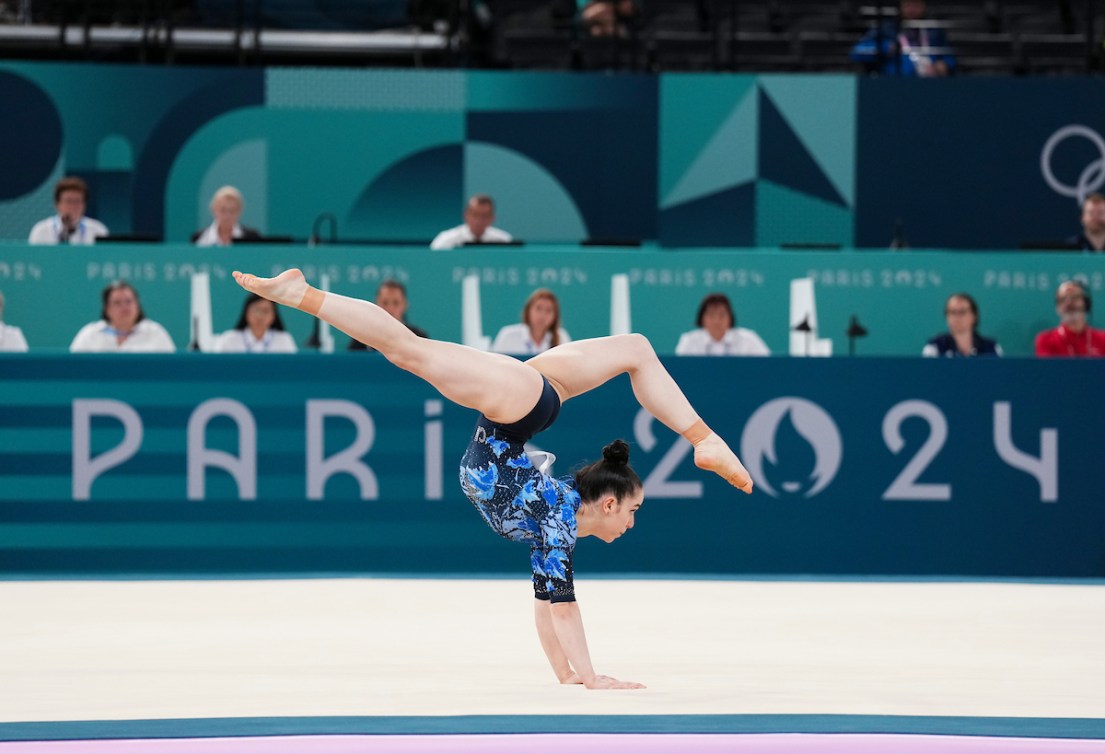
Scoring
There are two panels of judges that score each routine.
The two D judges score the difficulty. Starting at zero, they total the values of the eight most difficult skills in each routine (while meeting specifications for each apparatus) along with the composition requirements and the connections between the skills. In vault, each vault has a set difficulty score.
The seven E judges each start with a score of 10.0 and deduct for errors and faults in the technique, execution, and artistry/composition of each routine. The two highest and two lowest scores from the E judges are dropped, with the remaining three scores averaged.
The D-score and E-score are added together to get the final total for each routine, minus any deductions for neutral errors, such as stepping out of bounds or violating time limits.
Canada’s Olympic Artistic Gymnastics History (Pre-LA 2028)
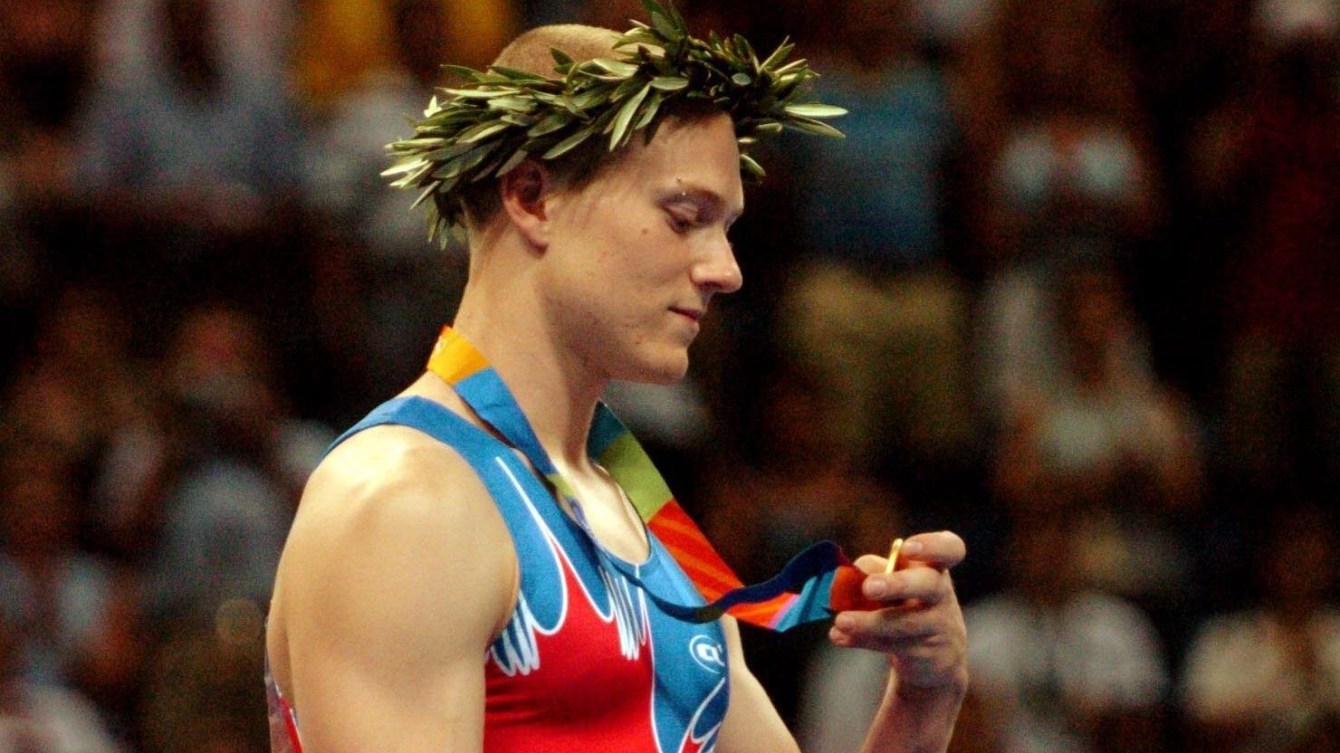
Canadian gymnastics fans witnessed an unprecedented gold medal victory by Kyle Shewfelt in men’s floor exercise at Athens 2004. His top place finish was the first ever Olympic artistic gymnastics medal for Canada, providing inspiration for future athletes. Shewfelt just missed a second podium in Athens, placing fourth in men’s vault.
Canada’s Best Ever Olympic Artistic Gymnastics Results by Event
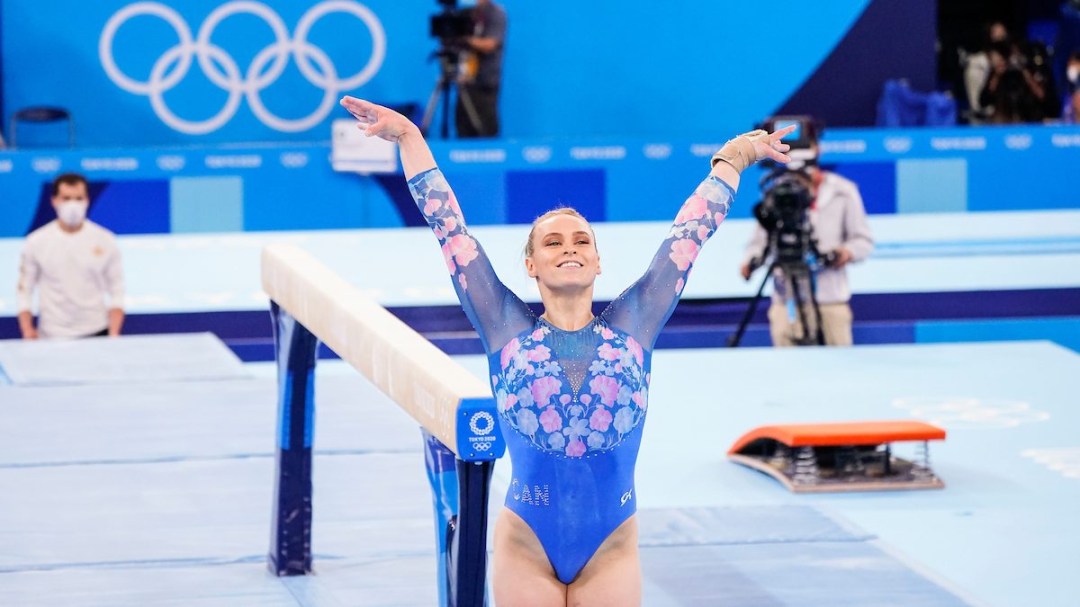
A notable moment for the Canadian women came in the team event at London 2012 where they finished a best-ever fifth. Ellie Black had another breakthrough performance four years later at Rio 2016 where she finished a Canadian best-ever fifth in the individual all-around. At Tokyo 2020, Black finished fourth in the balance beam final for Canada’s best-ever Olympic result in any women’s artistic gymnastics event. She led the women’s team to another fifth-place finish at Paris 2024.
Olympic Artistic Gymnastics History
Artistic gymnastics has been included at every edition of the Olympic Games dating back to Athens 1896. Only men were allowed to compete until Amsterdam 1928 when a women’s team event was added.
The current men’s program of eight events has been the same since Berlin 1936. Women have been competing in their full program of six events since Helsinki 1952.
In the early days, there were some other events on the Olympic program. In 1952 and 1956, women competed in a team portable apparatus event, similar to what we now see in rhythmic gymnastics. Prior to that, men had events such as rope climbing, club swinging, and tumbling. They also showcased different schools of gymnastics, such as the Swedish system which had a team all-around event in 1912 and 1920.
Canadian Medallists
| Games | Event | Athlete | Finish |
|---|---|---|---|
| Athens 2004 | Floor Exercise - Men | Kyle Shewfelt | Gold |