Curling
Team Canada Medal Count
 6
6
 3
3
 4
4
Sport Details


NSO Channels




Sport Overview
Curling at Milano Cortina 2026
Venue: Cortina Curling Olympic Stadium
Competition Dates: February 4-22 (Days -2-16)
Events: 3 (1 men, 1 women, 1 mixed)
| Men’s Events | Women’s Events | Mixed Events |
|---|---|---|
| Men’s Curling | Women’s Curling | Mixed Doubles |
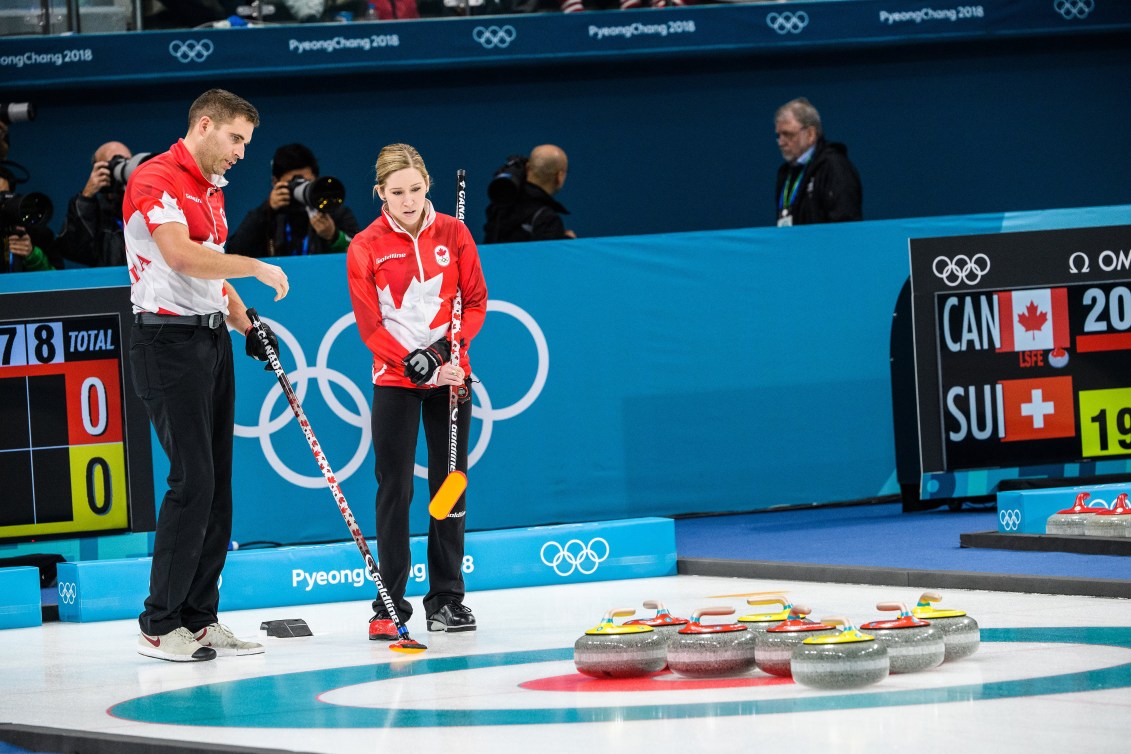
Curling is one of the most strategic sports at the Olympic Winter Games. Playing on a rectanglular sheet of ice, the objective is to get your team’s granite stones closer to the centre of a four-ringed target (known as the house) than those of your opposing team.
The traditional men’s and women’s tournaments feature teams of four curlers. These matches last 10 ends. Each team throws eight stones per end, with players alternating with their counterpart on the other team after each stone. The order of throwing is based on the players’ positions, usually leads first, then seconds, then thirds (also known as vice-skips) and finally skips. Two players help sweep their team’s thrown stones towards the house.
Only one team can score points in any one end, with one point awarded for every stone that is closer to the button (centre of the house) than any stone belonging to the other team. The team that scores will deliver the first stone of the next end. If an end is blanked (no team scores), then the team that had last stone in that end retains last stone in the next end.
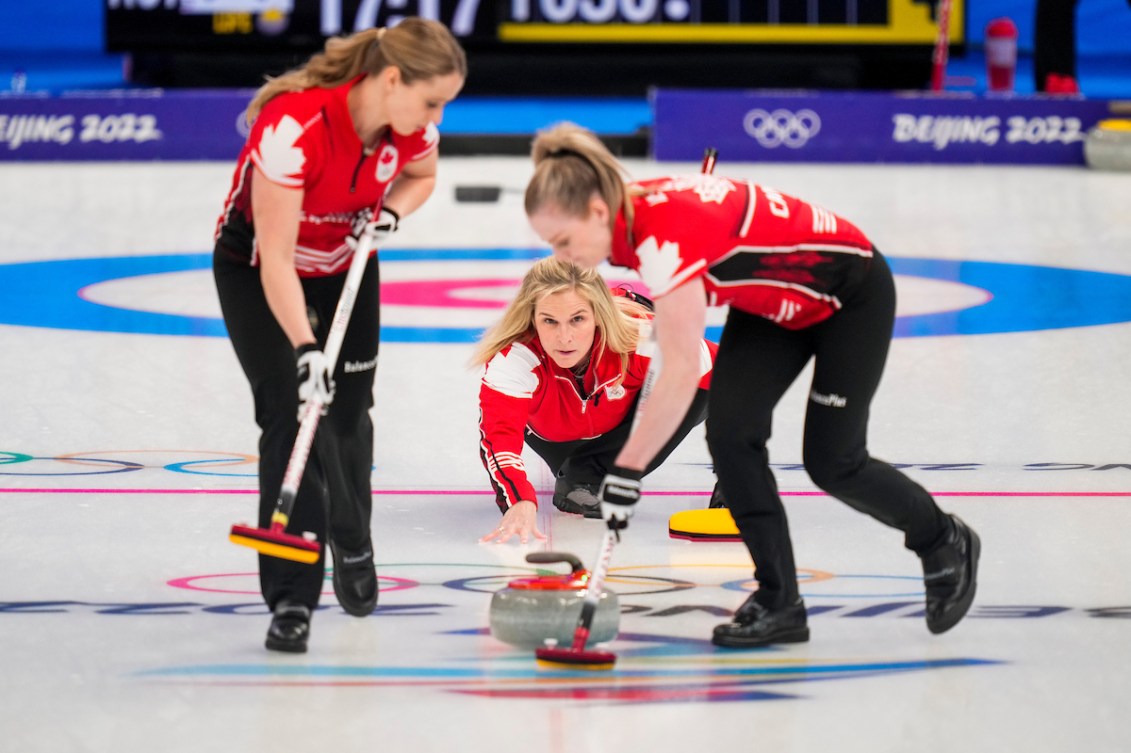
The Games employ the five-rock, free guard zone rule, meaning that the first five stones of an end cannot be removed from play until after the sixth stone has been delivered. Each team has 38 minutes of thinking time to strategize in a 10-end game.
Mixed doubles made its Olympic debut at PyeongChang 2018. Each team of two—one man and one woman—plays with six stones, with one stone per team positioned before the start of play in each end. The first player on a team delivers the first and last stones while the second player delivers the second, third, and fourth stones. No stone in play can be removed until the fourth stone is delivered in an end. Both team members are allowed to sweep and can swap throwing positions from end to end. Each game is divided into eight ends with 22 minutes of thinking time per team.

All three tournaments begin with a round robin. The top four based on win-loss record advance to the semifinals, from which the winners play for gold and silver while the losers play for bronze.
Canadian Olympic Curling History (pre-Milano Cortina 2026)
Canada has dominated Olympic curling since the sport’s return to the Olympic program at Nagano 1998, getting onto the podium in the first five men’s and women’s tournaments. Canada has won at least one curling medal at each Olympic Winter Games since Nagano 1998. The 12 total medals and six gold medals are the most won by any country in the sport.
Both Canadian teams won gold at Sochi 2014. The men’s team included Brad Jacobs (skip), Ryan Fry (third), E.J. Harnden (second), Ryan Harnden (lead) and Caleb Flaxey (fifth/alternate). The women’s team included Jennifer Jones (skip), Kaitlyn Lawes (third), Jill Officer (second), Dawn McEwen (lead) and Kirsten Wall (fifth/alternate).
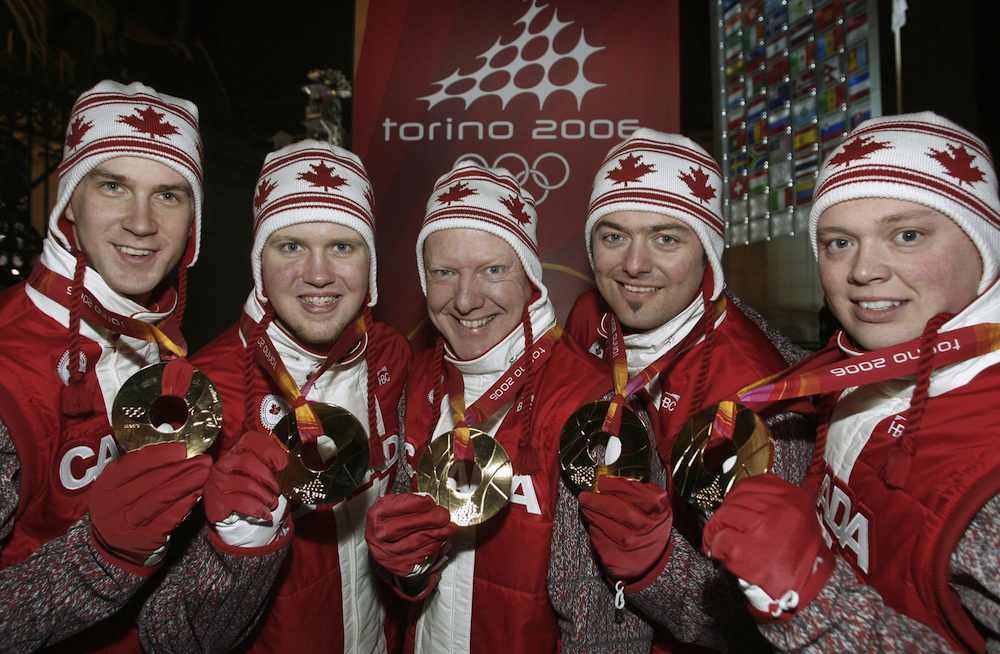
That was the third straight men’s gold won by Canada, following the success of Kevin Martin’s rink (also including John Morris, Marc Kennedy, Ben Hebert and Adam Enright) at Vancouver 2010 and Brad Gushue’s team (also including Russ Howard, Mark Nichols, Jamie Korab and Mike Adam) at Turin 2006.
Martin had previously won silver at Salt Lake City 2002 with a different team, which followed the silver at Nagano 1998 for the team skipped by Mike Harris.
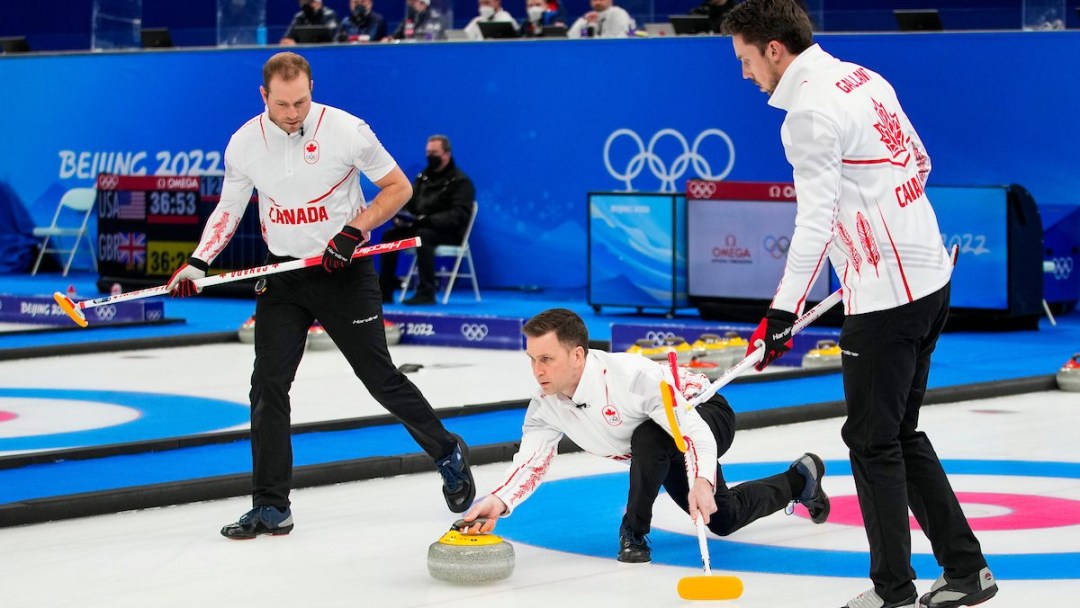
Gushue and his longtime third Nichols went 16 years between Olympic medals—the longest gap in Canadian Winter Olympic history—before they won bronze at Beijing 2022 alongside second Brett Gallant, lead Geoff Walker, and fifth/alternate Kennedy.
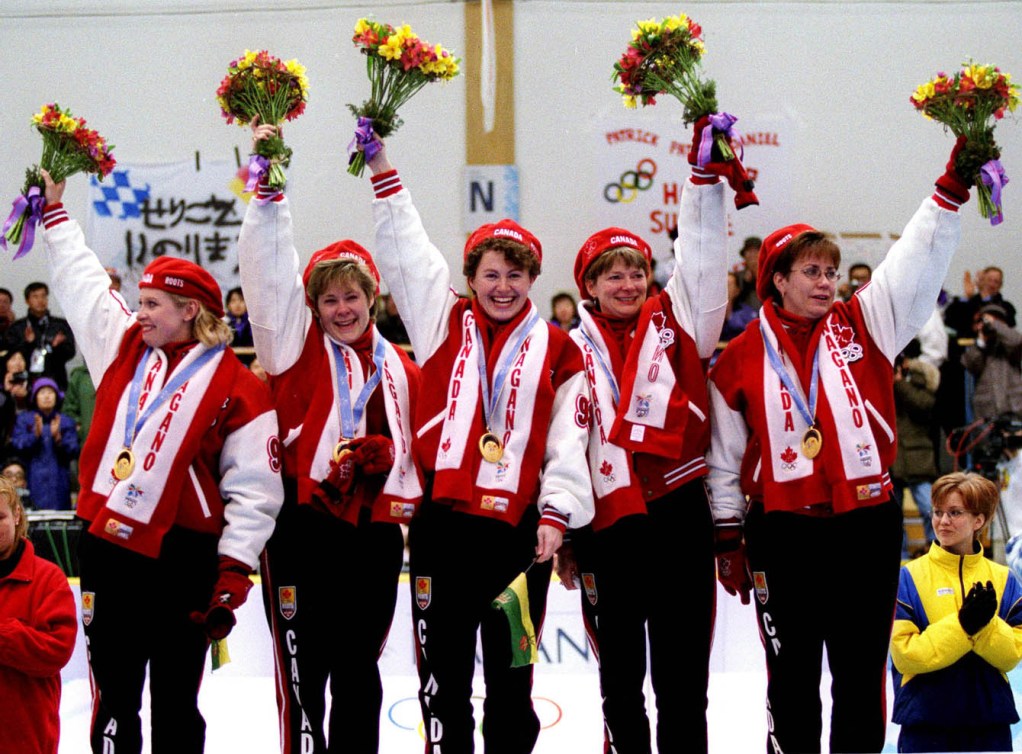
Canada had the first ever Olympic gold medallists in women’s curling. Led by the great skip Sandra Schmirler, her rink also included Jan Betker (third), Joan McCusker (second), Marcia Gudereit (lead) and Atina Ford (fifth/alternate). Cheryl Bernard skipped her team to silver at Vancouver 2010 while Kelley Law and Shannon Kleibrink guided their teams to bronze at Salt Lake City 2002 and Turin 2006.
John Morris and Kaitlyn Lawes became the first Canadian curlers to win two career Olympic gold medals when they teamed up to win the inaugural mixed doubles tournament at PyeongChang 2018.
Olympic Curling History
Curling was included at the first Olympic Winter Games. For many years, it was considered as a demonstration sport, but evidence was later found that showed the Chamonix 1924 men’s tournament was an official medal event.
Curling was a demonstration sport at Lake Placid 1932 and then there was a five-decade gap before it returned as a demonstration sport at Calgary 1988, this time with men’s and women’s tournaments. After one more appearance as a demonstration sport at Albertville 1992, curling became an official Olympic sport again at Nagano 1998 where men’s and women’s tournaments were included. Mixed doubles was added to the Olympic program at PyeongChang 2018.
Canadian Medallists
| Games | Event | Athlete | Finish |
|---|---|---|---|
| Nagano 1998 | Women | Sandra Schmirler, Jan Betker, Joan McCusker, Marcia Gudereit, Atina Ford | Gold |
| Turin 2006 | Men | Brad Gushue, Russ Howard, Mark Nichols, Jamie Korab, Mike Adam | Gold |
| Vancouver 2010 | Men | Kevin Martin, John Morris, Marc Kennedy, Ben Hebert, Adam Enright | Gold |
| Sochi 2014 | Women | Jennifer Jones, Kaitlyn Lawes, Jill Officer, Dawn McEwen, Kirsten Wall | Gold |
| Sochi 2014 | Men | Brad Jacobs, Ryan Fry, E.J. Harnden, Ryan Harnden, Caleb Flaxey | Gold |
| PyeongChang 2018 | Mixed Doubles | Kaitlyn Lawes, John Morris | Gold |
| Nagano 1998 | Men | Mike Harris, Richard Hart, Collin Mitchell, George Karrys, Paul Savage | Silver |
| Salt Lake City 2002 | Men | Kevin Martin, Don Walchuk, Carter Rycroft, Don Bartlett, Ken Tralnberg | Silver |
| Vancouver 2010 | Women | Cheryl Bernard, Susan O’Connor, Carolyn Darbyshire, Cori Bartel, Kristie Moore | Silver |
| Salt Lake City 2002 | Women | Kelley Law, Julie Skinner, Georgina Wheatcroft, Diane Nelson, Cheryl Noble | Bronze |
| Turin 2006 | Women | Shannon Kleibrink, Amy Nixon, Christine Keshen, Glenys Bakker, Sandra Jenkins | Bronze |
| Beijing 2022 | Men | Brad Gushue, Mark Nichols, Brett Gallant, Geoff Walker, Marc Kennedy | Bronze |
| Milano Cortina 2026 | Women | Rachel Homan, Tracy Fleury, Emma Miskew, Sarah Wilkes, Rachelle Brown | Bronze |